

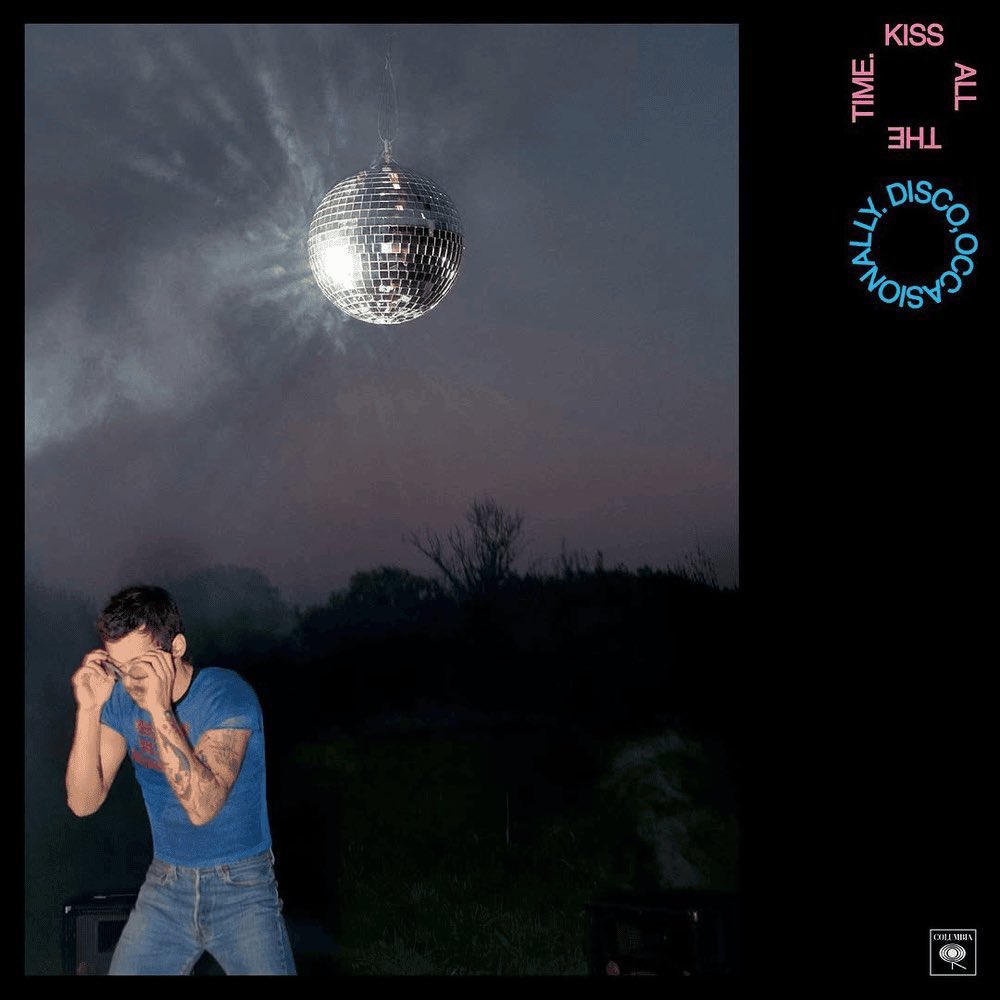
Harry Styles returned on March 6, 2026, with his fourth studio album, “Kiss All the Time. Disco, Occasionally.” After the success of “Harry’s House’, the 12-track album sees him continuing to evolve his solo sound, this time with a stronger synth-pop and disco influence. Featuring tracks like “Aperture,” “American Girls,” and “Dance No More,” the album presents a polished, dance-oriented direction while maintaining the melodic style that has defined much of his recent work.
The album begins with the song “Aperture,” an upbeat song with electronic rhythms rather than Styles’ usual guitar or live rock instrumentals echoing behind his voice.
Differing from his other albums, “Kiss All The Time. Disco, Occasionally” takes inspiration from artists like LCD Soundsystem, The Strokes, and Prince, creating a synth-driven sound. Using a synthesizer that creates sound digitally. The record also mixes electro-funk, piano, and orchestral elements, showcasing an experimental side of Styles that fans have never seen before.
Alongside its synth-heavy production, Styles’ voice has frequently been blended into its songs, emphasizing the importance of electronic production over vocals. This choice was obviously intentional. Styles wanted to focus on the mood and atmosphere his music was creating, exhibiting its dance music influences.
One song, however, stands apart from the rest of the album. “Coming Up Roses” slows the stream of upbeat tracks, featuring a 39-piece orchestra with composer Jules Buckley. While most of Styles’ new music encourages its listeners to sing and dance, “Coming Up Roses” makes one pause to think about their decisions and desires.
The lyrics, “Now I see your tears on account of my wants, and now it appears that I’m feeling guilty and worried, dear, that you think I might not want you here,” highlight the self-awareness that Styles feels when an emotional distance has formed.
This idea extends beyond the song, relating to how individuals begin to forge their own paths but often leave others behind. When applied to the high school experience, this can be seen in the friendships that have changed, priorities that have shifted, and tensions between independence and connection.
For all its stylistic confidence, “Kiss All the Time. Disco, Occasionally,” rarely demands attention. Much of the album unfolds at the same tempo, in the same emotional register, creating a listening experience that can blur together over time. Tracks like “Dance No More” inject flashes of energy, while “American Girls” offers a moment of pop brightness. Yet, even these highlights feel curiously weightless, as though engineered to maintain a mood rather than break it.
The album ultimately operates in a space between intention and impact. It’s consistently listenable, but also restrained to the point of detachment. There is a clear commitment to mood, to texture, but less emphasis on moments that disrupt or define. Even its brighter or more energetic passages feel carefully contained within the same aesthetic boundaries.
Although several of the album’s songs share similarities, the album as a whole challenges Styles’ previous music and has won the hearts of many.
“Kiss All The Time. Disco, Occasionally! proved that Styles is ready to take risks, balancing its new electronic innovation with the emotional depth fans expect. Lyrics from its songs express powerful themes of self-reflection and shift in identity, while still playing a minor part in the album as a whole. This proves that Styles can experiment with synths, piano, and subtle orchestral elements while still keeping its lyrics relevant.
By blending innovation and emotional resonance, Styles proved he’s not creating music for anyone but himself.