Finding our Place
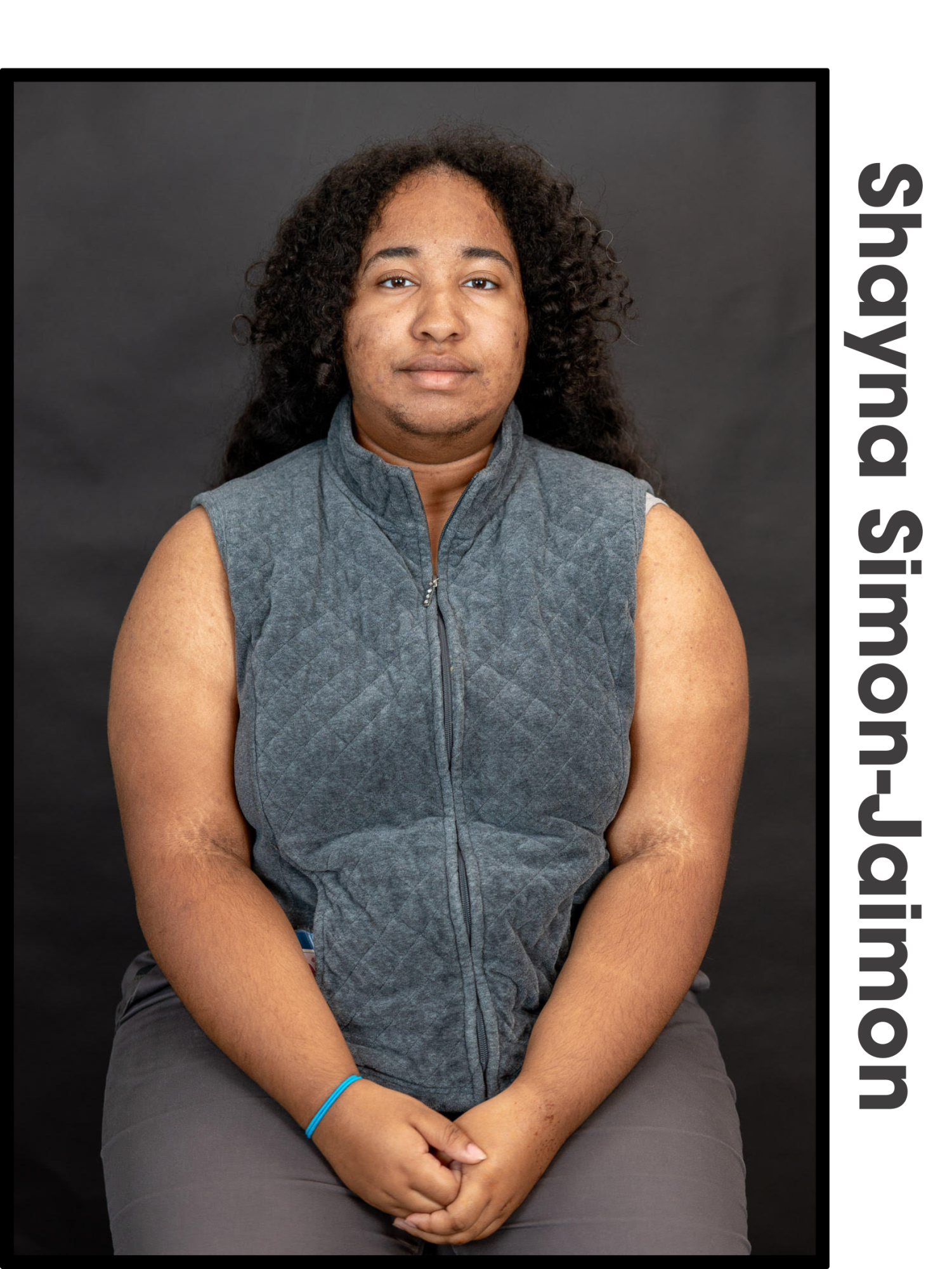

Whenever she finishes a book, Shayna Simon-Jaimon finds a way — somehow — to smush it into her already overflowing bookshelf, even if it means stacking books on top of others or squeezing paperbacks into the tiniest open space.
“There’s a nook where I have my own little library,” Simon-Jaimon said. “I have all these past books that I read that are still my favorites, and they’re just going to stay there for a while.”
Tucked into a corner of her home stand two wooden bookshelves that are worn with age. These pieces of furniture are time capsules, holding the stories that shaped her childhood, sparked her imagination and offered an escape when she needed it.
Since she rarely removes books from the bookshelf, the collection continues to grow. The bookshelf houses her favorite books from all ages, with stories from her elementary school years alongside ones she finished just last week during her junior year.
Since she was young, Simon-Jaimon has been a part of the book world. She credits — or jokingly blames — her mother for it, since Simon-Jaimon was always surrounded by books growing up. Her mother gifted Simon-Jaimon a special collection with beautiful covers of “Anne of Green Gables” by Lucy Maud Montgomery. The collection was stories Simon-Jaimon’s mother had once read as a child, so she wanted to pass that memory on to her daughter.
“She kept fueling my hunger for new books whenever they came,” Simon-Jaimon said. Her mom also encouraged Simon-Jaimon to read the books before watching the movie adaptations, which allowed Simon-Jaimon to experience the story in her own way before seeing someone else’s interpretation on screen.
Simon-Jaimon prefers to read physical books rather than online versions or audiobooks. When reading, her imagination takes over, painting vivid images of the described scenery and evoking the characters’ emotions as if they were her own. Physical books offer a gateway into another world, while digital ones often feel like a closed door.
“It [physical books] helps make the book disappear and the story emerge,” Simon-Jaimon said. “Once you’re reading and you’re in it for so long, you can imagine everything. With a bright screen, it’s harder. I like words on paper instead of a screen.”
The tactile experience of feeling the weight of a book and watching pages pass beneath her fingers makes the story feel more real.
Simon-Jaimon always makes sure to keep a book in her backpack during the school year. She’s ready to pull it out if there are moments of boredom or times when she needs a break, whether that’s during lunch, time between classes or on a bus ride home. Still, her favorite place to read is in her room, where comfort and quiet let her mind fully wander.
Even though she’s been a longtime reader, Simon-Jaimon has begun to use writing as a creative outlet in recent years. What started as a small habit has become an essential part of her daily life. It’s provided a way to process her thoughts, spark creativity and find calm in the chaos of her busy world. Writing helps her to focus on something that isn’t everyone else.
“I have a journal with all the ideas that pop into my head that I bring everywhere,” Simon-Jaimon said. “I feel like that helps cool me down, because if I didn’t have anywhere to release that, I wouldn’t be as focused as I am now.”
Writing gives her structure, expression and self-fulfillment. Where reading once provided an escape into other people’s stories, writing now gives her the power to shape her own and potentially share that story with others.
“Right now,” Simon-Jaimon said, “I’m really liking the process of writing and inching closer to the next idea that ties the story together.”
For Simon-Jaimon, books — both reading and writing them — are where she feels most herself. In the pages of a novel or the lines of her journal, she finds a sense of belonging and enjoyment.
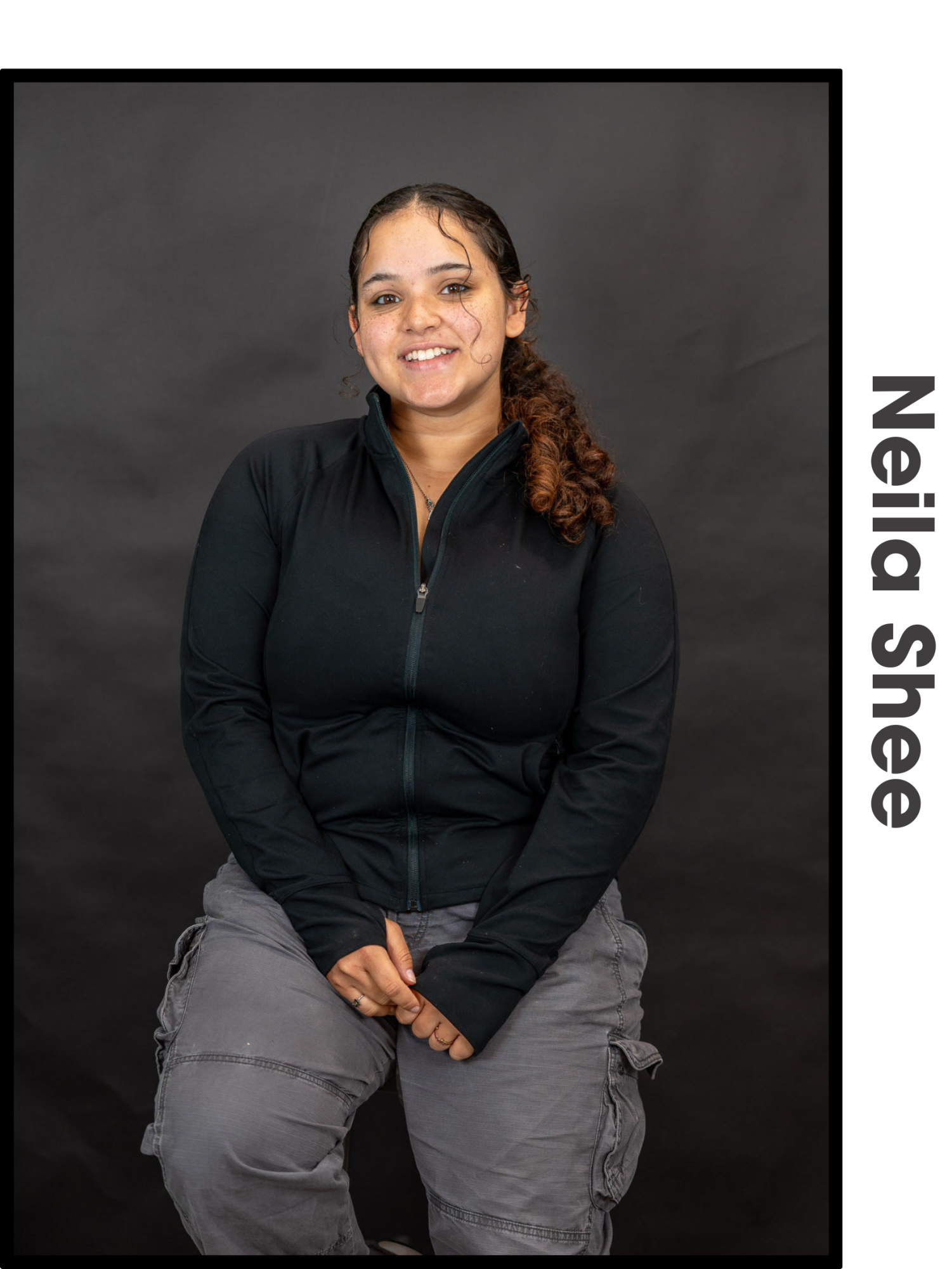

It was 17 degrees out. The snow wasn’t the fluffy, magical kind; it was more like the styrofoam pellets, half-frozen and half-slick. Amid the freezing cold, ten-year-old Neila Shee sat in the dark, desperately trying to get her water to boil. It didn’t — it was too cold. Shee and her friend, Anna, were hungry, cold and shivering as they hovered over a camp stove that refused to heat. They planned to cook chicken noodle soup for their first-ever campout. Instead, they sat side by side, eating pre-cooked frozen chicken straight from the bag.
“I was like, ‘This is what you’re in for Neila,’” Shee said.
That freezing, chaotic campout in 2019 turned into a tradition that has lasted to her senior year of high school. She’s a member of Troop 5G of Scouting America in Ann Arbor, the girls’ group created in 2019 that paralleled Troop 5B, the long-established boys’ group. Shee loves the skills she has learned and the relationships she has made throughout the years.
Just months before her first campout, Scouting America had officially opened its programs to girls, and Shee was one of the first female scouts in Michigan to join the program, which focused on exposing young kids to the outdoors.
Shee first joined Scouting America because her brother was in it, and when she was younger, she wanted to do everything he was doing. She continued with Scouting America and not switch to Girl Scouts because she loved the activities she was involved in with Scouting America.
“I tried Girl Scouts for a little bit, but it just didn’t match me,” Shee said. “I feel like I didn’t fit with what they were doing, and I wanted to do more fire, knots, hiking and camping.”
During her time with Scouting America, Shee has created lasting friendships, including the one she made that first night camping. Surviving with her friends in those harsh conditions felt empowering to Shee, even if it was a little scary. She had to learn how to camp in the cold for the first time. She cooked her own meals for the weekend and figured out how to set up a stove, use a compass and read a map on long muddy hikes.
But the one constant for Shee was her friends. Anna and Shee were in different grades, went to different schools and might’ve never met if not for Scouting.
“The chance of us becoming friends without Scouts is pretty much zero,” Shee said. “But wow, we met each other, and to this day, she’s one of my best friends.”
During another campout a few years later, again with Anna, Shee decided to complete a requirement for a wilderness survival merit badge, which included building a shelter out of materials found in the woods and spending the night out in the shelter. After building the shelter that felt more like a cocoon, she crawled in and settled down for the night. As soon as she got inside, the rain started.
Shee contemplated bailing on finishing the night in the shelter, but she decided to settle in and persevere. After a few noises and a run-in with a couple of bugs, she eventually fell asleep from the exhaustion of the day before. But, in the middle of the night, Shee found herself waking up needing to use the bathroom.
Getting out of her sleeping bag and pulling on some warmer clothes, a coat and boots, Shee walked to the restrooms in the pitch black night.
“I was afraid of the dark,” Shee said. “I didn’t like it.”
The wind was whipping, and her hair was blowing behind her as she walked the 200 feet from her tent to the restrooms. Thankfully, the bathroom was heated.
“My fingers and toes were so cold,” Shee said. “I really didn’t want to go back to my little shelter.”
As she sat in the bathroom trying to delay the cold walk back to her shelter, Anna walked in. The two friends sat next to each other on the floor, staying warm together and talking about anything that was on their minds.
“We were sitting on the ground,” Shee said. “She was cold in her tent, so we were sitting in the bathroom enjoying the heat. And then I just told her, ‘I think I’m bisexual.’”
Shee had never talked about her sexuality with anyone else before, so she forced it.
“Anna was like, ‘Oh, well, I’m also bisexual,’” Shee said. “So I just found out that another person was queer that I could talk to about this thing.”
For the first time, Shee found a friendship she hadn’t realized she needed. In this moment, Shee knew that she wasn’t alone.
She fit in when she was in Scouts, being alone in the woods, empowered by doing the hard things that she didn’t think she could do. But she also fit in with the friends that she made in Scouts, the ones who accepted her and appreciated her for who she was. The ones that she could sit on a bathroom floor in the middle of the woods and have one of the most meaningful conversations with.
“I told Anna that I was queer, and I found support there,” Shee said. “It was a moment where it felt like I had won.”
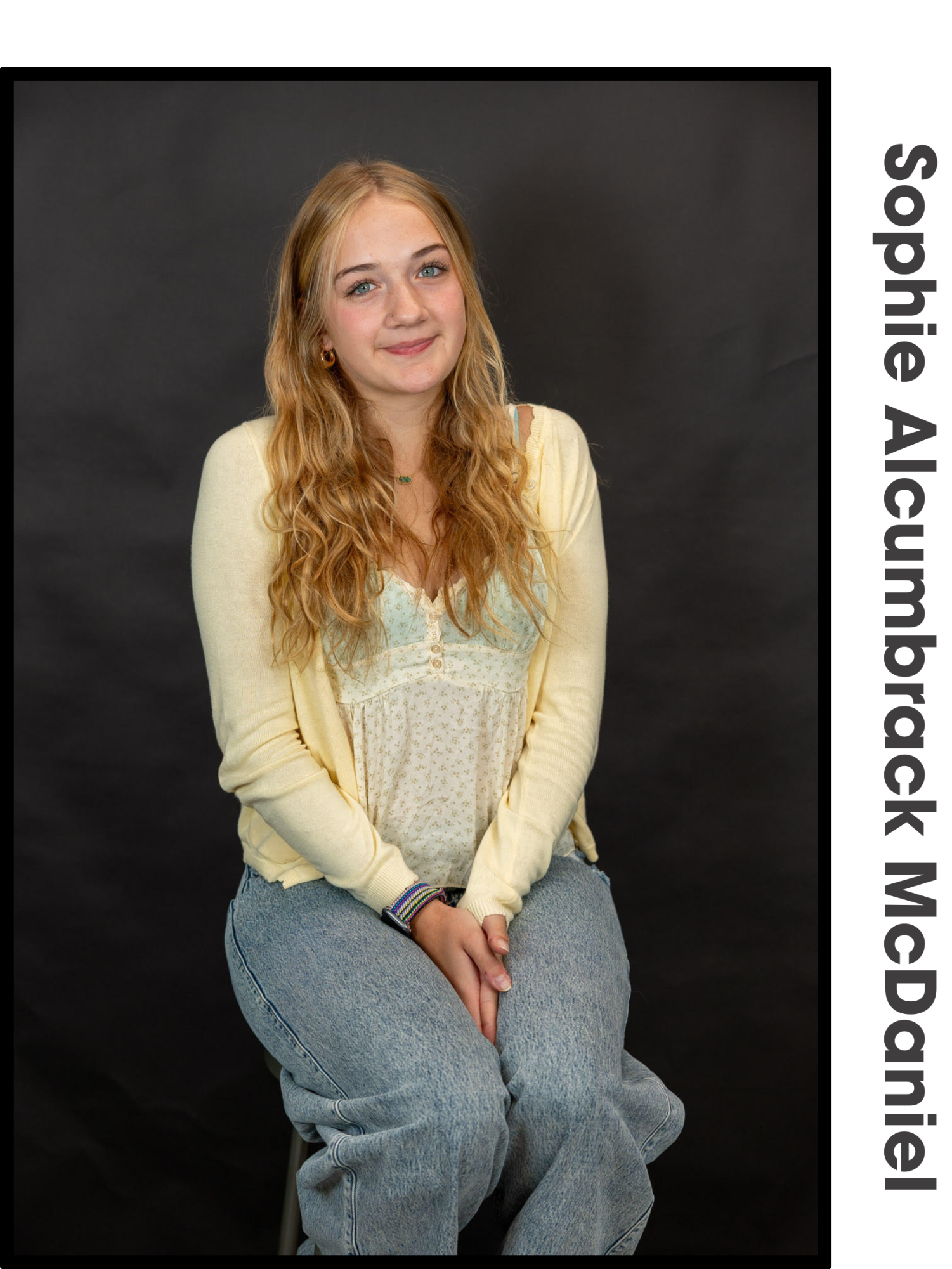


Since she was merely eight years old, home has adopted a new meaning for Sophie Alcumbrack McDaniel.
It isn’t a place. In fact, it’s anything but stationary.
Home is the way her limbs cut through clear blue water. It’s the sharp relief when icy currents shield her skin from the scalding summer sun, the echo of a best friend’s laughter and the thump of her bare feet as they barrel towards the pool’s edge.
“I lived literally a one-minute walk away from the pool,” Alcumbrack McDaniel said. “So in the summers, when I was younger, that was the place to be. It really shaped who I was in terms of having that community to go to and getting so close with the same people routinely over 10 years.”
Now, swimming is a natural movement for Alcumbrack McDaniel. The strokes feel familiar, like lyrics to a song so deeply rooted in your childhood, you’d sooner die than forget them. But it wasn’t always that way.
Alcumbrack McDaniel marched into her first-ever swim lesson right beside her childhood best friend, Elena Fortin. Immediately, this friendship injected the sport with an infectious, vibrant energy that was easy to fall in love with. After advancing through Goldfish Swim School, she spent her hours at the neighborhood pool. With each holiday came a new opportunity to connect with the people she had found there.
“There’s just so much that we’d do as a team together,” Alcumbrack McDaniel said. “We would do barbecues for Labor Day, the Fourth of July and Memorial Day. We would have potlucks, and the night before championship week, we would carbo-load. It’s just it’s a really beautiful thing to be around.”
So long as she remained grounded by these core memories, her childhood passion followed from pool to pool and team to team. But by freshman year, time took its toll, and what she had previously considered a simple hobby now demanded more of her time and energy. The focus of the sport shifted from socializing with close friends to technique, performance and improvement. She felt dwarfed by students who had already dedicated years of their lives to intense training and athletic grit. Gradually, memories of a bubbly eight-year-old girl became tainted with the fatigue of 5 a.m. alarms and two-hour morning practices. However, Alcumbrack McDaniel wasn’t the only one facing new beginnings. Former members of her neighborhood pool were now also entering high school, and they cushioned her transition into Huron Swim and Dive. The familiar, reassuring presence of her old teammates made bonding with these new ones feel a little less daunting.
“It was easy for me to branch out because I already had the people that I felt safe with,” Alcumbrack McDaniel said. “It’s easy to find a community anywhere where you feel loved.”
Still, at times, Alcumbrack McDaniel struggles to remember why she loves the sport so much. On certain days, the pressure to perform feels relentless. The weight of comparison seems to press in from all angles, each stroke a mere reminder of the distance she has yet to go. But even when hours of training beat her body into exhaustion, when her lungs burn, muscles ache and skin dries with the harsh pool chemicals, it’s the steady comfort of her teammates that can ground her once more.
“It’s very mentally taxing because it’s just you alone in the pool for two hours, no music, no one to talk to, just going through the motions over and over and over again,” Alcumbrack McDaniel said. “But each time I felt like I hated it, or we had a meet and I swam terribly, we [the team] would go and sit on the ground together and have dinner in the hallway. That’s what brought it all back together.”
It’s the small moments – the simplest ones – that have turned Alcumbrack McDaniel’s swim team into a forever family. Home, she’s realized, is not always synonymous with house. Sometimes, the word refers to the sound of laughter as it bounces off wet tiled walls or the smell of a team dinner on warm summer nights. It’s the unwavering certainty that she will always have a place right here, with these people.
“For me, it’s never been about how fast I can go or how many records I can break,” Alcumbrack McDaniel said. “It’s just about the people there. It’s about who you’re surrounding yourself with, especially when those people make you feel safe and loved and like you know you fit in. That’s all that really matters.”
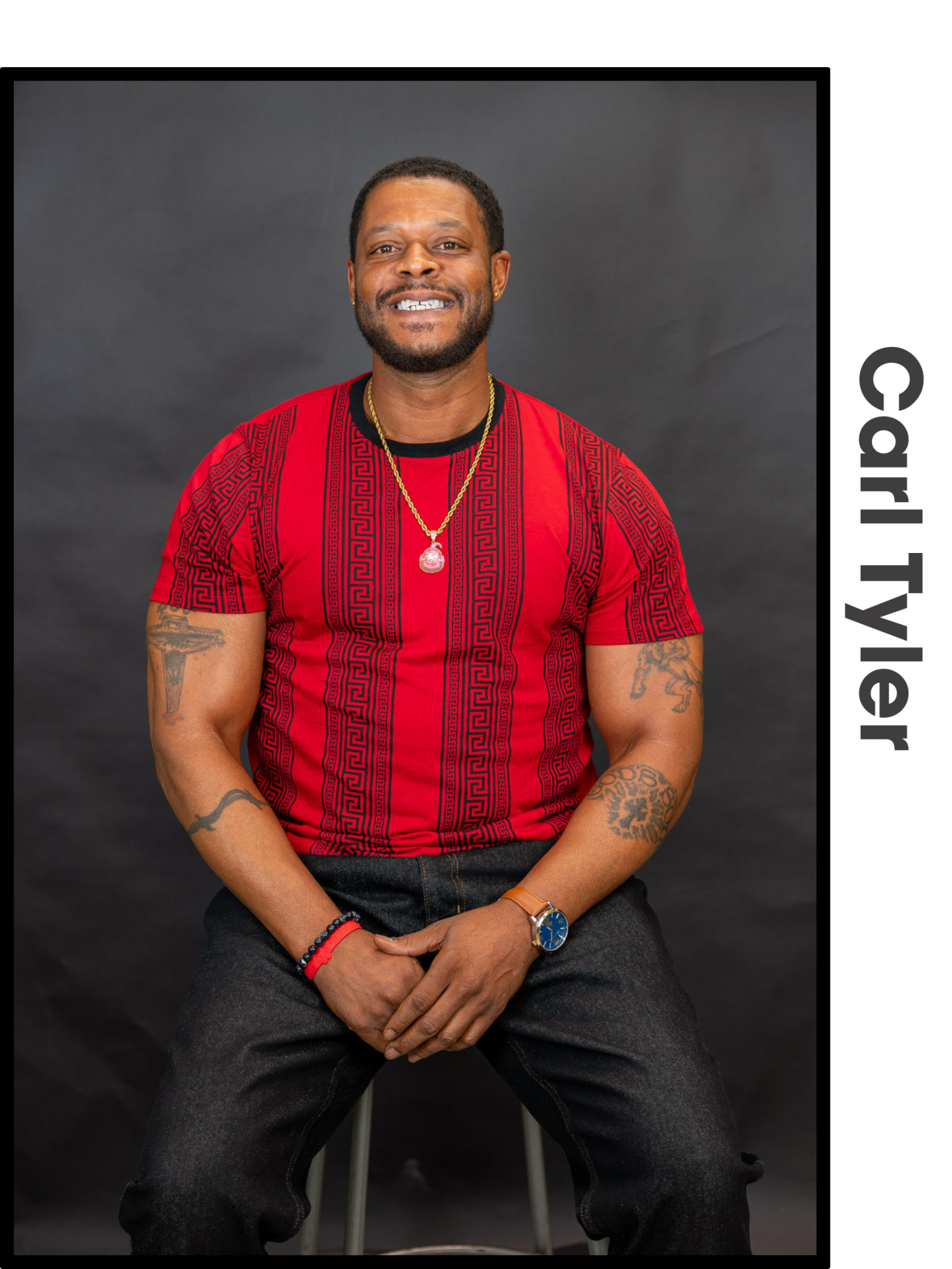


As Carl Tyler walks down the hallway at Community High School, he hands out fist bumps and hugs to students. Students frequently come up to Tyler to say hello, ask him how he’s doing or talk with him about their days and what’s happening in their lives. Tyler, CHS’s head custodian, gets energy from the connections he makes with students. These connections are why he feels like he fits in at Community.
“I felt like I fit in with y’all, because I love y’all,” Tyler said. “Y’all give me that energy.”
He also believes that fitting in is being in a place where you can learn and grow from the people around you.
Born in Miami, Florida, Tyler lived much of his childhood there. He loved being in the South because he found that the warmer weather of Florida allowed for more connection with the people around him.
“It’s just more fruitful with the sun,” Tyler said. “Going where the sun is the majority of the time, where the people and their personalities are better and pure.”
A large part of Tyler’s family lived in Florida with him. He had six brothers and six sisters, his mom and dad, and many aunts and uncles. Tyler recalls that his grandparents also had a major influence on him.
“Granny was the major foundation because she taught us a lot about consequences and responsibilities,” Tyler said. “My granddad, he was major too, because he came from that era of civilization, the era of just breaking free, freedom, rights.”
As Tyler got older, he started spending time in Detroit at the properties his grandma owned. Although he preferred the weather and connection in Florida, he found his place in Detroit and admired the struggle and toughness of the people there.
Tyler finished high school in Detroit at Cody and Harrison high schools. A few years after he graduated, Tyler’s grandmother passed away, and Tyler inherited her properties, most of which were in the Detroit area. Although he’s traveled plenty, his home has been in Michigan ever since.
Tyler still values traveling a lot, especially to big cities where he can meet and interact with many different people. He loves to learn about the world from everyone he meets when traveling.
“I think anywhere you go in life will help you grow because you get to see how other people think, how other people live, and how other people move,” Tyler said. “Everyone thinks differently, even though we are similar.”
As he grew and traveled, Tyler eventually found that talking and building relationships with people he met were the most influential parts of fitting in. Not only meeting people, but also listening and truly understanding people, helped build these meaningful relationships.
“If you are a person that grows apples, how can you grow oranges if you don’t know a person that got oranges,” Tyler said. “That’s gonna make you more fruitful, because now you can grow different things by learning from somebody different.”
He has found that meeting new people in different places helps create more balanced perspectives. Although he has a large family with many relatives, Tyler was raised to believe that family isn’t just the people you are related to by blood. He finds that family is better defined by the people that you talk to and have relationships with. To him, anyone you love is your family.
“You can meet a person tomorrow that can change your life, that can love you more than your mom,” Tyler said. “Family is the people that love you, that stick by your side. That’s very important because say if you went to Russia. Right now, y’all know nobody. But if you get down there and you meet good people, that’s going to be family.”
Tyler has built relationships and feels like he belongs almost anywhere he can make human connections. That has been true in Miami, Detroit, many of Tyler’s travel destinations and of course in Ann Arbor. Tyler first started working with Ann Arbor Public Schools by driving school buses until someone suggested he should start working within the school buildings. He gave it a try and never went back. Tyler has worked at all of the Ann Arbor high schools and even some elementary schools. Now, he finds a lot of human connections at Community.
Tyler believes that relationships and love are what life is rooted in and are what give him a sense of belonging and fitting in.
“Can’t nothing beat love,” Tyler said. “Love don’t come in no color, no description, no size, no nothing. Love is the most important thing.”
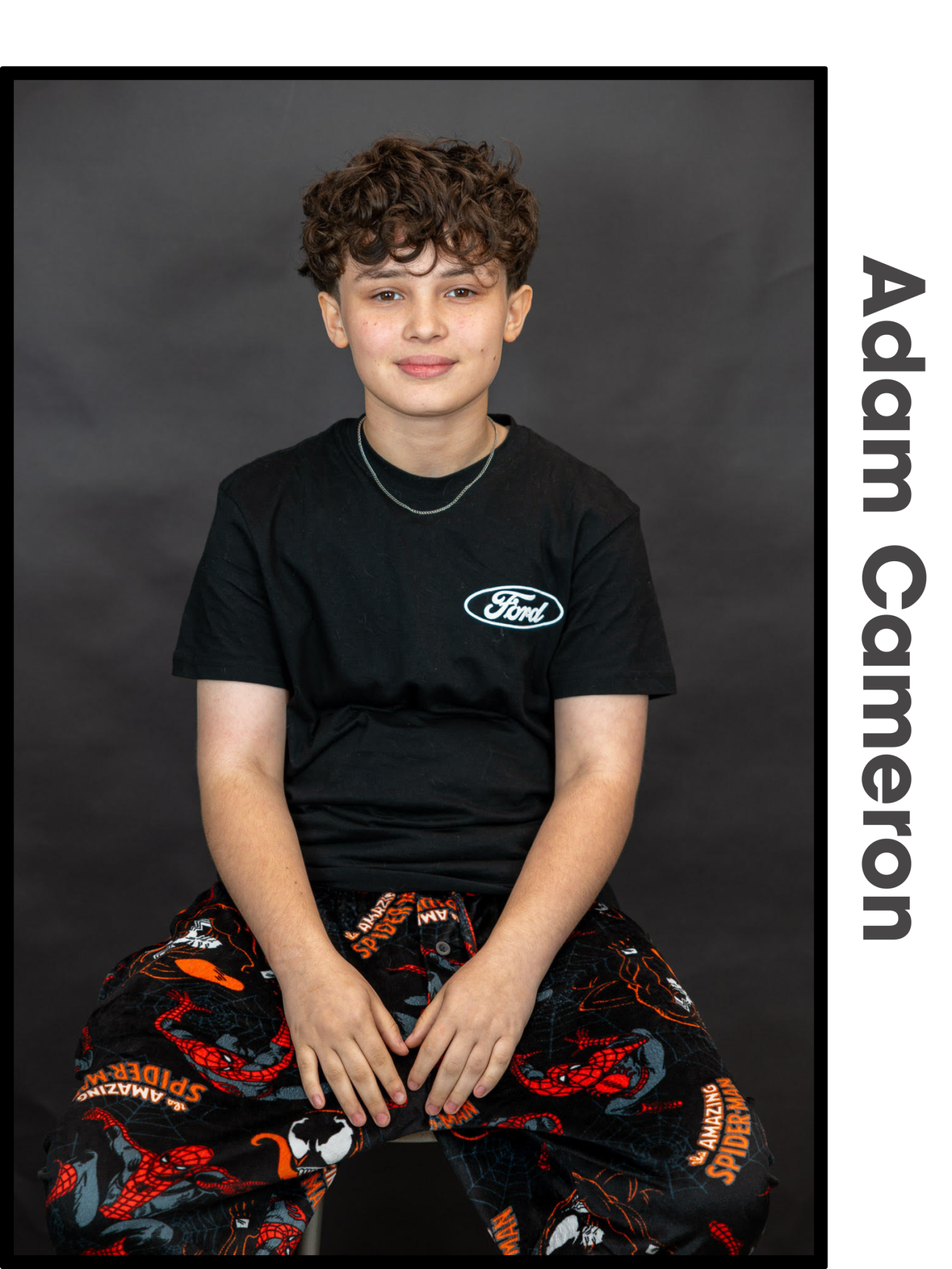


When Adam Cameron moved to Ann Arbor in fourth grade, he just needed a place to belong. And since his recent transition to CHS, he finds himself having a better understanding of who he spends his time with.
For Cameron, the concept of fitting in means building a support system of friends that allows him to be himself. Whether it is the new friends he made this year or long-time ones he’s had for a while, Cameron knows exactly what to expect out of a friendship and what to search for when meeting new people.
“The biggest trait I look for is humor,” Cameron said. “Being able to laugh with a person is probably one of the most important things.”
Since his move to Ann Arbor, Cameron has observed an evolution in his process of meeting new people and has noticed himself becoming more intentional with who he allows into his life.
Cameron has a technique he often finds himself using to figure out who he really fits in with. He frequently puts on a semi-false personality that isn’t too loud or too emotional. When he can be his true self despite the extremities, he knows he is around the right people.
“I tend to act a little differently around people that I don’t know,” Cameron said. “I think the thing that influences me the most is if I don’t consciously have to direct anything about my personality when I’m around a person.”
Additionally, it is extremely important to Cameron that his group of friends have shared ideals or interests. For example, he feels deeply about his political values and finds it hard to maintain friendships when others’ principles directly conflict with his own.
“Sometimes people’s views don’t really align with mine, and it’s not stuff that I get over because I am kind of particular in that section of my life,” Cameron said.
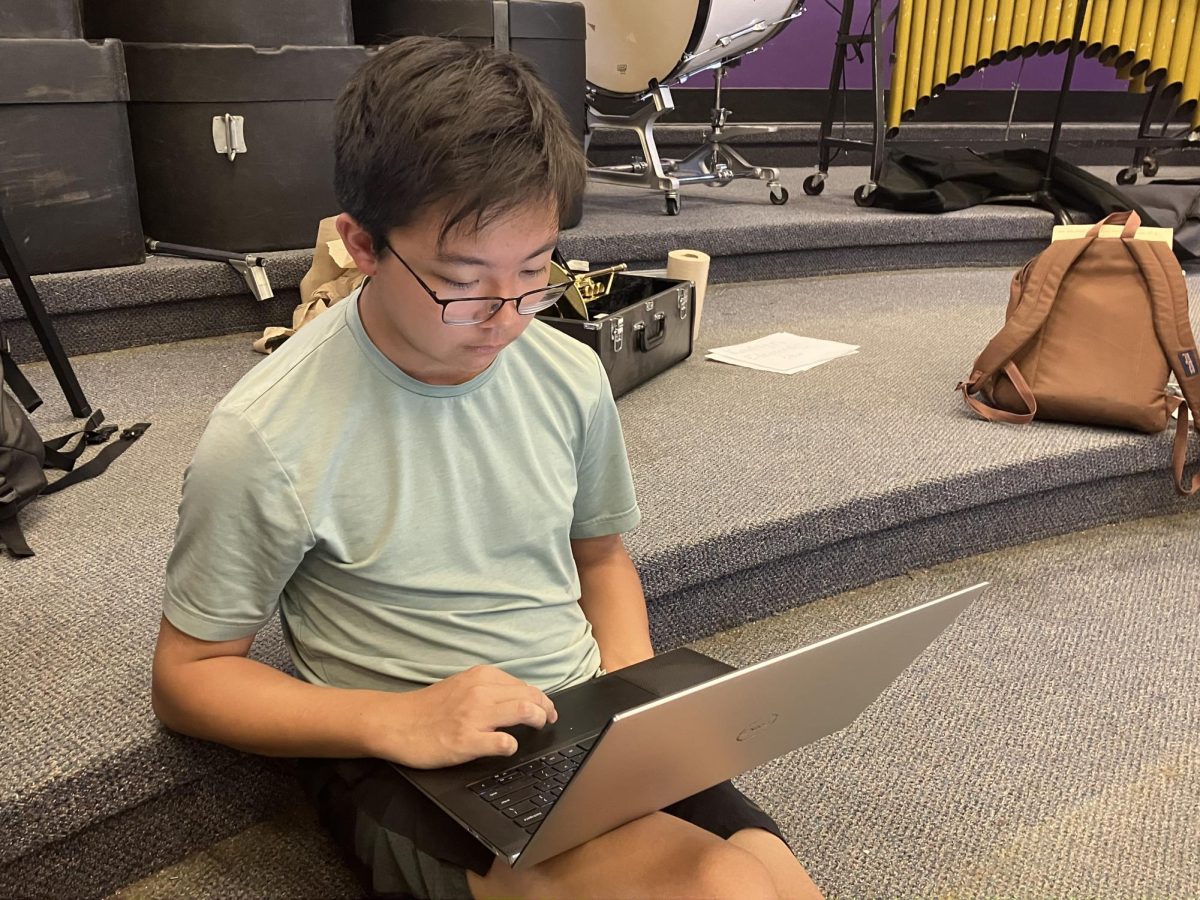
Music is a common interest between Cameron and some of his friends. He finds it easy to connect with people based on music, even those who don’t perform but still enjoy music through attending concerts or listening instead.
“It’s such a universally liked language,” Cameron said. “I think that’s how I made friends that I gained from playing music or bonded over music with.”
Friendship is a vital part of life for Cameron, as he has experienced school without it and knows how much it affects a person to have a group of people to turn to. From eating lunch by yourself to attending classes and not knowing who to talk to, having close friends motivates Cameron to fully immerse himself in school and enjoy the process.
Now in the midst of his freshman year, Cameron has found a new group of friends to experience the beginnings of high school alongside. He describes the process as “easy,” knowing that many students at Community enter the year not knowing many people. Cameron regularly reached out to new peers in his classes, knowing that there was a shared consensus of putting oneself out into the conversation, especially if he didn’t have any friends in the class.
Eventually, he found the friends he now hangs out with through pushing himself out of his comfort zone and many trips downtown during lunch periods.
“I’ve experienced being alone and not having anybody to hang out with during classes and not having anything to do during the weekends, but my friends helped me fill that gap,” Cameron said.
Since transitioning to high school, Cameron has lost contact with many friends from middle school. However, Cameron believes the most essential component in maintaining these friendships is equal effort from both parties. Due to this collaborative feel, Cameron has been able to keep some friendships dating back to fifth grade and currently sees his friend Peter, who attends a different high school, almost weekly. Moving to a new school hasn’t meant sacrificing all of his friendships, though, and he’s been able to keep strong ones.
“I have some friends who came here to Community with me,” Cameron said. “I’ve been able to build on those friendships, which has been really nice.”
Overall, moving schools has been a worthwhile choice for Cameron, although he inevitably fell off of some previous friendships that existed on a shallower level, he feels as if he has gained more than he lost.
One of Cameron’s favorite memories with his friends is Halloween of 2024. The group all wore matching onesies and ran around neighborhoods collecting the largest amount of candy possible. Following the festivities, they sat down to watch The Texas Chainsaw Massacre and munched on candy.
“I had made a good group of friends there,” Cameron said. “So it was really fun to spend such a fun holiday with them.”
To Cameron, friends are the place where he fits in the most because they accept him for who he truly is. Whether it’s watching a movie in theaters or playing music together, he always has a place with them.
For Cameron, it’s more than just a friendship: it’s a crucial part of his high school experience, from starting a simple conversation to sharing experiences with others. In Cameron’s experience, it’s not just about fitting in, it’s about belonging.