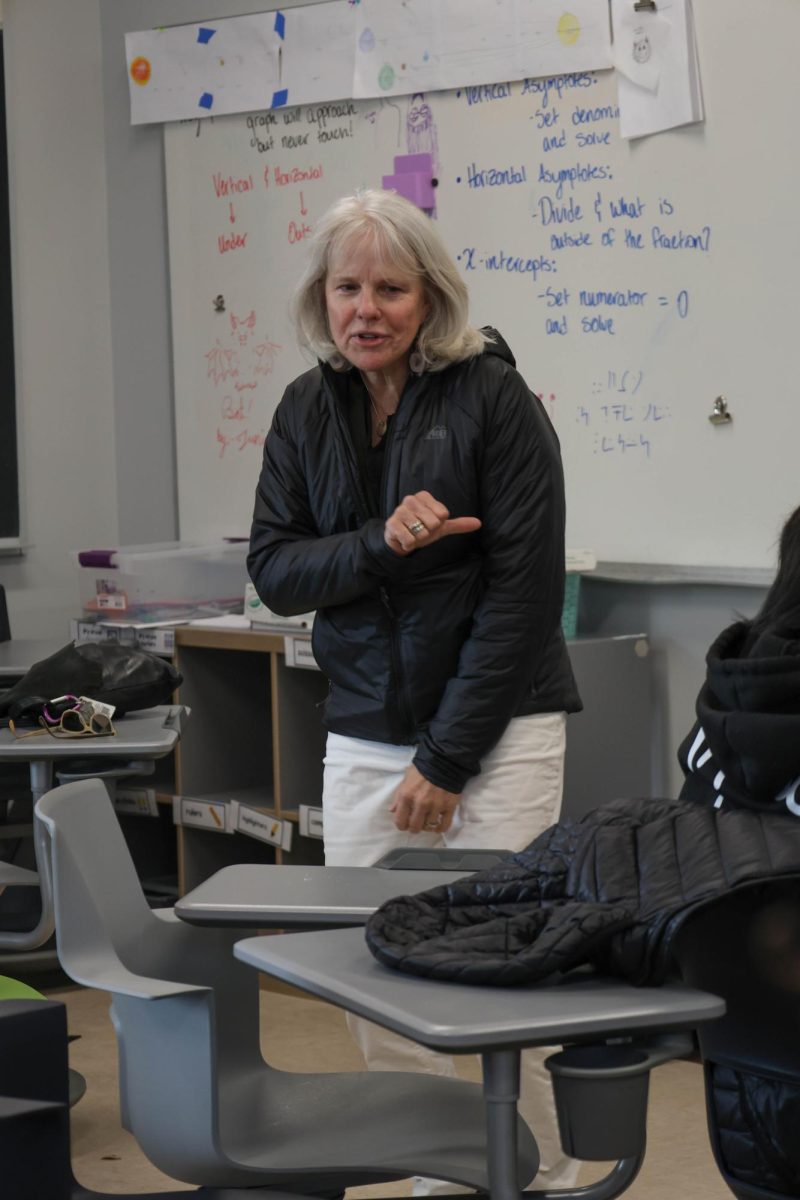
Jamaal May stood in front of a crowd of poets from Community High School’s Poetry Club who came to see the award-winning poet deliver his topic of resonance by using his energy and mastery over language. May presented to the poets not just how to write poetry but to feel it resonate in the room and their bodies. May, who was born in Detroit, has received numerous accolades for his work, including the Beatrice Hawley Award, American Library Association Notable Book Award, Spirit of Detroit Award and Indiana Review Poetry Prize.
May had come that day to teach, by delivering some of his own work for the group while also sharing with the students why it’s important to speak with authenticity, and to believe what you speak. May often visits schools, and really enjoys the dynamics of working with a group of students as an act of learning for the student and himself.
“I think the teacher-student exchange is one of the most pure relationships on the planet,” May said. “To me, it gets reciprocated sometimes pretty instantly, depending on what kind of workshop you do, like the one we did today… This is my jam, this stuff I love, I used to do it all the time. Being able to come out and teach people is more important to me than doing revolutionary work.”
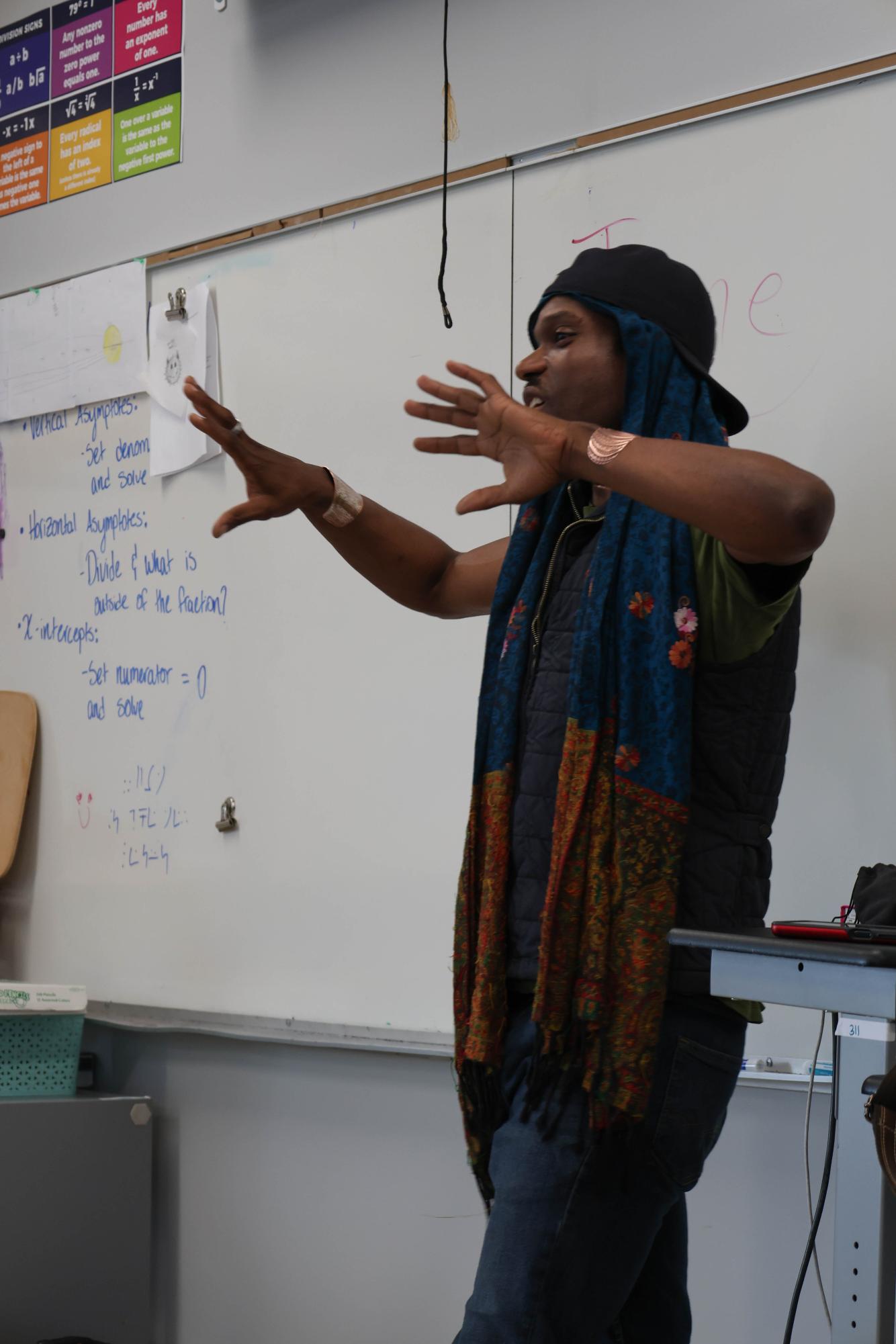
May often finds that the scope of his exercises is limited in the amount of time he can spend with a group. One of the things he has learned to do over years of traveling and presenting is the trick of getting something meaningful out of a small workshop that a poet can refine afterwards.
“You only get so much time, so you draw something out in the small space, and you get so many different results,” May said. “And I feel like I give people something they can go back and work on, like a nice raw piece of meat.”
This had led May to teach about resonance, how certain words have a weight or hum at a similar tone to the earth itself . What he is discussing is called the Schumann resonances, where a word when said out loud is at 7.8 Hz, it resonates with the earth. After learning of this, May composed a list of words that fall into this then challenged the poets that every 30 seconds or so he’d add a new word and they had to use it. The words were in the following order: copper, ferryman, glass, earth, foe, distortion, closer, memory, tree.
“My process is now very holistic, me doing stuff with music, me doing stuff with resonance… What’s happened to me in the last several years is I healed myself in mind and body through resonance and language and basically getting myself to the point where what I think is what I’m saying, and what I’m saying is somatically resonant with my body.” May said. “And that took years. So now I try to teach what has worked for me to anyone who wants to listen.”
Elliot Paloff, a poet from poetry club who often struggles with the drafting of a poem found May’s process eye-opening.
“The process was unique and vivid, it really helped me create something for once, and his energy was kind of infectious,” Paloff said. “I’m looking forward to using that method of rhythm and resonance in my own work again.”
Cypress Milligan, another poet in poetry club loved May’s way of explaining himself.
“He had a way of tricking your mind into understanding such a powerful subject without having to dumb it down. It wasn’t a standard lesson, instead it was opening a door into his world,” Milligan said.
As it came to a close May gave final words.
“The machine we live in is constrained by time, if I had just came in here and said we’re gonna write for six minutes where you’ll give me a perfectly unique piece that is intellectually interesting while also being lyrically creative, most of you would probably be on the first page still,” May said. “Instead, in six minutes you just made some beautiful poems, some of you may go back to edit, more importantly you created in that time, whether its song, poetry or even art. That initial time to start creation is the most important for the rest of the piece.”