After decades of war, a hopeful new chapter for the history of the conflict between the state of Israel and the surrounding Arab countries appeared to be on the horizon. In the early 2000s, Israel had withdrawn its troops from the Gaza Strip and then on Aug. 15, 2005, 8,000 Israeli citizens were forced to leave their homes in northern Gaza. The Palestinians in Gaza were holding legislative elections in 2006 in both the Gaza Strip and areas of the West Bank.
From 1964 until the 2006 elections, the main group representing Palestinian resistance to Israel was the Palestine Liberation Organization (PLO), which formed from various Arab militia groups in 1964. Since 1964 and through the 1990s, the PLO had been in a continuous state of war with Israel. The PLO used Palestinian refugee camps across neighboring countries as a base of operations, particularly Jordan and Lebanon, to launch attacks on Israel. These attacks led to the 1982 Israeli invasion of Lebanon.
“This is a 20th-century land conflict, and it is not an ancient religious conflict,” Amy Vanappledorn said. “It’s about land in an area that used to be the Ottoman Empire, the Ottoman Empire that disintegrated in World War I.”
 Vanappledorn was a public school teacher who worked in the Ann Arbor Public School District teaching history for over 30 years.
One of the parties in the new 2006 Palestinian elections was Hamas, a Palestinian political and militant organization founded in 1987. Hamas had participated in the violent uprising against Israel that had just taken place the years before the 2006 Palestinian elections. This uprising was known as the “second intifada”, which killed an estimated 1,000 Israelis and 2,000 Palestinians.
“Hamas won the elections, and so they were the government for a while,” said Mark Tessler, a Professor of Political Science at the University of Michigan. “The other political party, Fatah, was important, and the following year, in 2007, fighters from Hamas and fighters from Fatah began to fight one another in Gaza, and Hamas won.”
Tessler specializes in Comparative Politics and Middle East Studies at the University of Michigan. Tessler has published several books on the conflict between the Israelis and Palestinians. He also has visited Israel, Gaza and the West Bank as well as other countries across the region.
“Hamas has an Islamic agenda, and it wants a Palestinian state to be governed by Islamic law, as they would interpret it, and Fatah is much more secular,” Tessler said. “They would describe themselves as simply nationalist, non-denominationalist. We’re for Palestinian rights, and we don’t care about religion or other things. They represent different networks. They grew up under different conditions. They have different leadership structures, and they have different external supporters.”
Since 2007, Hamas has governed the Gaza Strip. Like the PLO in the 1960s, 1970s and 1980s, Hamas has been in an on-and-off war with Israel. These periods of violence would halt with the United States and Egyptian brokered ceasefires between the two sides.
“There have been mini wars between Israel and Hamas before, usually when Hamas is firing rockets at Israel and Israel is retaliating,” Tessler said. “So we’ve seen that dynamic before, but it’s nothing like what’s going on now. Either in terms of what Hamas did or in terms of what Israel did.”
One example of this was in 2012, when Hamas Launched 100 rockets into Israel. Israel responded with operation “Pillar of Defense” which killed a major Hamas commander along with an estimated 160 Palestinians.
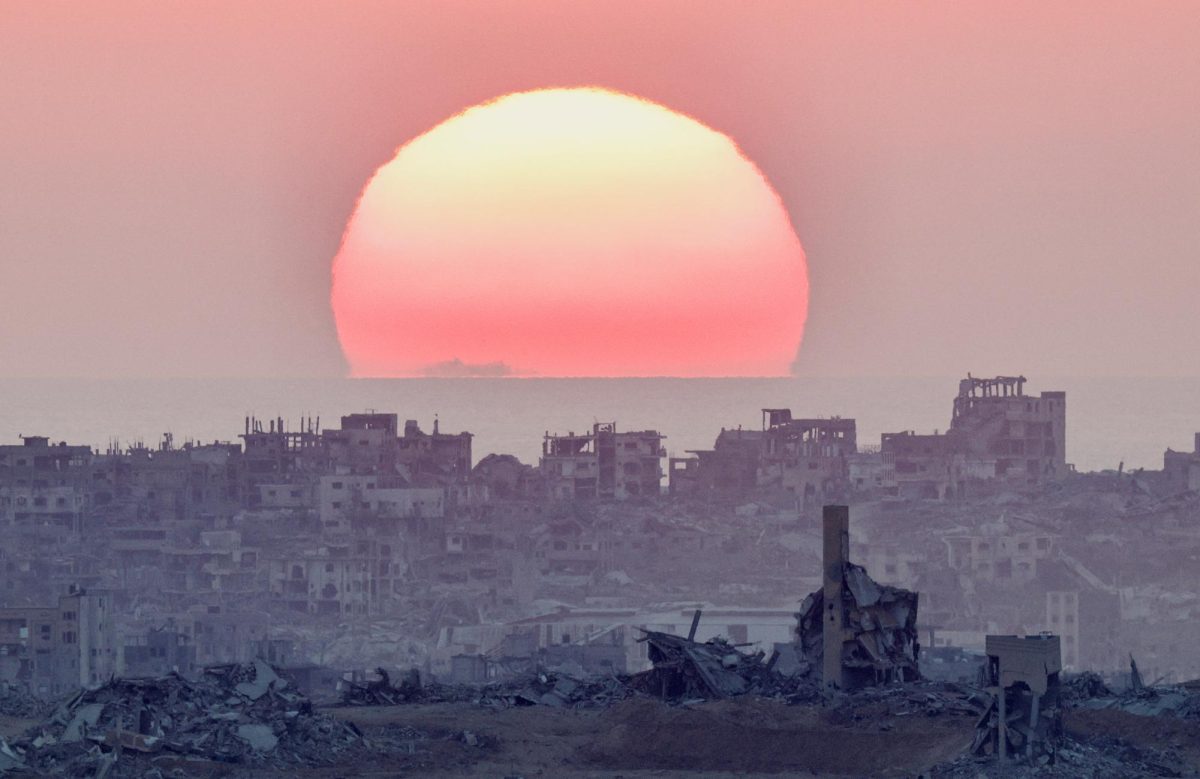
However, one of these smaller wars can compare to what happened during the October 7 attacks. The attacks took place in 2023, when Hamas launched 4,000 rockets into Israel and killed 1,200 Israelis in the communities around Gaza known as the Gaza Envelope. Since then, Israel has been at war with Hamas in order to prevent another attack on its soil from Gaza, resulting in major devastation of the Gaza Strip.
The Israelis had received warnings that there might be an attack on Oct 7, 2023. But according to Tessler, the Israeli Prime Minister, Benjamin Netanyahu decided to ignore those warnings resulting in the devastation that happened during the attack against Israel.
Tessler also explains how there are a lot of complicated parts to the October 7 attack. Hamas was building up its forces and capabilities inside Gaza, and part of its buildup was getting large sums of money from the oil rich country of Qatar. Israel and Prime Minister Benjamin Netanayhu were allowing this money to go into Gaza, and Hamas also received large amounts of support from the nation of Iran.
“Certainly what Hamas did was horrible and I wouldn’t have expected something as terrible as that, and what Israel has done in Gaza is also terrible. I don’t know if I would have expected that or not, but it’s very disturbing,” said Tessler.
Israel began its war with an offensive in Gaza City, in the northern part of the Gaza Strip. Then Israel attacked the southern cities of Khan Yunis and Rafah. After those offensives, Israel shifted its attention to deal with its enemies across the region in Lebanon and Yemen which had begun attacks against Israel after Oct 7. 2023. This culminated in the 12 day war with Iran in June, 2025.
“It’s hard to come up with a period that really resembles it,” Tessler said. “So we’ve seen that dynamic before, but it’s nothing, really, nothing like what’s going on now. Either in terms of what Hamas did or in terms of what Israel did.”
That brings us to where we are today, with the American brokered ceasefire set in place almost two years to the day of the Oct. 7 attacks. Hamas has released all remaining living hostages and many of the bodies of dead hostages. At least one hostage’s body still remains held by Hamas. In exchange, Israel has released hundreds of Hamas and Palestinian prisoners held in Israeli jails, many of whom had been serving life sentences, and withdrawn its forces to around half of the Gaza Strip, mostly the areas that border Israel known as the yellow line.
“If it stops the fighting and it frees the hostages, that’s a good thing. But it’s a pretty small step, and it’s not clear that either side is actually going to do what they promise to do,” Tessler said. “Both Hamas and Israel have already taken action that is inconsistent with the ceasefire. So will it last? We’ll see. So far it’s lasted, but not completely. If it does last, that’ll take us to the much more difficult questions that have been ignored up till now.”
The situation changes day to day. It is still a volatile situation that could reignite back into war at any moment. For now, we can make sure that we are informed, learn about the history of this conflict and hope that a lasting peace will be achieved soon.