Shoshannah Lenski started a climate action club on the playground in third grade. Now, she’s the first executive director of the A2 Sustainability Energy Unit (SEU).
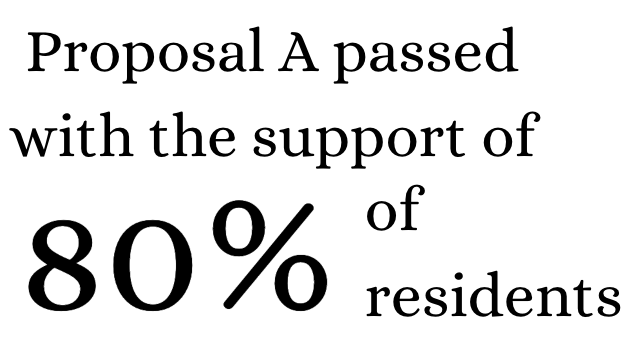
In November 2024, Ann Arbor residents voted to approve Proposal A: Creation of a Sustainable Energy Utility. It passed with almost 80% of residents in support of the plan.
Lenski is working to build a new community-owned utility made with 100% renewable energy that A2 residents participants can choose to join. Interested residents will get local solar energy solutions installed in their homes.
The SEU’s function is to help Ann Arbor progress on its climate goals while offering reliable utility services from a trusted local provider.
“This is a dream job,” Lenski said. “I cannot imagine something I would rather be doing.”
On June 1, 2020, four years before Proposal A, the City Council adopted A2ZERO, Ann Arbor’s plan for transitioning to community-wide carbon neutrality by 2030. Carbon neutrality is balancing the amount of greenhouse gasses, like carbon dioxide, released into the atmosphere with an equal amount removed.
A2ZERO includes seven strategies for achieving a successful transition. One of those seven strategies is to power Ann Arbor’s grid with 100% renewable energy; that’s where the SEU comes in.
Lenski plans to begin offering SEU’s services within the next 12-18 months. The first offer will be for solar panel installation.
Currently, most of Ann Arbor uses energy from fossil fuels like coal. According to Lenski, two-thirds of Ann Arbor’s greenhouse gas emissions come from the power needed to support buildings and houses. The SEU plan involves transitioning to solar and geothermal energy. Geothermal energy uses heat from within the Earth for heating, cooling and electricity.
“The energy systems that we have today are changing our planet and our climate in really devastating ways,” Lenski said.
In New York Times article “Listen to the Sounds of Climate Change,” researchers created an audio installation highlighting the damaging effects of fossil fuels. In the recording, you can hear the cracking of icebergs in the Arctic and bowhead whales moaning as their ocean — their home — is destroyed above them. The sound of air guns used in oil and gas exploration echoes through the audio, disrupting the ecosystems of rainforests, Arctic areas and jungles. Climate change effects like these are what sparked Lenski’s interest in sustainability and climate action.
Dr. Missy Stults, the Sustainability and Innovations Director for the City of Ann Arbor, is also passionate about taking climate action in our community.
She is extremely hopeful for how the SEU can help Ann Arbor advance its climate goals while also serving as a model for other communities across the country.
According to Lenski, Ann Arbor has started to experience the impact of climate change. Our region is likely to be a climate haven in the coming years compared to many other places in the world. Ann Arbor has recently been affected by warmer temperatures and increased precipitation, which have led to flooding and power outages.
One of the benefits of the SEU plan is the expectation of fewer power outages. Ann Arbor has the technology and the solutions to transition its energy system to 100% renewable, according to Stults. Now, Ann Arbor just needs the will.
Lenski believes that there are many ways Ann Arbor residents can help support plans like the new SEU. One way is by voting for politicians who prioritize climate issues. Another is talking about climate change with one’s community, and a third way is advocating for climate-friendly policies surrounding housing, land use and transportation.
“With the federal administration denying settled science and actively working against the clean energy transition, our work is undoubtedly harder,” Lenski said.
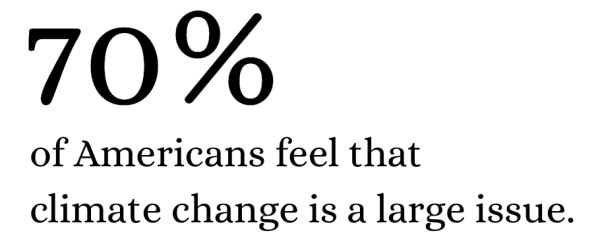
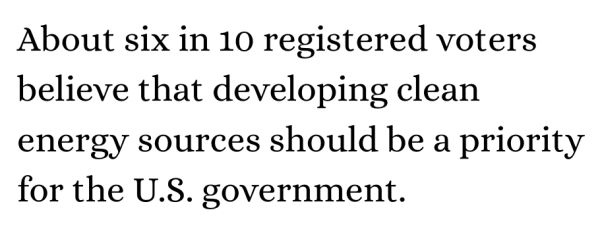
According to “The Hill,” a prominent American news outlet, polls show that 70% of Americans now believe that climate change is a serious problem. 64% support the development of clean energy, and 52% consider gloabal warming a top priority for the government.
“I think the climate crisis is the issue of our time,” Stults said.
The SEU in Ann Arbor could serve as a model for what is acheivable and inspire other cities to take action in the clean energy revolution. The sense of possibility fuels the team behind the project.
“There’s also a lot of pressure and a lot of unknowns, which makes it really fun,” Lenski said. “We are building something that has never been builtbefore. There is no playbook to follow for this.”
Lenski hopes that in 10-20 years, Ann Arbor will still be advocating for climate mitigation, which means transforming systems to reduce greenhouse gas emissions. And 50 years from now, Lenski believes that we’ll be aggressively focused on climate adaptation, adjusting our lives to fit the reality of living in a very different climate than the one we have come to know.
“We’re at an inflection point in history,” Lenski said. “We’re at a moment when young people can shape their own personal futures and the path of humanity.”
For Josie Simpson, a senior at CHS, sustainability and climate action are of crucial importance. To advocate for climate action, Simpson joined the Freeman Environmental Youth Council, which promotes environmental literacy and sustainability through youth advocacy and decisive action. One focus is educating others about the effects of climate change. Many of Simpson’s presentations are aimed towards younger kids in hopes that they will grow up to be strong, powerful advocates for the type of future they want and deserve.
As Ann Arbor begins its revolutionary sustainable energy utility plan, advocates like Lenski and Stults will be leading the way. And, someday, the third-graders on the playground, starting their own climate clubs, may carry the movement forward.