When Ryan Farr was in middle school, he was pulled out of his classroom by his math teacher. The reason? His parents were going through a divorce, and he’d forgotten his math workbook at the wrong house.
“She told me, ‘I don’t care if your parents are getting divorced. That’s not an excuse for you to not bring your math book.’” Farr said. “From middle school on then, I had a really bad taste in my mouth for math.”
Growing up, Farr’s school experience was filled with long lectures and “boring” teachers. The shapes and equations that built up throughout high school didn’t click in his brain, and he constantly counted down the minutes until class ended. It wasn’t until college that his perspective on math began to shift.
“After having all of those bad math teachers in high school, I had a professor who explained things so well that I was able to test out of a lot of the math classes that I took,” Farr said. “All it took was just one good explanation.”
Farr believes that the subject has long been viewed negatively by students and that teachers don’t often make a point of helping their students interact with the coursework in a meaningful way.
Farr launched his career in mathematics to fit the shoes of a “good teacher,” pushing high school students to enjoy math rather than dread it. Inspired by his history teacher, Deb Buckneck, Farr wanted his students to fully love class, even if the subject wasn’t the most intriguing to school-aged children.
“I was tired of math getting such a bad rep,” Farr said. “Normally, when you think of your least favorite teacher, it’s a math teacher, because the content sucks for a lot of high schoolers, and it did for me. I wanted to bring a fun and nice learning environment where you can learn things, but also enjoy math.”
Going into college, Farr’s original plan was to go into the medical field. However, he veered away from pre-medicine to continue the journey towards being a teacher. With the switch over from Indiana State University to Eastern Michigan University, Farr began walking the path back to school.
Even though he originally planned to go into medical school after college, he switched tracks to a more math-focused path after his sophomore year. Farr says that this was due to him not really enjoying any of the pre-med coursework, especially the more biology-focused curriculum.
“It didn’t necessarily inspire me,” Farr said. “There was way too much biology. If I don’t see something, like a cell, I don’t want to memorize what’s in it.”
Following this switch, Farr had to take up to four math classes simultaneously in order to graduate on time with his new degree. Despite all this, Farr still graduated on schedule in December 2021.
“I really enjoyed it,” Farr said. “I think there would have been consequences had I changed it maybe a year later. I had done all of my prerequisites, so I changed at the right time.”
After graduating, Farr headed to a charter school in Canton for student teaching. He was launched headfirst into the position of a teacher, but hated the way the curriculum was planned out.
“A lot of stuff with my lessons was not up to me,” Farr said. “I was timed down to the minute, just like that. They pre-made lessons for me. I would get talked to if I went over those minutes, just because students didn’t understand something.”
Because of this culture clash, Farr was willing to interview for an open position at CHS. Bjorn Jensen, a junior who was a part of the committee to hire the new math teacher, was instantly impressed by Farr’s upbeat and confident attitude, as well as his professional attire.
“He seemed very open-minded about the whole thing, which was, I’d say, the biggest moment where it felt like he would have been a good teacher,” Jensen said. “If you haven’t met him, you gotta go meet him, because there aren’t a lot of people like Ryan in the world. Most of them are more locked down and less receiving of information…Ryan’s a one-of-a-kind dude.”
Farr was drawn to CHS because of the unique learning style that students are given, as well as the flexibility to leave freely during class. Alongside this, Farr had more time to help students understand the material better.

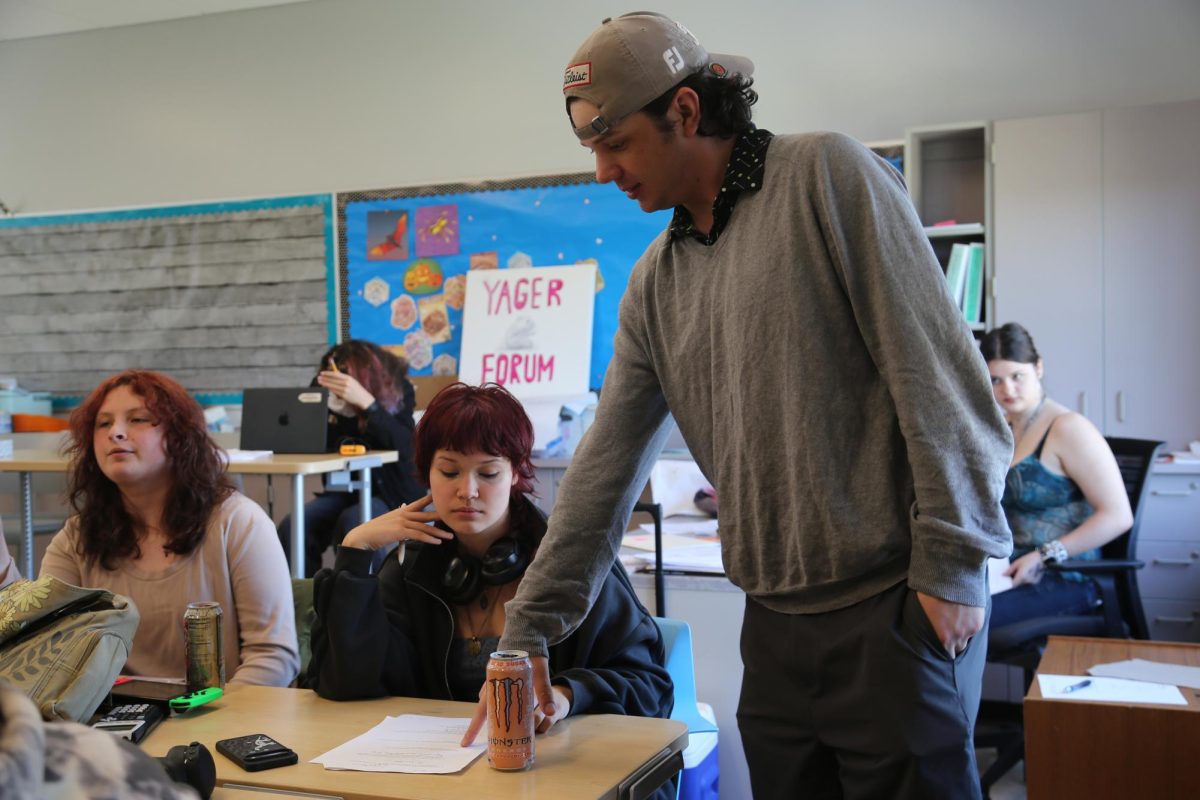
“I want to enjoy teaching, and Community allows me this freedom to teach in abstract ways where a lot of other schools will just focus on, ‘Okay, this is the lesson. Here’s how you teach it,’” Farr said. “I get freedom with, ‘Hey, we’re doing a project, and we’re collaborating, and you guys are doing the learning, and then I’m the one summarizing it.’”
In addition, Farr feels a greater connection between him and his students due to the first-name basis. He feels more comfortable trusting them with responsibilities and the freedoms that come with CHS.
The connection Farr has felt with his students goes both ways, as many of them feel that the kindness and friendliness he brings to teaching makes the class more enjoyable.
“I think he’s so friendly with students, and he has a lot of willingness to actually talk to people and almost be friends with his students,” Azalea VanderElzen, a 10th grader at CHS, said. “Not like how students are friends with each other, but in a way that just really helps people feel comfortable and excited.”
In addition to freedom, several core values are upheld within Farr’s teaching environment. For one thing, mutual respect helps the classroom move better on both ends.
“I see them as students,” Farr said. “They see me as a teacher on the most fundamental level. But that doesn’t mean that I’m the dictator of the classroom. It means that we can have a conversation about ‘Why don’t we do this instead? Why do we have a test and not a project?’ And it opens up more doors.”
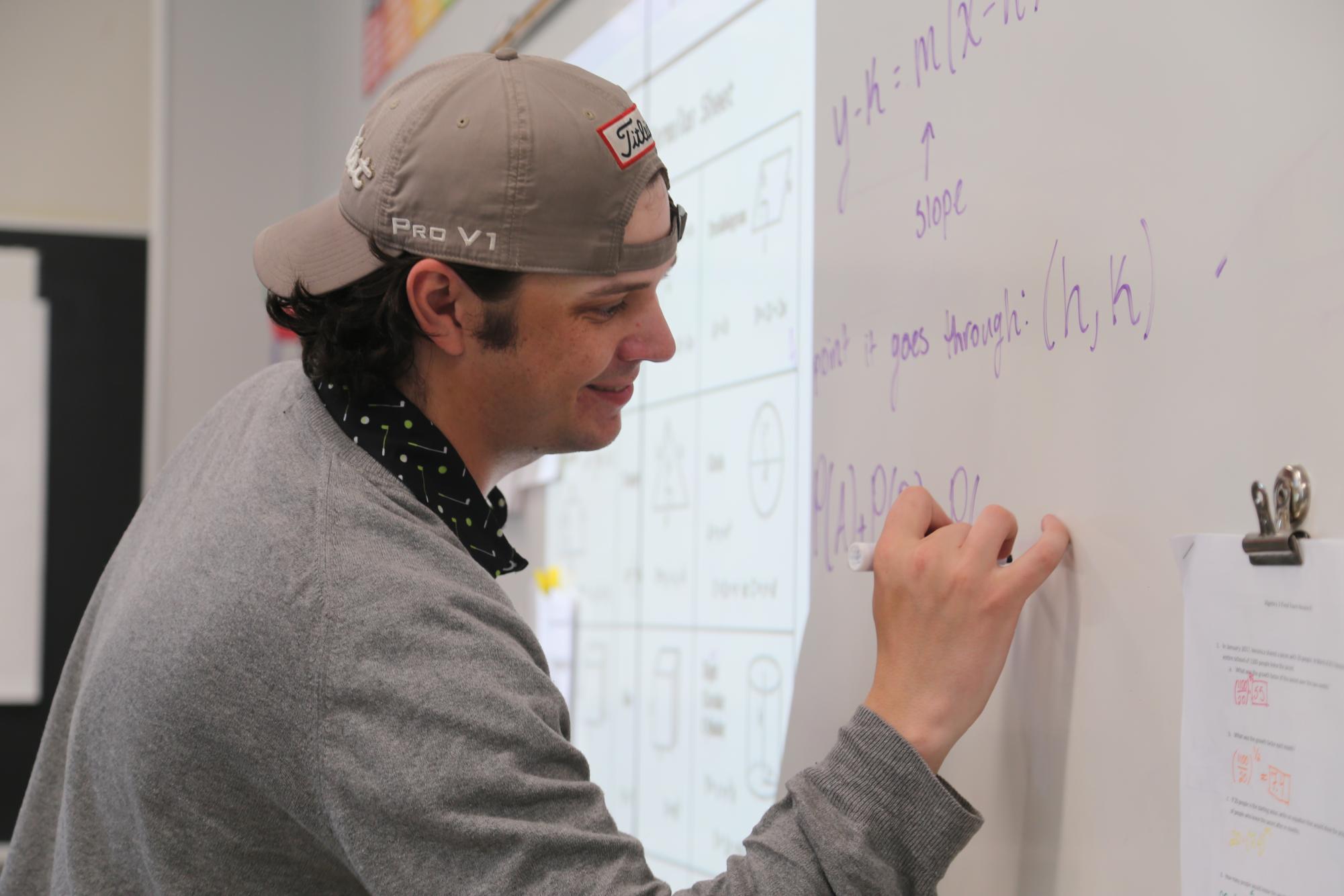
Stemming from respect comes another important part of Farr’s classroom culture: communication. Farr welcomes student feedback, which helps him form a better classroom environment. One benefit of these constructive criticisms has been redoing the practice problems normally assigned at the end of class, which ended up taking many students too much time to properly understand the material.
“I wanted to have that time to go through any questions that people may have in that class,” Farr said. “It was a genuine concern that I heard from a bunch of people. So I changed the lesson plan so that I would get through the lesson quicker and then cover the exit ticket in class.”
Farr also values engagement throughout the classroom. Through several different forms, Farr aims to keep students engaged both within class and outside of it.
“A lot of times, you don’t know what’s going on in students’ lives,” Farr said. “I want my students to be actually engaged, but I also really want to make sure that students are still thriving and still being able to take on what they can at the moment. My priority is for students to feel welcomed and comfortable in a space. And I also want to incorporate that if a student is going through something at a time, you can’t really expect them to focus.”
Farr also includes bits and pieces of his students’ interests in his teaching to keep them engaged.
“I send out a survey at the beginning of the year about what my students are interested in, and then try to incorporate that into the lessons,” Farr said. “So if somebody’s talking about how they really like skateboarding, then when we get to parabolas, I’ll make up a skateboarding question. I try to incorporate their interests and do hands-on and physical activities.”
VanderElzen feels that incorporating students’ interests within teaching helps students improve not only their mathematical skills, but also their ability to learn, focus and understand complex materials.
“I think it helps messages come across a lot easier,” VanderElzen said. “It’ll help people who maybe have trouble with lecture-based learning to actually understand the information that he’s trying to communicate. I’m definitely way better at math and way more excited to go to math class because of him as my teacher.”
From the freedom and open feel of CHS to the student learning environment, Farr truly feels that he has found the right school. Throughout his long journey to becoming a teacher, clicking into the right space was difficult but well deserved.
“I would never work anywhere else,” Farr said. “This is the greatest school to teach at and to learn at in the world. I have friends who teach at other high schools, and I tell them about Community, and they are amazed and jealous, and having that perspective from teaching before to now is like night and day. I’m very grateful to be able to teach here.”