The connection between teammates can be demonstrated in various ways. It’s there when a junior hockey player walks her freshman friend to class. It’s there when a group of girls needs to fundraise to cover their athletic expenses. It’s there on the ice and off the ice.
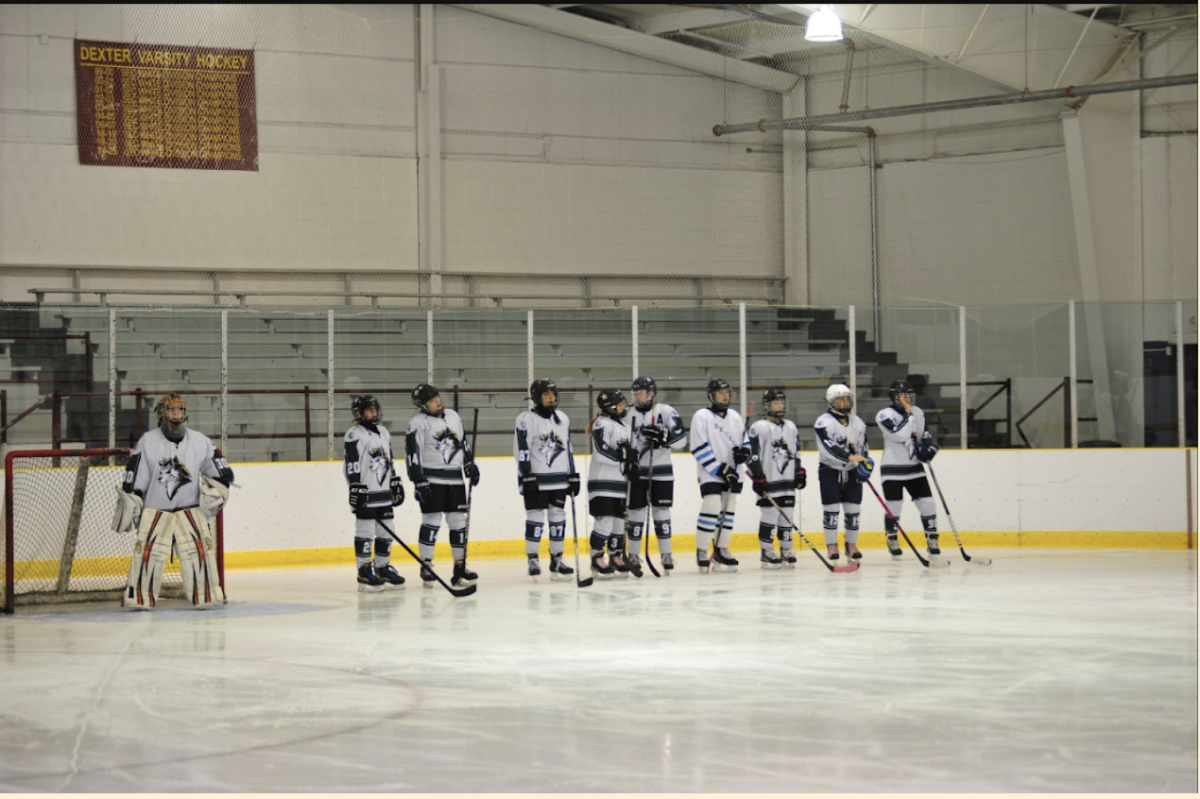
In the Skyron Women’s Hockey team, there are players from three schools: Skyline, Huron and Community. Odessa Pietryga is a freshman at Community who is a part of this team.
“I like the community; we’re all really close together, we’re all really positive, we all really clicked,” Pietryga said. “We’re in varsity, so we can get feedback from older players, and it’s helpful for the team. We can work towards something together.”
This is Pietryga’s first year on the Skyron Women’s Hockey team. They’ve been on both men’s and women’s hockey teams in the past and have experienced a variety of interactions among the players.
“I feel like with the guys’ team there’s more contact, which there isn’t as much with the women’s team,” Pietryga said. “On the ice, it’s also a lot quieter, and there’s less communication.”
Along with a sense of space between the women on the team, Pietryga observed that there are fewer opportunities for women hockey players in the future than for men. They noticed that the Ice Cube has a habit of prioritizing older players over younger ones.
Corinne Sczomak, a junior at Community, shared similar views towards gendered sports. She commented on the fact that the men’s team is provided with all the funding necessary for their games. They are even provided with a bus to travel to other schools, while the women’s funding is entirely raised by the team.
The men’s team is also more well-known, which means that their games get filled up more than the women’s games. Even while facing these challenges, the sense of community among the team remains strong, and participating in these fundraisers and events gives the team players more time together.
“I think it’s really cool that a lot of people come from different schools; Huron, Skyline and Community,” Sczomak said. “You get to learn a lot of different perspectives and meet lots of different people you normally wouldn’t meet. I played with Farmington Hills, and now I play with people who live close by.”
All these experiences and connections are part of what makes this hockey team so unique. Even though they don’t get the same funds and publicity as other teams in Ann Arbor, they manage to form a community of athletes who stick together through thick and thin.