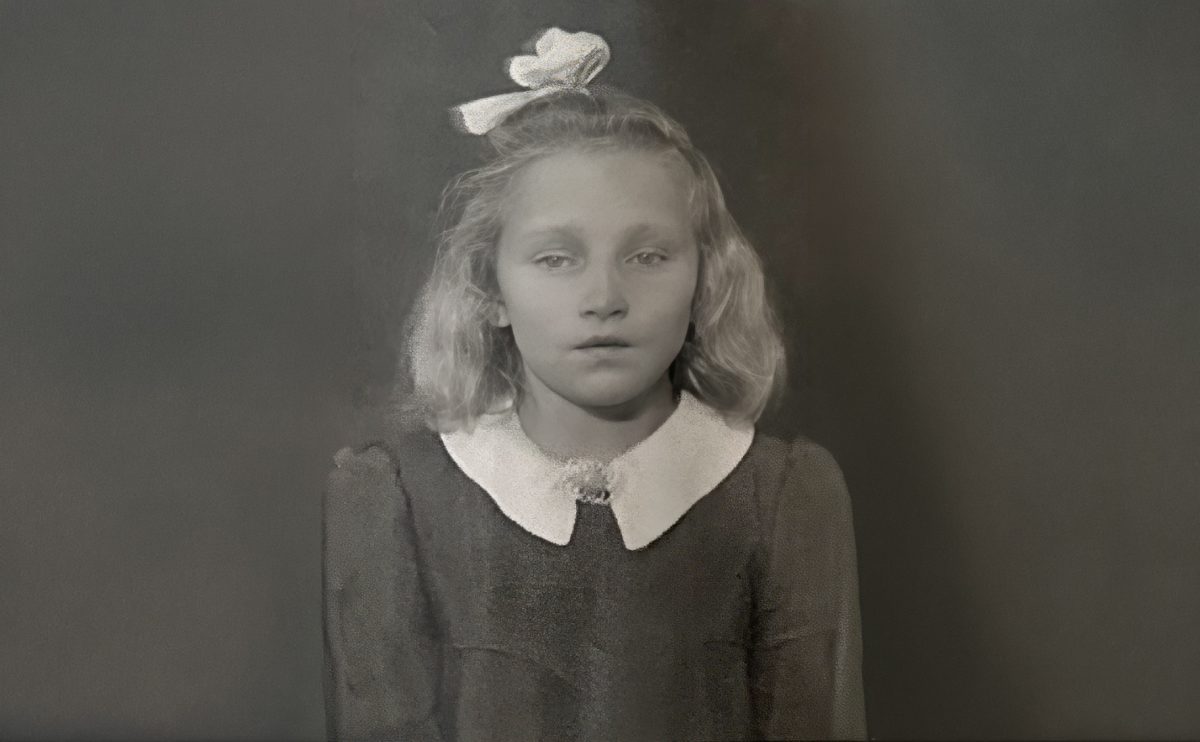
When Laura Raynor was ten years old, she discovered something she didn’t know she had: the power to hold a room completely still.
Her younger sister had invited friends for a sleepover in the basement. The kids, seven years old and full of energy, begged Laura to tell them stories.
“I remember thinking, ‘I don’t know any stories,’” Raynor said. “And then all of a sudden I just started making one up. It wasn’t super scary—just scary enough to hold their attention. And I felt this sense of power. They were absolutely still and engaged, and I remember thinking: ‘This is really fun.’”
That moment, in a basement in Michigan, would shape the rest of her life.
Raynor grew up surrounded by storytelling, long before she realized not every family lived that way. Her grandmother shared her family history through tales told around the kitchen table.
“She told stories all the time,” Raynor said. “I thought every home had that.”
Her father, “a real trickster,” Raynor said, had a different kind of storytelling. His jokes and schemes became family legend. Raynor says both sides shaped her style of storytelling: warmth from her grandmother, humor and wit from her dad.
“When I tell stories about my family, it’s like they’re standing on stage with me,” Raynor said. “It feels magical.”
Even now, decades later, she still feels connected to them throughout each performance.
Raynor spent nearly four decades as a children’s librarian in Ann Arbor, starting in 1976 at just 23 years old. Her job wasn’t simply to read books—it was to bring stories to life. She worked as an outreach librarian, visiting neighborhood centers where kids struggled in school and were expected to listen quietly after a full day of class. She realized that traditional storytime wouldn’t work.
“I thought, ‘Oh no, I’m going to have to shake this up,’” Raynor said. “So we danced and moved. We snapped fingers, tapped legs, growled like bears. The stories came alive.”
It changed her entire approach. Storytime became loud, rhythmic and interactive. Kids who struggled to sit still suddenly had a place where movement was part of the magic. Raynor retired shortly before COVID, but even now she still performs in daycares, schools and festivals across the country.
Storytelling has taken Raynor to California, Utah, Texas and even Canada. She jokes that presenting at the University of Windsor made her “internationally renowned,” even though it was just across the bridge. Some moments stand out more than others. She once told a story at a festival in California and looked out to see a woman who looked uncannily familiar.
“I got chills,” Raynor said. “She looked so much like my family that tears came to my eyes in the middle of the story.”
The two met afterward, hugged without speaking, and realized they were cousins who hadn’t seen each other in years. Another memory she carries is a moment from Utah, where she performed for thousands under massive festival tents. To her younger self, that would’ve sounded impossible.
Raynor’s most iconic storytime companion came from a street performer and artist at the Ann Arbor Art Fair: a hand-carved dancing lumberjack puppet. Soon, it became a staple.
“Every kid in Ann Arbor wanted a lumberjack because of storytime,” Raynor said.
She now owns around 30 lumberjack puppets.
“My grandson is the only child I’ve ever let play with them,” Raynor said. “They’re pretty fragile.”
For many children growing up in Ann Arbor, Raynor’s storytimes are a part of childhood memories. CHS Sophomore, France McGuire remembers going every week with her mom, grandma and younger brother.
“We would always go and sit and listen to the story,” McGuire said. “But my brother would always want to play with all the toys, and I would always be the one to yell at him because he was being really loud during storytime.”
During COVID, McGuire also watched the library’s online storytime videos.
“I remember a couple of the songs they used to make,” McGuire said.
To Raynor, storytelling is not just about the performance she gives, it’s about the connection with the audience.
“We do it all the time without thinking,” Raynor said. “If you share something in the form of a story, people get interested.”
She believes good storytelling comes from knowing yourself—your humor, your memories, your fears. Just a person and their truth, sitting in front of their audience.
“To do it well you really have to know your own style,” Raynor said. “What makes you laugh. What stories you love.”
Decades after that first night in the basement, people still gather around Raynor—kids, parents, teachers, entire festival tents—to listen to that same spark she discovered as a ten-year-old. Laura Raynor built a life out of stories. And she’s still telling them.