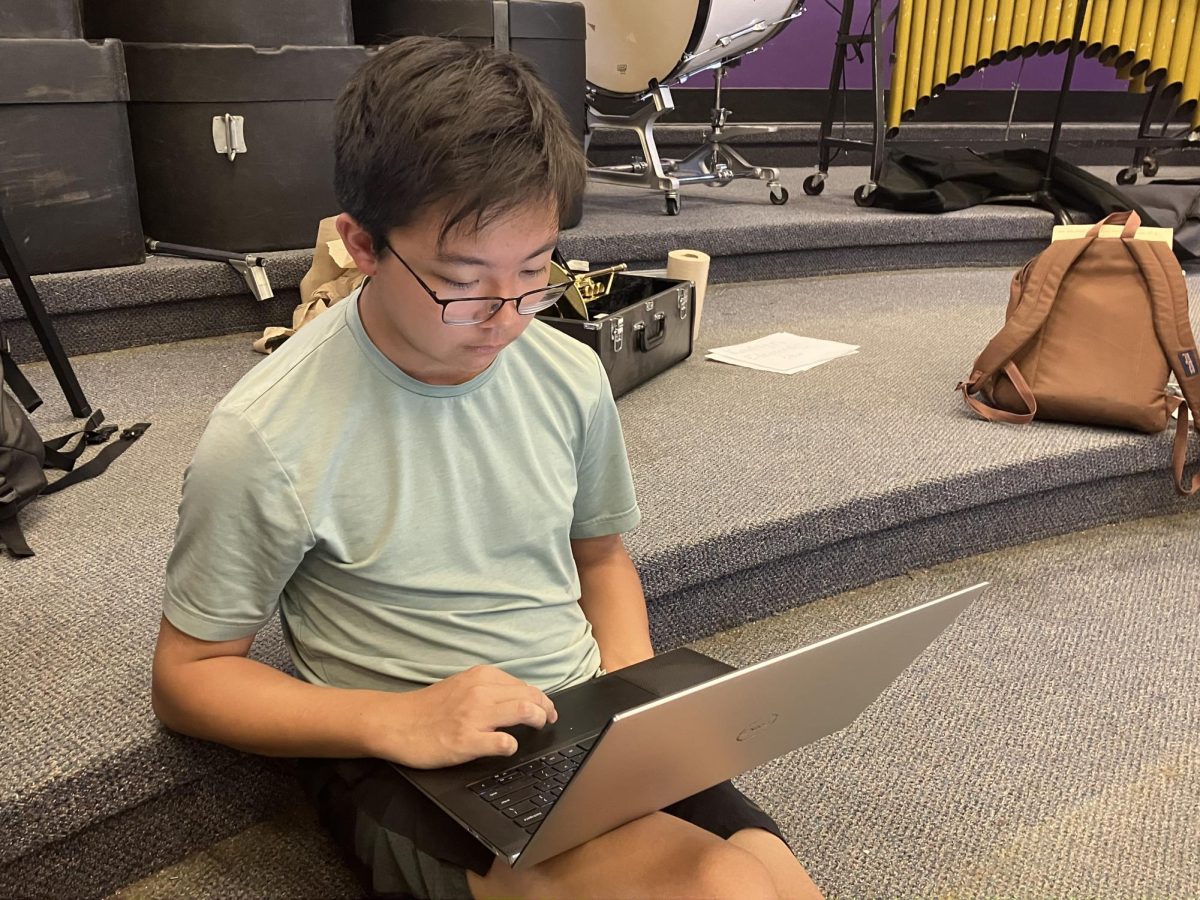
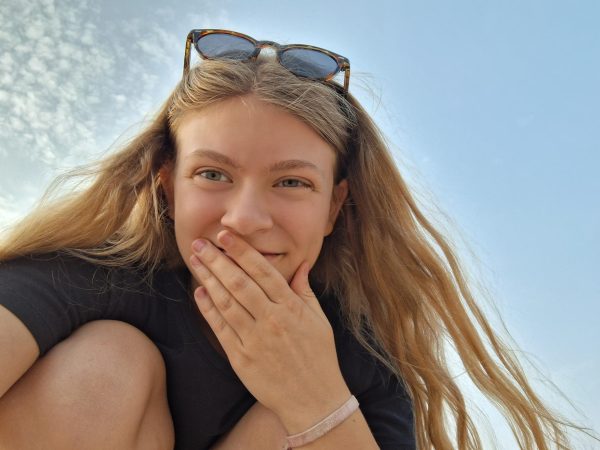
A magical, vibrant night market showcased the colors, music and food of the Spanish culture, making Grahm Hannah feel alive. As a middle school student, Hannah wasn’t initially enamored with Spanish, but this experience on a family vacation to Mexico sparked his love for the language.
“At that point, I definitely decided that I wanted to pay more attention in Spanish class,” Hannah said.
Hannah continued his Spanish studies throughout high school at both Community and Pioneer. When Hannah began his undergraduate studies at Michigan State University, he was set on studying Spanish and eventually decided to double major in psychology. Afterwards, Hannah returned to school for a master’s degree in education to teach Spanish. His interest in education and working with children started when he was younger, as he grew up attending and working at YMCA’s Camp AGQ and running various other summer programs. His knowledge of child development from his psychology degree and experience working with children in the past helped Hannah realize that he wanted to return to school.
He now teaches Spanish at both Skyline High School and Community, which Hannah started last year. Spanish has taken Hannah on adventures beyond just becoming a teacher, though.
Hannah finds that his ability to be a traveler instead of a tourist is one of the most valuable things he’s gained from knowing the Spanish language and culture. Hannah believes that tourists are separate from the places that they visit, having purely transactional relationships with locals. When Hannah visits new places, he strives to integrate himself into the community and make memories for both himself and the people he meets.
Hannah has been able to make connections with people who don’t speak English, and his sense of adventure has been increased tenfold, just by taking the time to learn and understand another language.
“[Spanish is] a key to a big piece of the globe,” Hannah said.
Hannah is grateful for the opportunity to both learn and teach Spanish simultaneously, as he often fact-checks and re-researches topics to ensure that he’s giving students correct information, and he finds that it shapes his own thoughts and beliefs. Hannah has also gained more patience and understanding for his students throughout his years of teaching in Detroit and Oxford, Michigan, before coming to Ann Arbor.
“My ability to socialize patiently and with a purpose has increased,” Hannah said.
As a teacher, Hannah tries to make learning fun. He often has his students play games or participate in hands-on activities to keep them engaged. He has even invented his own tongue twister, which is his favorite Spanish phrase: “Siempre seimbra, y seimbra siempre,” which translates to “always cultivate, and cultivate always.” While the phrase is much more poetic in Spanish, it still calls Hannah to continue growing and moving forward, even as an adult and a teacher.
Senior Ronan Laporte has experienced a similar connection to language, like Hannah. Laporte discovered his love for French in eighth grade through his aunt’s friend, who happened to be a French tutor. Since then, Laporte has started the French Club at Community, taken private French lessons and will continue to keep French as a part of his life after high school.
Laporte’s passion for French has given him a sense of capability and engagement that he had longed for after watching his older brother travel abroad to study Germany. As Laporte saw his brother undertake the process of language learning, he wanted the same
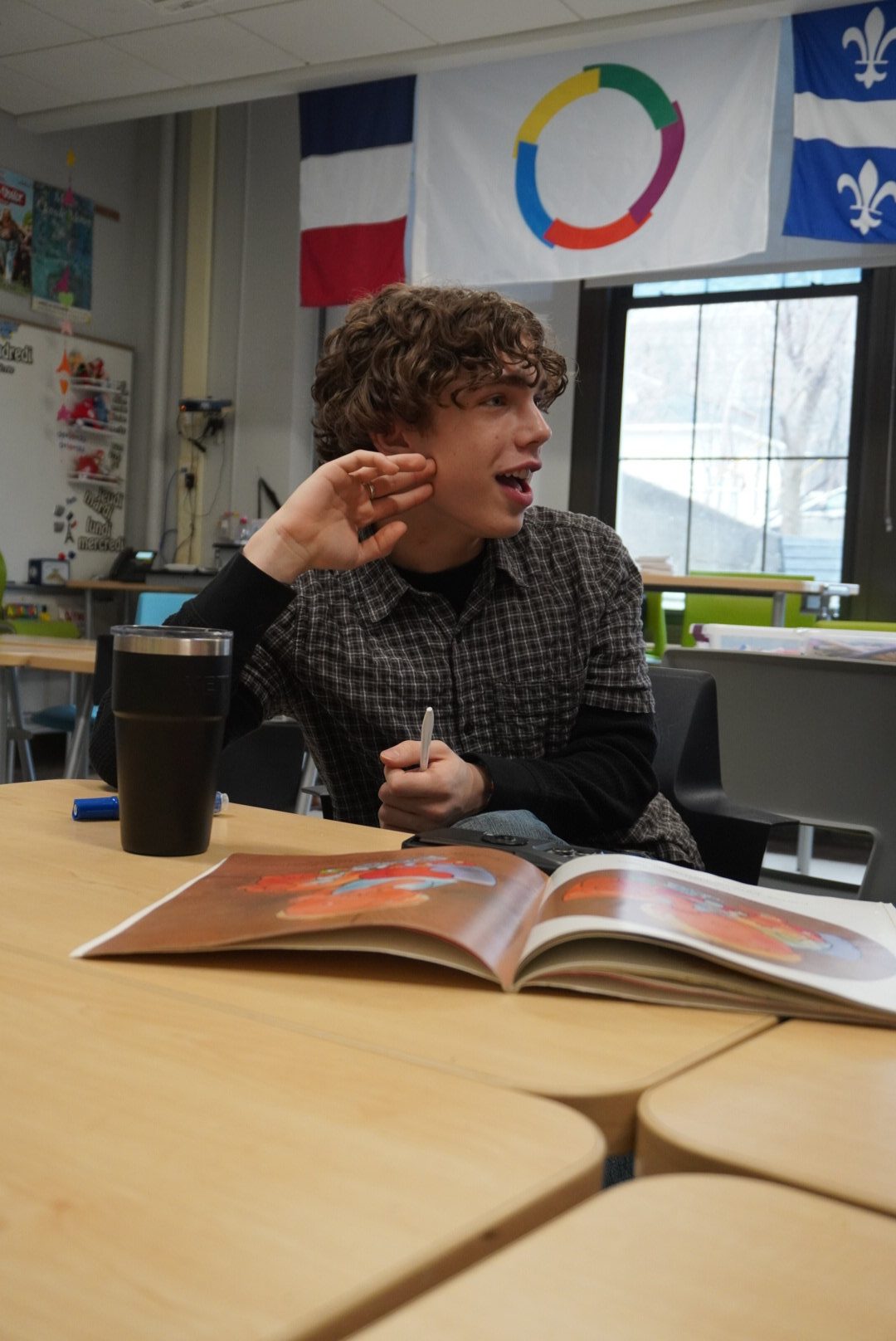
thing for himself. While Laporte was getting his hair cut by his aunt, he mentioned wanting to begin French lessons with a private tutor. As luck would have it, Laporte’s aunt had a friend who did just that.
Through his French lessons, Laporte has reimagined how to learn. Laporte finds that, as a society, we are expected to know what learning is and how it feels. He feels that oftentimes, we expect learning to just happen to us. It took time, but now Laporte has discovered that he truly enjoys the labor of learning.
“With French, I was able to fall in love with the process of learning and engaging in academics, and it spread out from there,” Laporte said.
While Laporte can apply his love for learning in academic classes like science or math, that’s not the only thing he’s gained from learning French. Laporte’s world is much larger simply by having learned another language. He’s found that there are countless French cultural references that he can understand and a multitude of people he can connect with.
Laporte’s speaking skills were put to the test when he recently visited Montreal, Canada, to tour colleges. In the linguistically diverse city, Laporte was able to put his French knowledge into practice. He understands that sounding like a non-native speaker is part of learning a foreign language, and he even received questioning glances from native speakers during the trip.
When Laporte asked for parking and hotel information though, he was able to converse in fluent French. He found the experience rewarding because after making many mistakes in his years of practice, he has gained the skills to have a full and informative conversation.
In the future, Laporte hopes French continues to have an influence on his life, and he knows that he wants to be surrounded by the language often.
“I want French to expand my life, no matter what I do,” Laporte said.
While Community offers two spoken languages, it also offers American Sign Language (ASL), which is communicated through facial expressions and hand gestures, called signs.
Bug Denomme’s interest in ASL began in eighth grade, just like Laporte’s. Denomme’s older brother had taken ASL, so they were interested in studying the signed language in high school instead of Spanish. A conversation with a substitute Spanish teacher that year ultimately solidified their decision.
“He was like, ‘Well, there are so many people in the world who speak Spanish, you should know Spanish,’” Denomme said. “‘And I was like, ‘Yes, that’s true, but there are also people who speak Spanish and English. How many people do you know who can communicate with a deaf person?’”
ASL isn’t as different from a spoken language as many suspect. Facial expressions play a large role in communicating, and there are many other aspects of sign language other than the signs themselves that can make communication even easier.
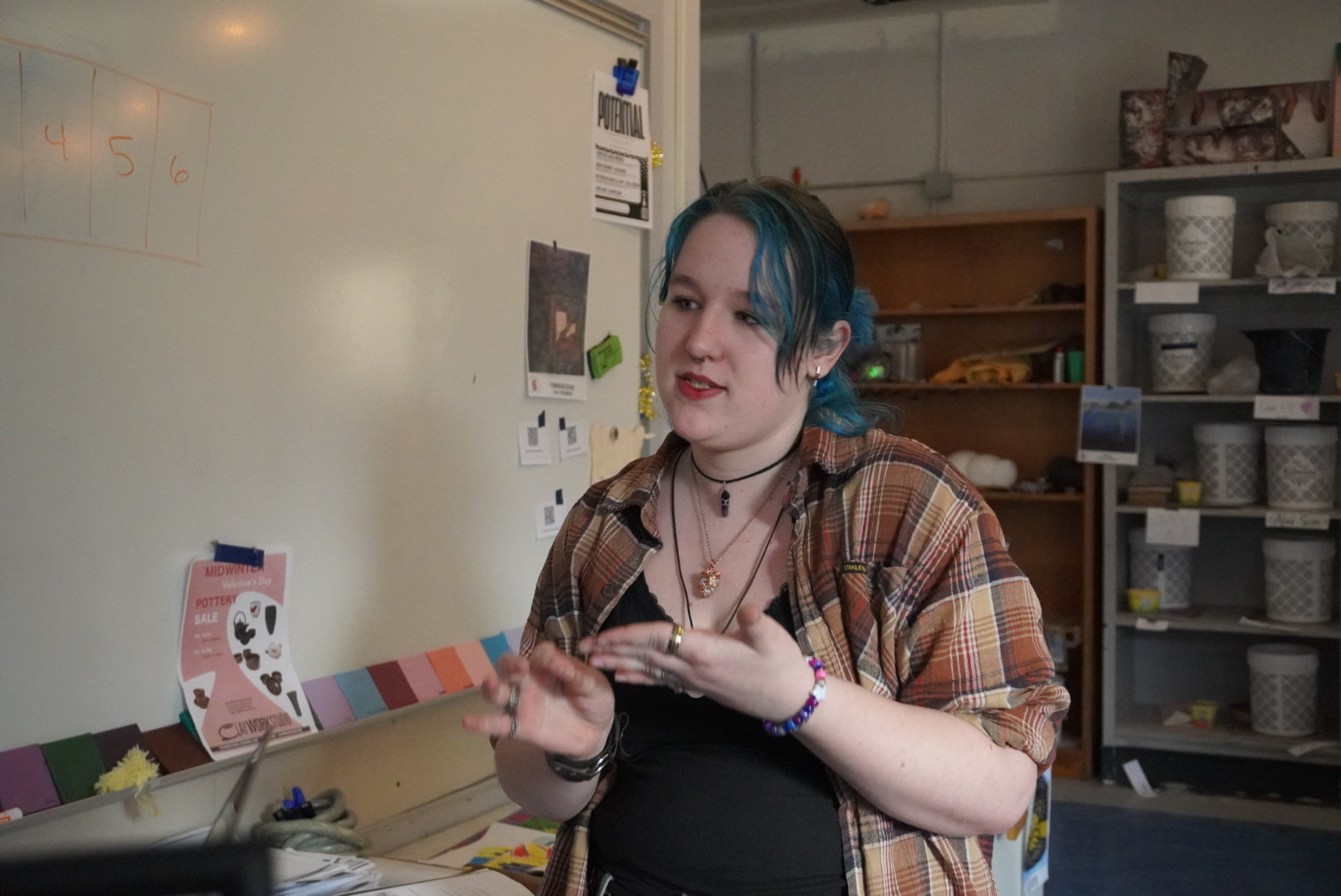
“I like the fluidness of [ASL],” Denomme said. “Just like with spoken language, there are dialects. There’s variety based on who you’re around.”
Learning ASL has stretched beyond just a class for Denomme. While working at the Kerrytown Farmer’s Market, Denomme had the opportunity to communicate in ASL with the deaf owner of the Sun Cycle Bakery stand. Denomme’s mother is a teacher and is constantly interested in learning new things. Their mom has taken up learning ASL from a beginner course taught at Pioneer. Denomme appreciates interactions like these and believes that learning a language is a benefit for both themselves and the larger society.
“Learning any language is amazing because you’re able to connect with people,” Denomme said. “It opens your eyes to a whole community you’ve never seen before.”
Hannah, Laporte and Denomme’s stories show that learning a new language, whether it be spoken or signed, provides an avenue for connection and self-discovery. In every classroom, conversation and signed exchange, students aren’t only receiving a grade, they’re expanding what it means to understand culture and those who speak a different language, making unexpected connections along the way.