The women’s clothing industry lacks a sizing standard. Some stores have small, medium and large; some have zero, two and four; some have one, two and three and some just have one size. These disparities are not uncommon in women’s or feminine clothing.
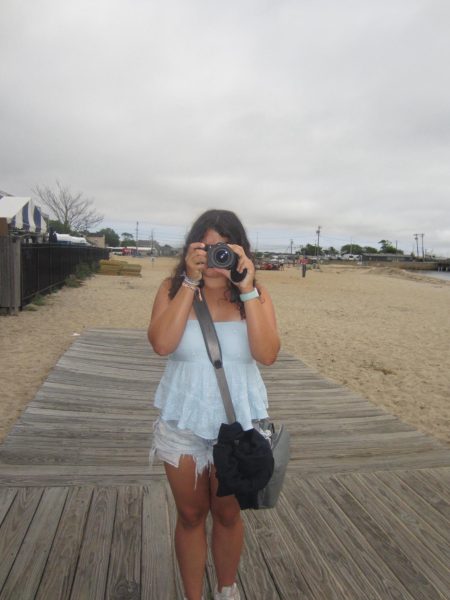
Claire Theiss began exploring her fashion style in seventh grade, and her curiosity has only grown from there, leading her to be a part of the costumes team in Community Ensemble Theater (CET). Theiss loves to thrift her pieces and strays away from buying into fast fashion. She adopts a more vintage style, with the majority of her pieces second-hand. Even while staying away from more modern stores, Theiss has noticed concerns arising with clothing. One of Theiss’s biggest issues with clothes isn’t in the color or design, but in the sizes. Whenever she goes shopping for clothes, specifically jeans, she doesn’t know what to expect. She can range in sizes from brand to brand, style to style or simply color to color.
“When I am shopping for clothing, pant sizing specifically, it changes so much,” Theiss said. “I’ll see something that’s my size usually, but then it’s way smaller or way bigger than usual. It’s just really hard because there’s no set standard like there is with men’s clothing.”
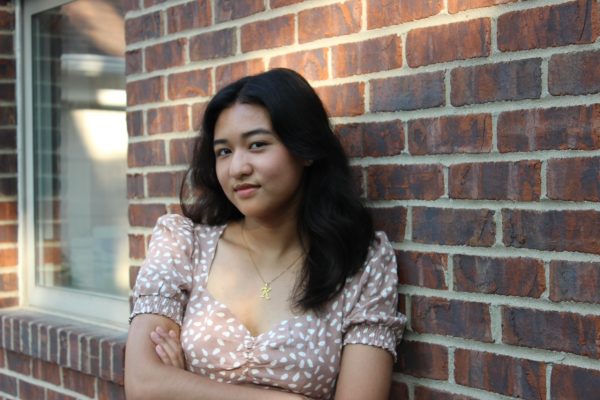
Autumn Klus-Salisbury, a senior at CHS, became more aware of fashion at the start of high school. After COVID-19, clothes changed from comfort to an art form for her. Interested in designing costumes, Klus-Salisbury joined CET’s crew at the end of her sophomore year. In addition to her role as co-crewhead for this team, she is also co-president of the Feminist Club. Klus-Salisbury believes that the fashion industry is very much a feminist issue.
“There are a lot of big fashion brands that are run by men but use the voices and bodies of women for their own profit,” Klus-Salisbury said.
Theiss has felt something similar to this, believing that is it not only a feminist issue, but it is a very feminine subject.
“I think that a lot of times when men get into fashion, it’s seen as gay,” Theiss said. “There’s a lot of toxic masculinity that can force men to stay in boxes. In society, I think it’s hard for a man to express himself and not be seen as feminine.”
Klus-Salisbury has also experienced sizing disparities when purchasing women’s clothing. She’ll buy a medium shirt and a large shirt, and they’ll fit the same.
“It’s very disproportionate,” Klus-Salisbury said. “It can be really demoralizing if you’re trying on something that’s a size you usually wear, but then it doesn’t fit you. Since there’s so much value put on that, on being skinnier and these different sizes, it really can affect you.”
Theiss also feels that vanity sizing has played into the disparities between sizes. Vanity sizing is labeling garments with a smaller size number or creating more sizes, such as 00 and 000, that give consumers the illusion that they’re wearing a smaller size than they actually are. The fact that people can “fit into smaller sizes” with the same waist measurements just leaves Theiss confused. She has found a prominent example of the sizing discrepancy when using a vintage 1950s sewing pattern: Theiss bought it in her size, but it ended up giving measurements for a modern size six.
In a study published in the Journal of Consumer Psychology, named “The flip side of vanity sizing: How consumers respond to and compensate for larger than expected clothing sizes,” researchers found that not only are consumers less likely to buy items that might have a sizing disparity — such as needing a larger size — but, they actually cope with buying non-sizing related appearance-enhancing items, like makeup or accessories or other items that boost areas of their self-esteem. The research also investigated how people perceive sizing labels and found that some brands — like Ted Baker or Chicos — that use alternative labeling, such as 1, 2 and 3 instead of small, medium and large, are regarded as more psychologically attractive to our brains. They also hypothesized that further studies might reveal a correlation between vanity sizing, self-esteem and a poor relationship with food. Klus-Salisbury noticed that while there are a lot of fashion items targeted toward women, they are typically marketed for a conformist population. The industry covets a specific type of woman, most often a young, white, attractive woman who is skinny or unhealthily underweight.
“A lot of these issues are things that we as a culture don’t like talking about, even though they’re ever-present in a lot of people’s lives, especially women’s lives,” Klus-Salisbury said. “[Weight and sizes] are things that affect people’s mental health, but we don’t like to talk about it because it’s just seen as the norm.”
Theiss feels there’s a lot of stigma surrounding discussions about clothing size in general, but she often sees discourse online about it. She believes that people are scared they might say something offensive about sizing and that terms like midsize are so easily thrown around but loosely defined that some tend to avoid the topic entirely. Theiss, along with others she’s noticed, believes that the way the industry as a whole deals with inclusion when it comes to sizing is in desperate need for improvement.
“I think people are frustrated with the way that the fashion industry is trying to seem woke, even if they are extremely fatphobic,” Theiss said. “[The fashion industry is] trying to seem like they are accepting, but they’re not.”
When working on costumes for CET actors, Klus-Salisbury is makes sure to be aware of everyone’s comfort level. She works with mannequins to ensure clothing will fit proportionally on people.
“There’s multiple people who are seeing you try on clothes,” Klus-Salisbury said. “We want to make sure that it’s not going to be an uncomfortable experience for them. We’re all just trying to put on a good show and do our jobs.”
The costume crew tries to accommodate actors and their needs. This is because they understand that getting fitted for a costume can be a stigmatizing process. Klus-Salisbury and Theiss both try to create an environment where an actor can feel comfortable when trying on clothes.
“With me, I know exactly how I feel about it, so I know what I need,” Klus-Salisbury said. “I’m able to be specific with what I do. When it’s with other people, I have no idea what their experience with it is, so I’m much more careful, being like, ‘I’m gonna talk with them if there are problems.’”
Klus-Salisbury advocates for brands to have more consistent sizing based on the average person’s size and weight instead of the “ideal” body type.
“When you’re buying clothes, it’s very single-based, like, ‘This is the size,’” Klus-Salisbury said. “When you’re modifying or making things, you’re not necessarily going to think about the size. You’re going to think about the person, whoever you’re making it for. You’ll think about their needs, not what you think is a small or a medium.”