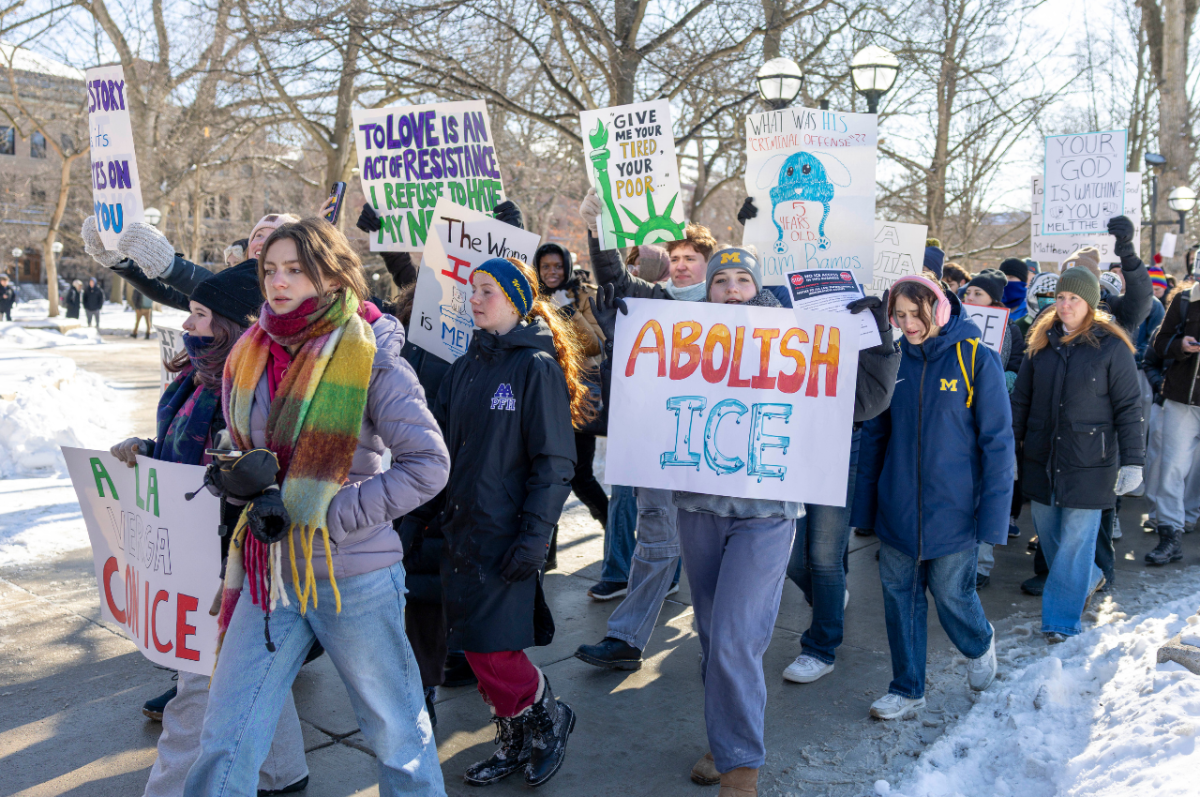
“We’re living in such unprecedented times.” It’s a refrain I hear all the time. Actually the truth is that none of what is happening today is something that hasn’t happened before. It sucks, but it isn’t new.
What is new, though, is the fact that we’re finding out exactly how bad the world is nonstop at every second of every day, thanks to the invention of the often very distressing internet. In the past when people were living through corrupt governments, unfair or illegal detainments and citizens being killed on the street by the military, they caught up on it in their morning newspaper, then went about their daily routine. As upset as they were about the news, more of their day was filled with constants. Their coffee tasted the same. The tree or building they spotted on their way to work was still there each day. They went to the same place for work, worked mainly with the same people day in and day out and did mostly the same work each day. Some people may have protested during the day. But when they came home in the evening, they passed that same building or tree.
Now that our news pages refresh every few seconds, more of our days are filled with what’s “new.” We scroll through videos of people being killed on social media, which are updated with more angles and slo-mo; we get notifications about another species going extinct from news sources, followed up by pings every time someone posts a comment. News pages update all day long, day after day, through disaster after disaster. All the while we forget the tree outside our window.
“You get so much information and news so instantly that it feels like an onslaught,” said Julie Ault, renowned artist and 2018 MacArthur “Genius” Fellow. “In some ways, that onslaught creates a lot of problems for us collectively and individually, because it can produce despair and feel like, ‘Oh, my God, this is bigger than me.’”
Ault, who currently has an exhibit, “American Sampler,” at University of Michigan Museum of Art (UMMA), uses history to tell a story in her curations of intertwined movements and the visuals and arts that came with them. “American Sampler” features artifacts from the Joseph A. Labadie Collection of the University of Michigan Library. According to its website, the Labadie Collection curates “materials on anarchism, anti-colonialist movements, antiwar and pacifist movements, atheism and free thought, civil liberties and civil rights, ecology, labor and workers’ rights, feminism, LGBTQ movements, prisons and prisoners, the New Left, the Spanish Civil War, and youth and student protest.” It’s a treasure trove of material that attests to long-standing traditions of radical political activism in U.S. history.
At the celebratory opening of Ault’s exhibit, Julie Herrada, the curator of the Labadie collection, shared a letter from 1933 that was written in the midst of the Great Depression. The nearly 100-year-old letter declared: “The Labadie Collection of Anarchist literature in the library of the University of Michigan, Ann Arbor, Mich., will some day be a regular gold mine of information for future historians. It will show that this is the “Age of Insanity,” and will have no trouble in proving it.”
“All the time, pretty much every day, I find things that relate to the present or give me a sense of the age of insanity for every era,” Herrada said. “Every era, pretty much, there is one. So that’s why that particular quote from basically a newspaper letter-to-the-editor, really stands out to me. And it was saved. When I saw that, I thought, wow, this could be any day of any year.”
All the fast changes now make it feel like the insanity is getting worse and worse. But in reality, even that feeling is not new. Although it may feel like we’re spinning out into chaos, movements truly take time. Movements take a few steps forward and then, inevitably, a step back.
There’s a trend on social media right now about going back to the “90s” when a lot of today’s teenagers’ parents were teenagers. In videos, people talk about how the 1990s were such a great time to grow up and how they wish they were so lucky. But despite the nostalgia for the non-screen, outdoorsy 1990s childhoods, the decade was not without hardships. The first major school shooting, at Columbine High School, happened in 1999. During the 1992 Los Angeles riots, scores of people were killed (including by police officers) and thousands more were injured; rioters were protesting the acquittal of the four white police officers who beat Rodney King, a black man. It was the first example of police brutality that was caught on camera for the whole world to see.
Recently, I visited my grandma and told her about protests that I had participated in this year, and about the thousands of people who I marched with through the streets in my hometown of Ann Arbor. She told me that she was so glad to hear that I was involved. When she was my age in the 1960s, she shared that she had taken her turn too. Different issues, but similar pictures. The segregation and redlining of my grandmother’s time may feel like history to us, but to her it was all she knew. Every movement we are in feels like all there is right now. Ault noticed that theme throughout the pieces that she picked up at the Labadie collection.
“I was struck by how most of the material I came across did not have a year,” Ault said. “If it had a date on it, it would just be the month and the day, but no year, because the activists and the people that were working for the change they sought were working in the immediate sense, for the immediate change. They weren’t thinking that they’re making history.”
In fact, the timelines from big movements, like the civil rights movement in the 1960s, cover a lot of time. Stop reading for a second and answer this question: how much time passed between Rosa Parks and “I Have a Dream”? There were eight years between the famous Montgomery Bus Boycott, started by Rosa Parks’s arrest in 1955, and Martin Luther King’s I have a Dream speech, given in 1963. For many high schoolers, that eight-year stretch of time is half of our lifetimes. The people boycotting and marching for miles and getting beat up never knew whether what they were doing was going to pay off. It was almost a decade between Parks’ arrest and the passage of the Civil Rights and Voting Rights Acts by the U.S. government. Consider that span of time: that means that if we boycott and protest now, nothing would actually be passed as a result until the year 2035 — which feels so far from now. The collapsing of all that time is reinforced when we’re taught that whole era of history during one class in school.
We need to remember that patience and diligence are required for movements to matter. We can’t give up as soon as it seems like nothing is immediately changing, or if it seems that there is no “new” news.
“For a while, I found it [the artifacts] more in the disturbing and depressing arena than anything else, but I got out of that because I couldn’t believe the courage that some of the people working in the Black Freedom Movement, and also the anti Vietnam War, or anti American war in Vietnam movements, it just is amazing,” Ault said. “And I see these people are beacons. It’s like seeing, you know, a lighthouse in the distance. And so I find it very empowering to try and understand ground situations, real ground situations at a human level.”
When we think about the issues that are surfacing today, many feel and sound similar to previous issues, like military personnel arresting people in the streets, increasing discrimination, fighting for women’s reproductive health and freedoms. And there are also new issues: climate change has become bigger and social media has too. But whether it’s a new issue or an old issue, struggles and protests and fights for what’s right remain ingrained in our nation’s past.
“I hope it [the history] gives people some perspective and some grounding like they can learn about people that struggle before them, you know, just so that you’re not flailing out there by yourself,” Herrada said. “You’re not alone.”
We are, quite simply, not in an unprecedented time in history. Every decade has had its struggles, every century has had its bad presidents. My point is not to minimize our moment. In fact, once we admit that our moment is not unprecedented, we can learn from the people who have fought these struggles before us.
There have always been lots of things changing very fast in every decade of history. Now that we’re inundated with seeing things change constantly every day, we need to remember the decade between the bus boycott and the civil rights legislation. We need to remember that even the most committed activists often drank their coffee in the morning and passed the same buildings and trees on their way to work.
We also can imagine that one morning when they brought in the newspaper, they saw the headlines that they had been waiting for. After years of fighting against decades of injustice, it took one day for things to look different. Throughout our protests and fights in the current moment, we can hold onto that spark of hope that there will be a day down the road when everything changes and our work pays off.
“Hope is not a policy or anything like that, but hopelessness and giving into powerlessness is just self defeating,” Ault said. “It’s never, never moved us collectively towards change for the better for everyone.”
Instead it’s the precedent of collective movement, the courage of people who came before us that move us towards change. Amid all of the horrors of the current day, we need to remember to look for that constant tree or building we see on our way to school and know that, while we need to keep fighting every day, precedent suggests we will prevail.