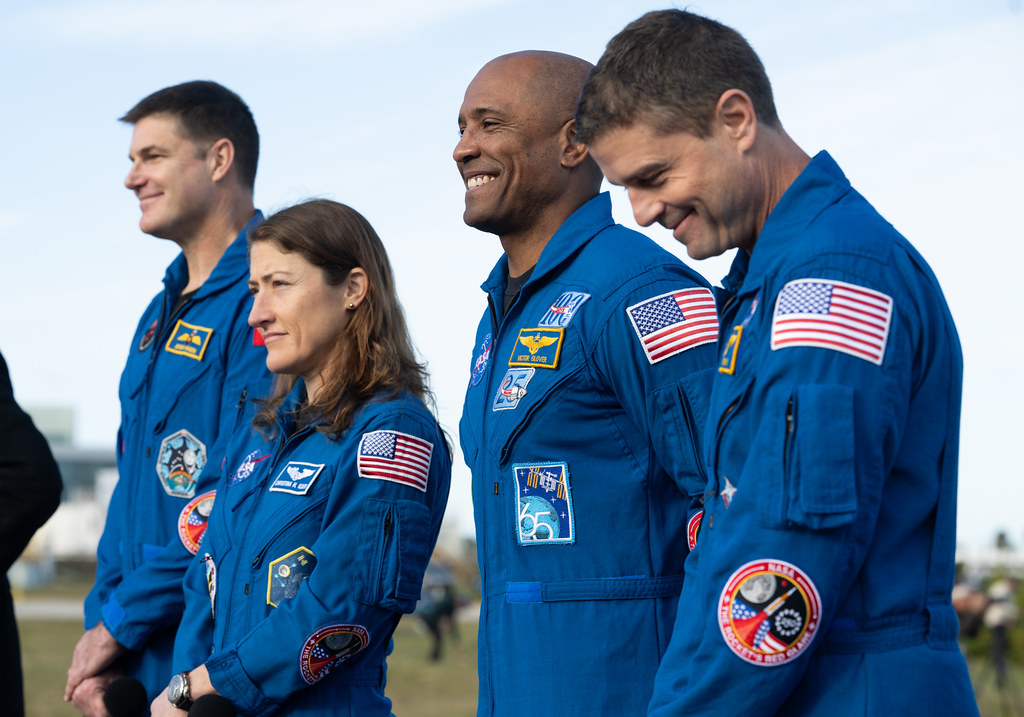
For the first time in over 50 years, NASA is sending humans to the moon. The first step of the mission was marked when the Artemis spacecraft launched on April 6, 2026.
CHS sophomore Clara Woodside was on a spring break trip to Florida and watched the rocket launch from a nature preserve with her family. Although they were on the West Coast, and far away from the launch pad located on the East Coast, they were able to see the trails of the rocket as it left the atmosphere.
“When it launched, everyone cheered, which was just so cool to be part of a crowd that’s excited about the same thing,” Woodside said. “It’s something people don’t see in person unless they’re really lucky and I feel like it’s more historical to see it yourself than just hear about it”
The Artemis II marks many new leaps for NASA and their work, including being the first rocket ship to try to reach the moon ever since 1972 and the Apollo 17.
On April 6, a historic moment was witnessed as a livestream showed the four astronauts flying the farthest distance away from Earth that humans have ever been: a record-breaking 252,760 miles away from the Earth.
It isn’t just the feats of distance from the Artemis II crew. Christina Koch represents the first woman to go around the moon and Victor Glover, similarly, represents the first man of color to make a full trip around the moon. Koch and Glover are joined by Jeremy Hansen and Reid Wisemen in their journey.
“Humanity has once again shown what we are capable of, and it’s your hopes for the future that carry us now on this journey around the moon,” Hansen said, after the ship made it out of Earth’s orbit.
For Wisemen, one of the most spectacular moments of the flight was when they could see the sun setting behind Earth. This was a special moment for all of the crew, marking a point of success in the mission.
“You could see the entire globe, from pole to pole,” Wiseman said. “You could see Africa, Europe, and if you looked really close, you could see the northern lights. It was the most spectacular moment, and it paused all four of us in our tracks.”
Another extraordinary moment was the translunar injection burn. This is when the ship left the orbit of Earth. The momentum was then used to glide towards the moon where it would make a U-turn in order to return back to Earth, completing the 10-day mission.
Back on Earth, Woodside found the experience to be exciting and new and hopes she can be there to witness some of NASA’s future missions. While the successful launch of the Artemis II crew is a feat in itself, it is only the beginning for the team at NASA.