

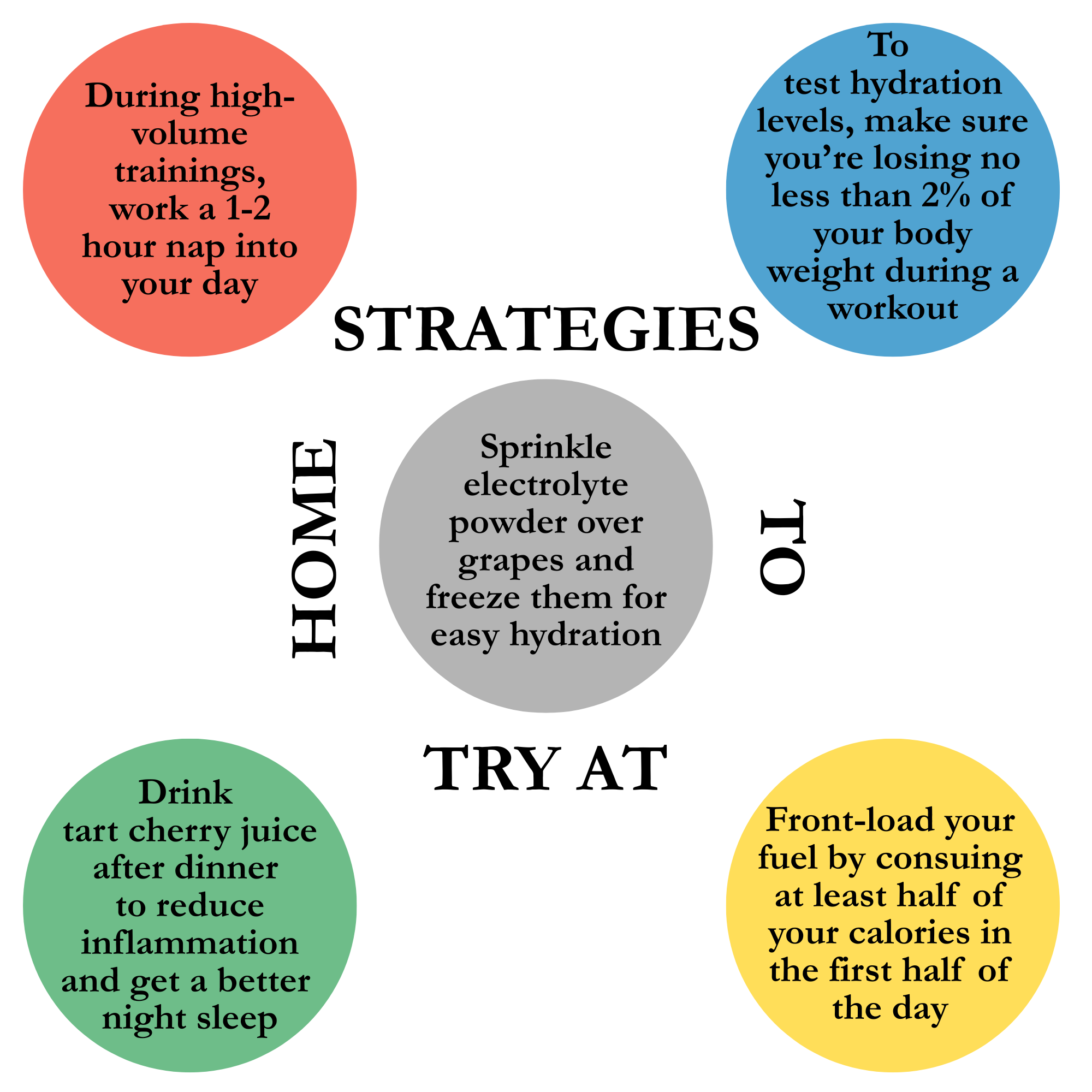
Caroline Mandel, Director of Performance Nutrition in the Athletic Department at the University of Michigan, sprinkles electrolyte powder onto grapes and then sticks them in the freezer. Members of the University of Michigan rowing team will eat them in the morning on the first day of their Big Ten Championships. It’s one of her tricks to help the athletes hydrate around their big competitions.
“Grapes are so hydrating, but then we’re also adding some extra electrolytes to help with their hydration,” Mandel said. “And I swear they taste like Sour Patch Kids.”
Mandel spends a lot of time preparing food for athletes because of the importance that fueling has on their performance and fitness. When she talks to athletes, she teaches them why nutrition is so important. She outlines five different reasons.
One, it helps athletes adapt to their training. Two, nutrition helps athletes recover from their training. Three, it helps to prevent fatigue. Four, nutrition keeps people healthy in the present moment, but also as lifestyle choices in the future. And five is the one that she never wants us to forget: food is there for joy and to make people happy.
Hillary Beall, professional soccer player for the San Diego Wave, also notes that 50% of her fitness comes from fueling, while the next 40% comes from sleep.
“Make sure you get your macronutrients, carbs, vegetables and protein,” Beall said. “And then also make sure you have good sleep hygiene and consistency in bedtime and wake time.”
In fact, Lauren Schmetterling, a three-time world champion and Olympic gold medalist rower on the U.S. national team, notes that when being an athlete full-time, every part of the day is focused on fitness, especially sleeping and fueling.

“When I was training, my entire day centered around fueling so that I could have productive training sessions,” Schmetterling said. “And also getting enough sleep so I could recover and come back for the next workout.”
Schmetterling also mentioned hydration as a key element to fitness, even noting that the national team did hydration tests before practice every morning. If they were not fully hydrated, their dietitian would send them away with water and a sports drink, and they would have to come back later in the day to complete the workout when they were properly hydrated.
But not every athlete, especially in high school, has access to a dietitian like Mandel or the other trainers that Beall and Schmetterling work with. So what can high school athletes do with their sleep, hydration and fueling, on their own, to keep up their physical fitness?
A place to start is sleep, as that is the first and last thing people do every day. It is important for an athlete to stay on track with how much sleep they are getting.
“When you don’t sleep, you drop off, energy-wise,” Beall said. “What might be one bad night of sleep, you have to catch up for the next day, so it’ll bother you for two days. So make sure that you don’t get behind.”
Schmetterling also paid close attention to how much sleep she was getting, always aiming for eight to eight and a half hours a night, with an additional one to two hours of naps in between practices and meals.
Sleep is something that many high school students struggle with. In fact, the CDC reports that 77% of high school students get insufficient sleep, or less than eight hours. And eight hours is just the minimum amount for most teenagers. Given how important sleep is for fitness and how little sleep most high school students get, it is an immediate way many high schoolers can improve their fitness.
Next is hydration, which has many benefits for fitness. It’s the medium to transfer nutrients, oxygen and waste products in blood and through cells, and water also makes up 75% of our muscle mass.
In addition to providing frozen grapes, lots of water and many liquid forms of electrolytes for the Michigan Rowing team, Mandel often tests her athletes for hydration through urine samples to help them know if they are drinking enough.

“It’s for education,” Mandel said. “It’s to help them be aware. A lot of athletes think they’re a lot more hydrated than they really are, so actually measuring it helps them to gauge it a little bit better, and then they can make those adjustments.”
A urine sample isn’t the only way to test how hydrated an athlete is, however. There are other strategies that high school students can use at home. If an athlete is properly hydrated, they should only lose up to 2% of their body weight during a workout. So Mandel sometimes weighs athletes before and after their workouts as another way to make sure they are drinking enough before and during practices.
Before her first U.S. National Team morning workout of the day, Schmetterling would be sure to drink at least 16 ounces of water. Teenagers should drink 11-16 ounces of water for every 20 minutes of physical activity they do, making it especially important for all high school athletes to carry water or a sports drink with them.
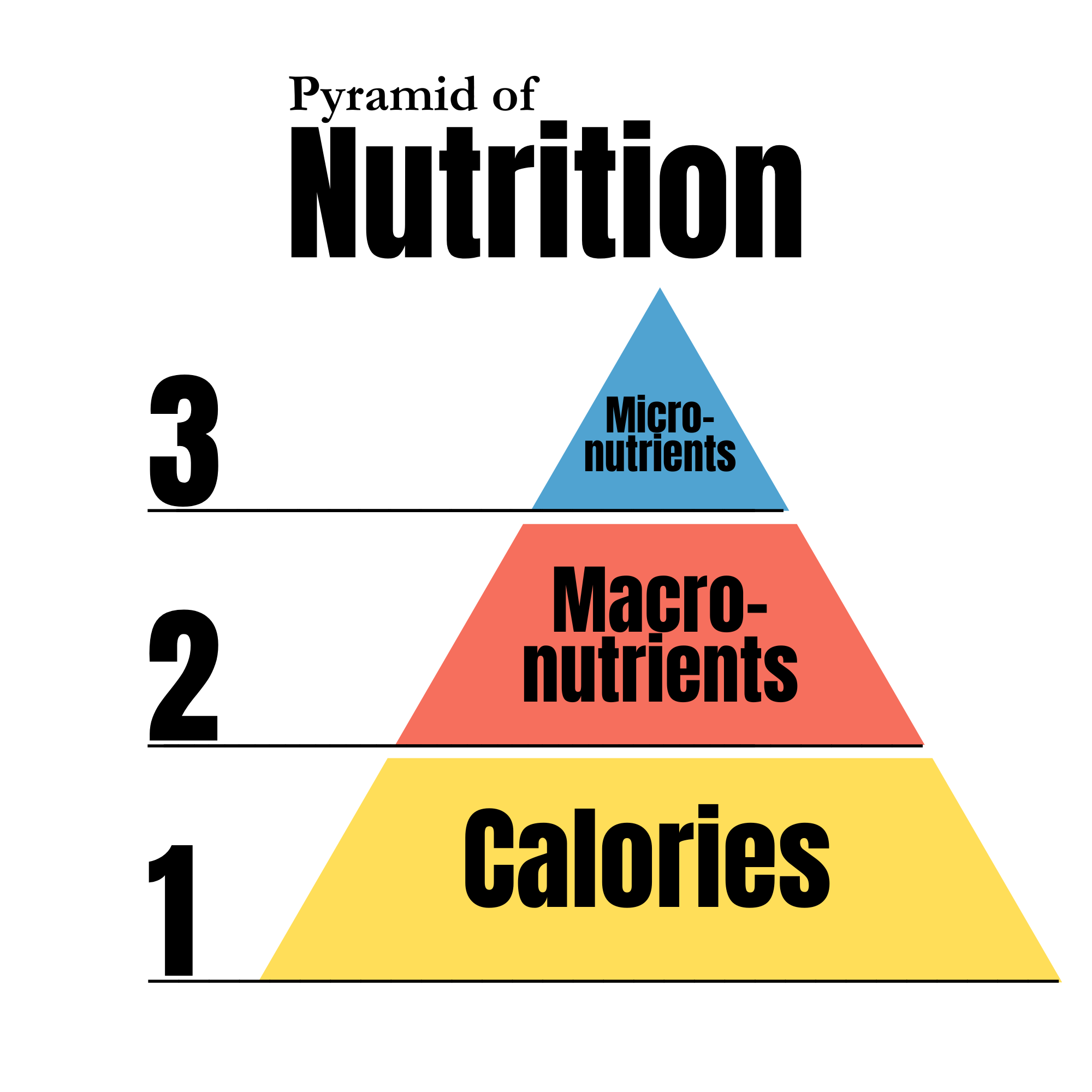
Most of fitness, however, comes from the fueling, or, typically, food. In nutrition, Mandel works with athletes’ diets: what to eat, when to eat, and how to adapt that to their own needs. She thinks of it like a pyramid, the base of which is calories.
The amount of calories an athlete needs depends on the amount of physical training that they are doing. Schmetterling ate about 4000-5000 calories a day when she was training, but she was rowing at a high intensity for 4-6 hours every day.
It is important to make sure, though, that athletes are eating plenty so they stay in equilibrium with their training. Not eating enough calories means that the body doesn’t have enough energy to work as hard during exercise, meaning an athlete cannot stay as fit.
“If the day and days leading up to a competition you’re not fueling well, you’re going to really, really feel that impact during your performance,” Schmetterling said. “It feels like your muscles are empty PVC pipes, like there’s nothing inside of them, when you’re not fueling correctly.”
Mandel also encourages students not to skip meals and to make sure they plan ahead so that they eat in relatively even increments throughout the day. She tells athletes to front-load their fuel and try to eat at least half of their nutrition in the first half of the day.
“The more I work with athletes, the more I realize focusing on meal timing and frequency is so very, very, very important,” Mandel said. “I see athletes skipping meals, missing meals, not eating enough during the day, and it’s really hurting their academic performance. I think it’s hurting their body composition, their appetite management, their focus, their mood stability and definitely their performance.”
Beall compares fueling her body to fueling a car. It’s important to keep the tank full of good-quality fuel so you don’t run out of gas in the middle of something.
“You might think that it might not be a big deal, but if you get behind on nutrition one day, you can’t make up for that,” Beall said.“You can preload your fuel, so make sure you stay on top of that, because it’s really a big thing in performance and fueling your body is the best way to get the best results.”
Mandel often encourages athletes to drink chocolate milk after a workout or competition because it is a good way to get quick and tasty protein and carbohydrates. However, she’s noticed that if an athlete isn’t properly fueled or hydrated before a workout, the chocolate milk won’t have the same positive effect after.
If, in high school, eating in the morning and consistently throughout the day poses the same challenges as it does for Mandel’s athletes in college, athletes need to plan ahead.
“It’s easier said than done, because people are busy, and eating meals spread evenly throughout the day takes planning,” Mandel said. “You might have to pack your lunch if you don’t buy school lunch, or you might have to carry a lunch bag. It might make you feel like a geek.”
Those extra steps are worth it, according to Beall, even for a high school athlete. She remembers being on top of nutrition and fueling when she was in high school, and emphasizes the phrase “your body is a temple.”
The second level of the pyramid is macronutrients, which include proteins, carbohydrates and fats. The amounts that athletes eat of these vary throughout the season and off-season, based on what types of training they’re doing and their sport’s endurance versus sprint level.
In addition, macronutrients can vary when athletes are recovering back from an injury or working on building up a particular part of their fitness.
“I had an injury at the beginning of the year,” Beall said. “I had to up my protein intake to heal what I had injured but also make sure that I was maintaining my muscle during the whole time.”
Macronutrient levels also depend on the position that the athlete plays. Since Beall is a goalie, she has to be more explosive on the field than her teammates who don’t have to jump for balls in the same way but may have to run up to a 10k around the field during a game. To be more explosive, Beall needs to have more muscle mass, so she may eat more protein than her teammates.
The top of the pyramid is micro- nutrients, like vitamins. For example, Mandel tests teams, especially in women’s sports, for iron. If athletes’ iron levels are low, she will add iron- rich foods into their diet so they get the necessary micronutrient.
Knowing these levels of the pyramid and being able to use this knowledge in fueling and nutrition is a good way for a high school athlete to improve their performance. Mandel encourages athletes to consider the science behind fueling strategies. For example, Mandel recommends beet powder for endurance athletes because it helps to expand blood flow and carry more nutrients through the bloodstream. Mandel only offers it before races, though, when recovery is key, as it also reduces inflammation. Reducing inflammation is great before a race, but in training, inflammation is what builds up the muscles, allows the body to adapt, and creates more fitness. Timing matters.
The same is true for tart cherry juice, which is also best used before races or competitions. Just like beet powder, tart cherry juice reduces inflammation. It also has natural melatonin in it, allowing athletes to get better sleep. The tart cherry juice is best made with Montmorency cherries, and a big bonus for local Michigan athletes is that it is a local product, grown right here in Michigan.
“It [the Montmorency cherry] has been known to help reduce inflammation, but it’s also a food source of melatonin,” Mandel said. “A lot of athletes say that when they take it at night, after dinner, it helps them fall asleep, and they get really good sleep. And we know that sleep is number one for recovery, so I love drawing that connection with athletes.”
The tart cherry juice, with its hydration, fueling and sleep components, is one strategy that shows how connected every part of fitness is. All three elements are important to maintain physical fitness. High schoolers can look at their own hydration levels, meal planning, and sleep schedules to figure out what works best for them to maintain their fitness — maybe even drinking beet powder mixed into water to recover from a race or sprinkling a little electrolyte powder over their grapes to hydrate before stepping onto the field or race course.