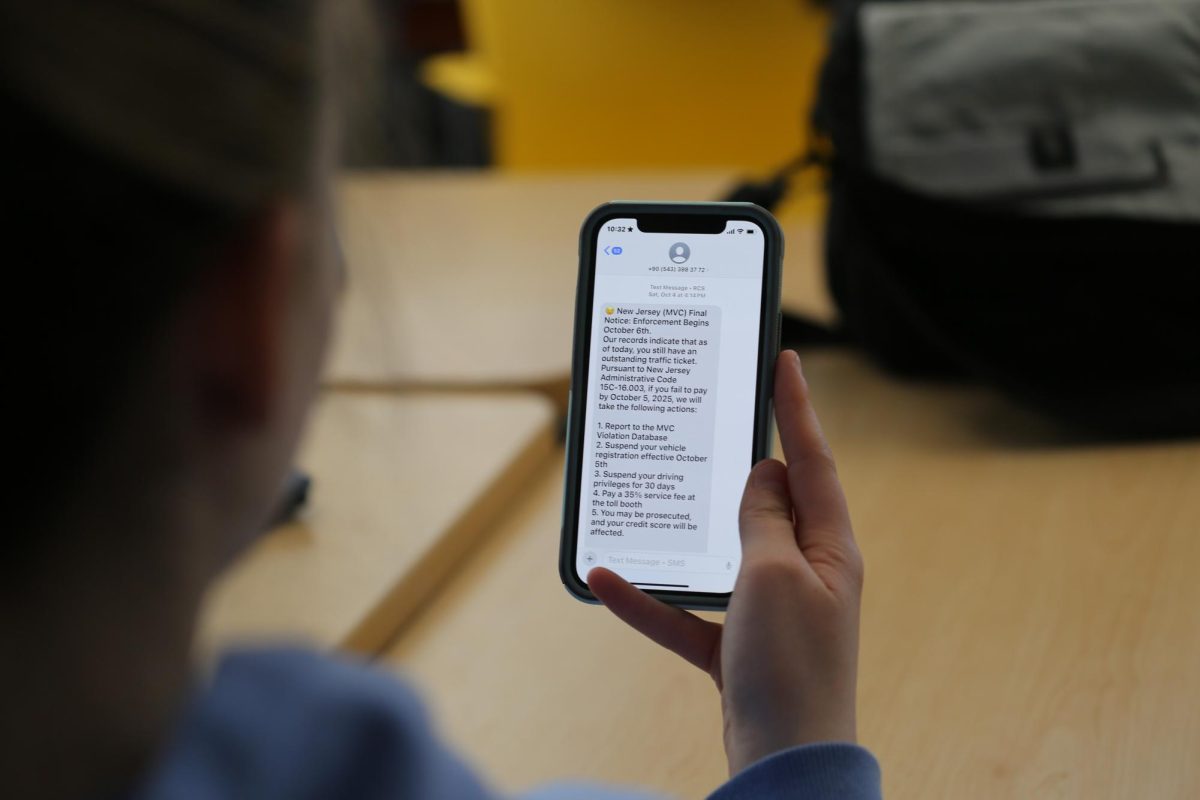
Once in a while, I pick up my phone to find a new text or call from an unknown number. While I have never personally gotten scammed online, I know a handful of people who have and faced the consequences. I remember the fear I felt after the realization I had clicked on a malicious link. The hesitation to open my laptop afterwards, and the shame leading up to the talk I had with my parents about the error I had made.
The truth is that every day, unwanted threats have pathways to enter into our devices. Whether it’s a text, email or phone call, people fall victim to handing over their information daily. Scam messages can happen anywhere around the world, and no one is safe. Millions of Americans lose money annually to online scammers. According to Pew Research Center, 16.6 billion dollars were stolen by scam callers in the United States alone in 2024.
Even in our community, phishing scams can spread like wildfire. In the past month, I’ve received multiple fake “project proposal” emails, designed to steal information and distribute copies of the link to others. When I first opened up the message, I clicked on the link because it was from someone I trusted… or so I thought. Weeks later I saw the same email again, and I knew I had made a mistake. I was left rechecking email safety precautions daily and changing passwords in order to protect my information and safety.
In addition to emails and text messages, scam calls have gotten stronger in other ways. By using Artificial Intelligence (AI), calls have developed in more complex ways by adapting to the voices of family or friends. Copious messages are not even real people anymore; they are AI automated. With the rise of new developments in AI technology, it’s become harder to spot what’s real and what’s not.
People in every age group are affected by scammers differently. Scammers target people who they find more “gullible” or susceptible to scams. CHS librarian Jeri Schneider had an experience someone she knows had over the phone.
“I can’t remember if they got a phone call or a text message, something to do with their bank account and this person started asking them for all this information,” Schneider said. “As they got further and further along, they realized it didn’t sound legitimate. And so they hung up and immediately called their bank, and had to close an account and change over a bunch of things.”
People in older generations don’t necessarily know how to decipher what’s real and what’s fake, which can make them a target.
So, how do you prevent scam callers from affecting you?
Don’t pick up suspicious or unknown numbers on your phone if they aren’t in your contacts, even if it’s in your area code. If anyone asks for your information, don’t trust them– even if you think you know who they are. If your information is compromised, take precautions by shutting down bank accounts or changing passwords. If you see something suspicious from someone, contact them in a safe way to let them know. If there’s a threat at play, talk to someone you know and turn your device off immediately.