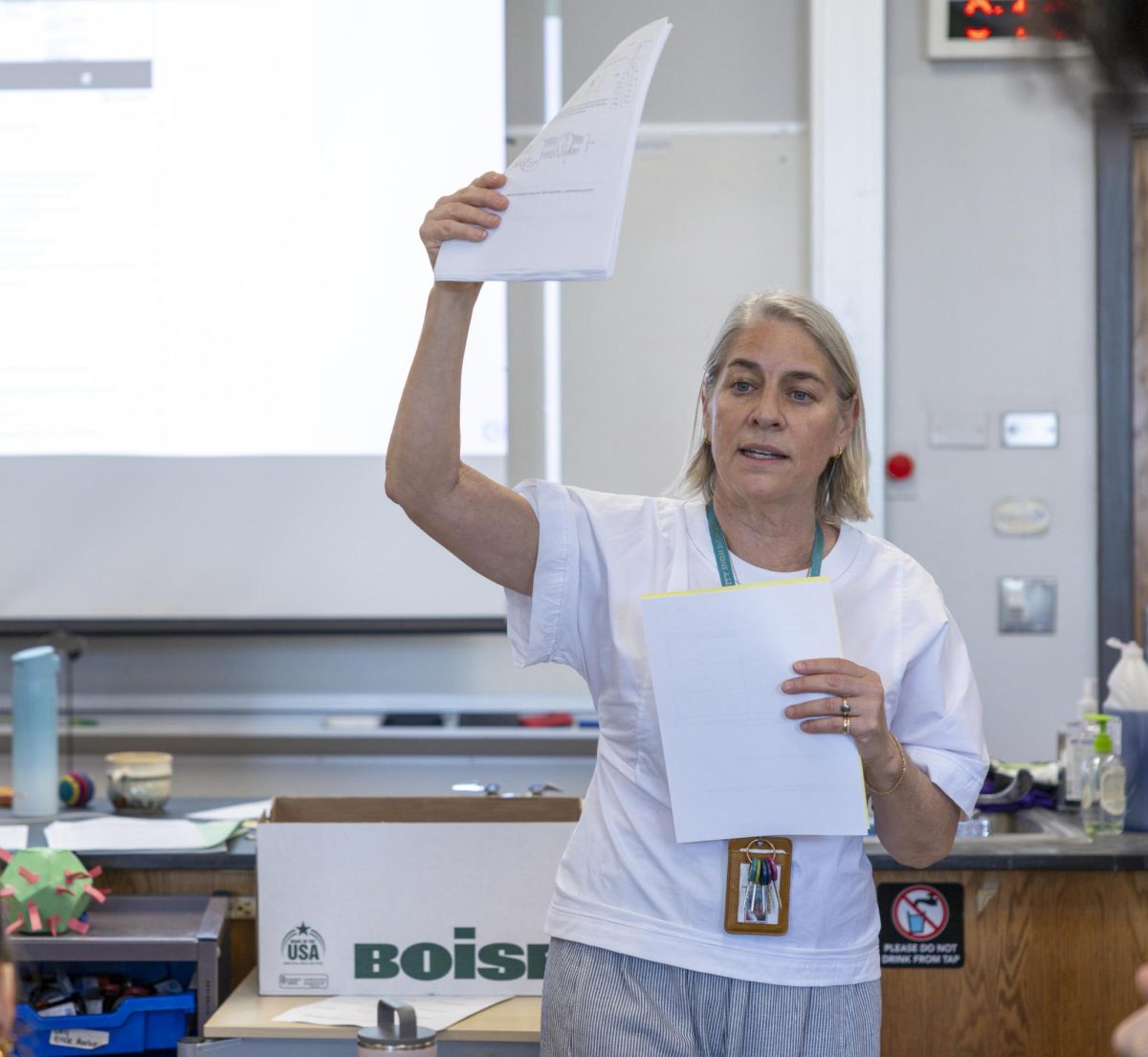
From helping build CHS’s Foundations of Science program to leading students in French classrooms and across the world, Liz Stern’s 33-year career has been defined by curiosity, adaptability and constant reinvention.
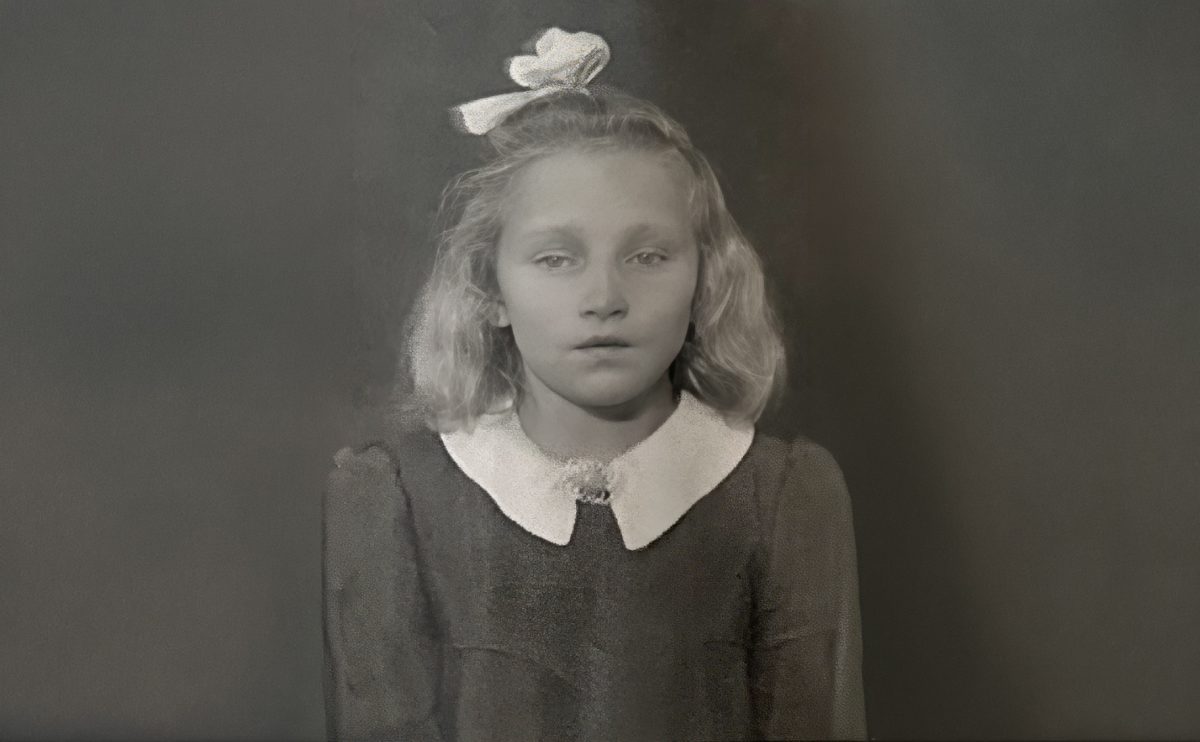
But long before Stern became a teacher at CHS, her story began in a very different place.
“It was called Fraser, Michigan,” Stern said. “It’s kind of a lower income. My parents were both teachers, and we didn’t have a ton of money, because teachers don’t make a lot of money, so we lived in a little brick house, and I have two sisters who are very close in age to me.”
Stern’s sense of curiosity was shaped on the road. Growing up in a working-class family, travel wasn’t glamorous — it was creative and resourceful.
“We just traveled all over,” Stern said. “We drove out to California in a VW Bug without air conditioning. I kind of got the travel bug early on in my life.”
Her family took road trips as far as Mexico City and Alaska, often sleeping in their car along the way.
“We had an old Suburban, and we slept in the car,” Stern said. “I remember waking up at Mount McKinley (now Mount Denali) in Alaska. My parents were like, ‘Get up here, get out here,’ and we ran out of the tent. You could actually see the mountain, which is usually ringed with clouds.”
However, this early love of exploration didn’t translate into clarity about her future. When it came time for college, Stern found herself unsure of what path to take. At the University of Michigan for her undergraduate studies, Stern decided to study French, something different from her upbringing. The transition was not just academic but cultural.
“Going to U of M was really eye-opening,” Stern said. “I was around people who had a lot of money and strong academic backgrounds. I had to really, really work hard.”
Luckily, Stern made the right decision to study French and grow her love of language.
“I went to junior year abroad in Aix-en-Provence, and that was really formative for me to be in a country that was so different,” Stern said. “Even though I had traveled widely in the U.S., I’d never gone abroad. I think it helped shape me and see the world in a different way and see that there were a lot more possibilities.”
During her time in undergrad, Stern made her living by house cleaning and later networked her way into a job at CHS.
“I was a house cleaner, and one of my clients introduced me to, well, actually, I was working a party for her, and I was introduced to a couple of teachers that were here at Community High School, Mike Mouradian and Madeline Drake,” Stern said. “My client, who was also a really good friend, helped me out a lot, and she was an educator here, also, Gretchen Whitman. And they were like, ‘You might want to consider going into teaching.’ And I hadn’t really ever considered it, but I thought, ‘Maybe I’ll do that.’”
Stern ended up falling into student teaching at CHS, earning her certification while simultaneously completing her master’s degree and working as a teaching assistant at the University of Michigan, where she decided to pursue biology and other sciences.
“This is the only place that I’ve ever been,” Stern said.
Over time, that deep familiarity with the school shaped her approach in the classroom.
“We were really looking at a different way of doing science,” Stern said. “It really was experimentation, figuring out what worked for students and building the curriculum as we went.”
That experimentation soon grew into something more structured and impactful through the development of Foundations of Science.
“We started gathering data from Traver Creek and having kids write reports and do modeling,” Stern said.
The approach gained attention beyond CHS, eventually leading to collaboration with the University of Michigan. Through that partnership, the program connected classroom learning with real scientific research, further expanding its reach and credibility.
“We had people come visit us all the time… from all across the United States,” Stern said. “What I really wanted was for students to stop just memorizing science and start doing it—asking questions, collecting real data and figuring things out for themselves.”
As her work in science education evolved, so did her philosophy about what science education should look like and achieve. Stern’s love of science grew during graduate school, but so did her core beliefs surrounding science.
“Everybody needs to know science… it’s a part of literacy,” Stern said. “If you’ve ever landed in a doctor’s office, you don’t want to be suddenly looking up basic terminology. I always want whatever I’m teaching to be extremely relevant to my students.”
That same student-centered approach has continued to resonate in her classes today, where students say that the environment feels both engaging and personal.
“Forensics is my favorite class with Liz so far,” Zola Saigal said. “Even as a senior, it’s still really engaging and rigorous—we do quite a lot of hands-on labs, and the quizzes are very challenging. But the best thing about forensics class is seeing Liz every day. Little moments, like when she sits in the back and chats with us occasionally, really make our day.”
That enthusiasm does not go unnoticed by her students, who say it shapes the tone of her classroom and makes learning more engaging.
“I love Liz,” Amelia Knight said. “She is so funny and always makes class time feel fun and educational. She is really passionate about what she teaches, especially since she’s been teaching the same content for a while. I also saw her perform in the SpongeBob musical, and it was a joy to see her doing something with so much enthusiasm—that’s really what I love about her: her enthusiasm.”
That commitment to relevance, however, was soon tested unexpectedly. When budget changes during 2006-2007 forced Stern into an unexpected shift, she suddenly found herself at a crossroads.
“I had to either teach French or move to a different building,” Stern said. “I was like, ‘I haven’t spoken French in 25 years.’”
Rather than derailing her and distracting her from her passion, the challenge became a turning point. Initially, it felt like a setback quickly turned into an unexpected source of energy. The experience reinforced a belief that has carried her through decades of teaching and change.
“It really energized me in my profession,” Stern said. “Anytime that you can be creative and innovative, it gives you juice to go on.”
Stern’s legacy at CHS is closely tied to her role in reshaping how science is taught with Foundations of Science, shifting learning toward more hands-on, inquiry-based work. “Developing Foundations of Science… that model…” she said, reflecting on a program that helped shift learning toward more hands-on, inquiry-based work. She considers the FOS program to be her biggest accomplishment during her CHS career.
As she looks ahead to retirement, Stern speaks less about slowing down and more about shifting her energy into the parts of life she has always made time for. While some people become “so consumed” by their work that they feel lost afterward, she has “never lived [her] life like that,” explaining that she has always maintained passions beyond the classroom.
“Retirement, then, is not an ending but an expansion—there will be a change,” Stern said. “But… I’ll just have a little bit more time.” That time will be filled with travel, from long-awaited trips to England, Ireland and Iceland to visiting family, along with staying active through biking, hiking and cross-country skiing.
Although she jokes that she will be “forgotten very quickly” as students graduate, her stories suggest otherwise—she continues to run into former students “all over the place, like, all the time.” As she steps into this next chapter, Stern does so with reflection and certainty, feeling “very settled” and “very solid” in her decision—while leaving the door just slightly open to return for subbing.