Every time I take the bus to school, I notice that there are people living in completely different economic conditions than others. I pass houses in neighborhoods worth millions of dollars, while two minutes later, seeing people sleep outside, on stairs and ledges. This made me realise just how isolated wealth classes can be from each other.
There are all sorts of different types of wealth in America, but generally they are divided into three categories — upper, middle, and lower class, each of which being widely different from the others.
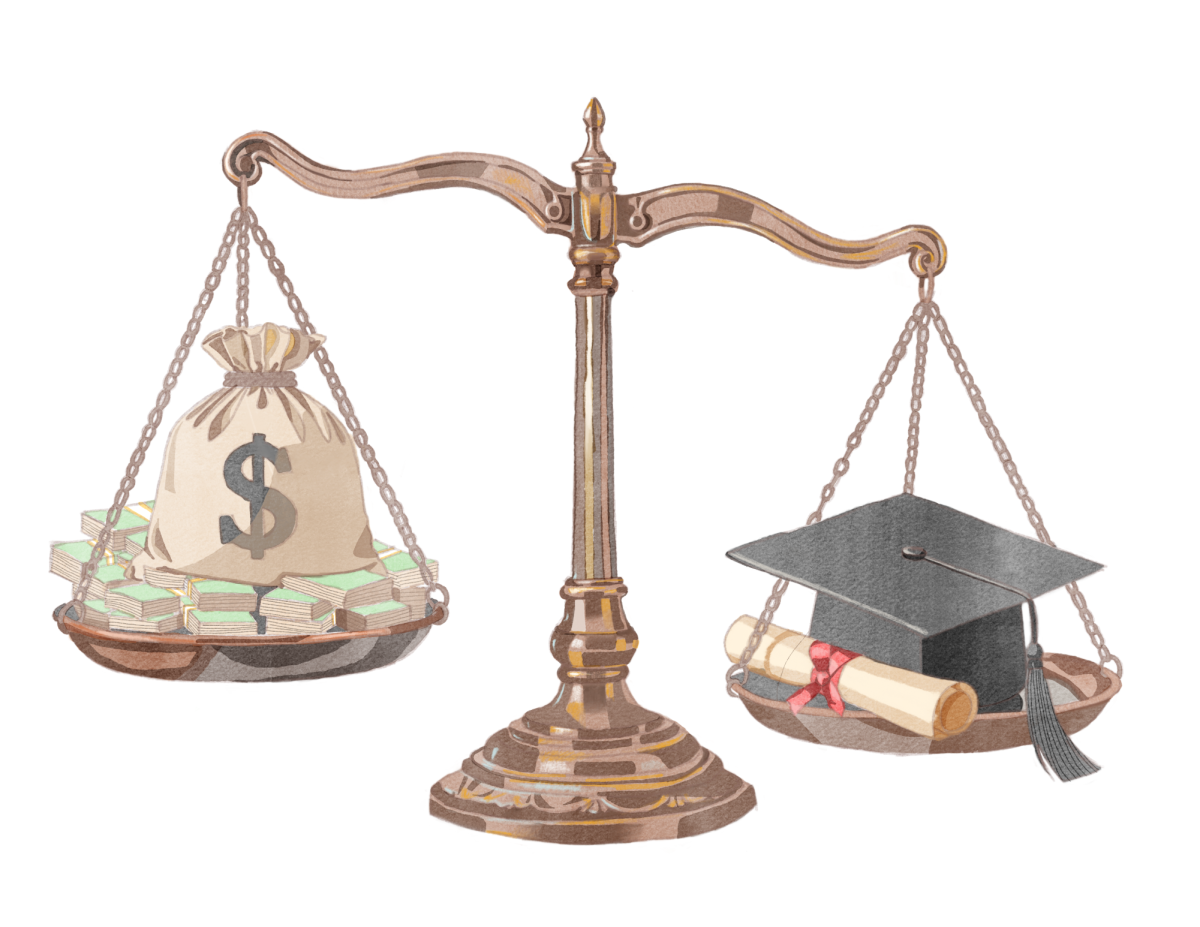
On one end of the spectrum, the upper class holds the luxury of easily affording housing, food, education and the ability to spend at will. At the other end, in the lower class, workers hustle multiple jobs to cover rent, groceries and healthcare, with little left over. Some are unable to afford shelter, education, even food.
In the center, the middle class split the difference, maintaining stable jobs, holding apartments or homes, but still facing the pressure of finances. These aren’t just casual facts about the world, they show a large truth of income in the United States.
Income inequality is the term that describes how uneven the wealth distribution in the population is. When a small portion of the population earns more than the rest, it affects who can afford housing, education and shelter.
Emmanuel Saez, a professor of UC Berkeley, explains his long-term study of U.S. incomes through his article, “Striking It Richer”.
“Income inequality remains extremely high,” Saez said. “For example, the top 10% income share is 50.5%.”
This means that half of all money earned in the United States flows into just the 10% of the population.
Obviously this is a very complex topic, income inequality is a hard thing to perfectly measure. We have to take in the income of every percentage of people in the nation, and figure out how equal the income is distributed among them. Surprisingly, the solution to this problem was created over 100 years ago, and is still used today. The solution? A pair called the Lorenz curve and the Gini Coefficient.
Simply put, the Lorez curve is a graph that measures the income of the nation, while the Gini coefficient is the equation that tells us a real number.
The Lorenz curve works by graphing the percentage of the population, from poorest to richest on the X-axis, against the cumulative income on the Y-axis.
“A 45 degree line would mean that every singular percentage of income is shared by one percentage of households, so that’s like perfect equality,” Ryan Silvester, the econ teacher at community explained. “But the more drooped the line, the larger amount of wealth is held by a smaller and smaller percentage of the population.”
Once the Lorenz curve is complete with all data, economists can calculate the Gini Coefficient.
The gini coefficient ranges from zero to one, where zero means perfect equality, and one is perfect inequality. For example, the United States had a Gini coefficient of 0.49 in 2024, showing significant inequality especially compared to countries with lower Gini coefficient, like Sweden and Norway.
So what does this mean? Aside from the complex equations and graphs, the simple truth is that the United States has a lot of economic inequality.
But what can we do about it?
The point isn’t about claiming how wealth itself is unfair, it’s to get an understanding of the system that makes it easier for some people to gain wealth. Dozens of factors play into inequality, like taxes, investments, politics, wages, but that doesn’t mean that we shouldn’t take the time to learn how our system works.
Income inequality is more than just having a poorly paying job or being born into a wealthy family, it’s about how our economy sets some people up for failure, and lifts others up.
Simply being aware is the first step. Advocating for transparency, updated tax policies, saving programs, financial education, and affordable housing can help the start of rebuilding this system. The more we pay attention to how income, taxes, and distribution of wealth works in our country, the better chance we have to get a say in changing our economy and create something for the future.