
Throughout the anxiety and fear of imperfection, the mistakes, out-of-tune chords and dance moves that made me trample over my feet, I heard one consistent phrase: “You just have to trust the process.”
I, Ellie Fox, have been in dozens of theatrical productions. We learn the music before all else and the scenes out of order, making the majority of the process dizzying. This is where the phrase “trust the process” comes in.
“Trust the process” is commonly used in the performing arts and refers to the collective process of creating a show. We often do not see the final product until the last week of rehearsals, called tech week; this is where trust becomes necessary.
CHS junior Simon Schroeder has been involved in the performing arts for years, and he finds himself trusting the process every time. Every show, without fail, he’s experienced this phenomenon. It can be stressful at times for him, but consistently, the show comes together.
“There’s a sense of blind faith that you have to have in everyone else,” Schroeder said. “If you put in what you’re supposed to, everyone else will do the same, and the directors will be there for you and support you.”
Schroeder sees this trust being given and received not just on the performing side of a show. He finds that having utmost faith in the technical side of theater — all of the backstage workings such as lighting, sound, hair and makeup, costumes, painting and stage management — and the people on these crews makes the whole production run smoother and safer.
“I see how much care is put into [tech] and how hard they work,” Schroeder said. 
Schroeder’s mom is very involved with the technical aspects of theater at organizations such as Pioneer Theater Guild (PTG) and Young People’s Theater, which are both programs that Schroeder has performed with. Seeing his mom in that role has led him to believe in the capabilities of a tech team and understand that tech is necessary for a show to run.
Similarly, PTG Sets crew head Fiona Garwood plays a large role in ensuring the safety of the cast, specifically when they’re dancing and moving on the platforms decorating the stage.
“I have to go around and make sure that everybody’s doing everything correctly,” Garwood said. “If it still isn’t working, I just have to do it. I’m not willing to let somebody get hurt.”
As someone on the technological side of a production, Garwood often experiences an exchange of trust with the cast members and directing team. For each show, the set crew at PTG typically meets four times a week, for an hour and a half, over six weeks. This amounts to about 36 hours, excluding tech week. Tech week itself consists of around 60 hours and long nights. Additionally, tech brainstorming begins well before auditions start.
Due to the time and dedication the crew applies to their work, they place a great deal of faith in the rest of the company to showcase the pieces they created.
“We have to trust that they’re not going to break anything, and that they’ll make it worth it — make all of the months that we’ve spent worth it,” Garwood said.
However, pulling off a large-scale project, such as the sets for PTG’s “SpongeBob The Musical,” is no easy feat. The people behind the scenes must build bonds that can last through conflict, stress and fatigue. For the set crew, the formation of trust begins on the first meeting with an introduction circle accompanied with a silly question. Later on, the team bonds through events like postering, where all of the cast and crew spend hours putting up posters in downtown Ann Arbor to advertise the show. 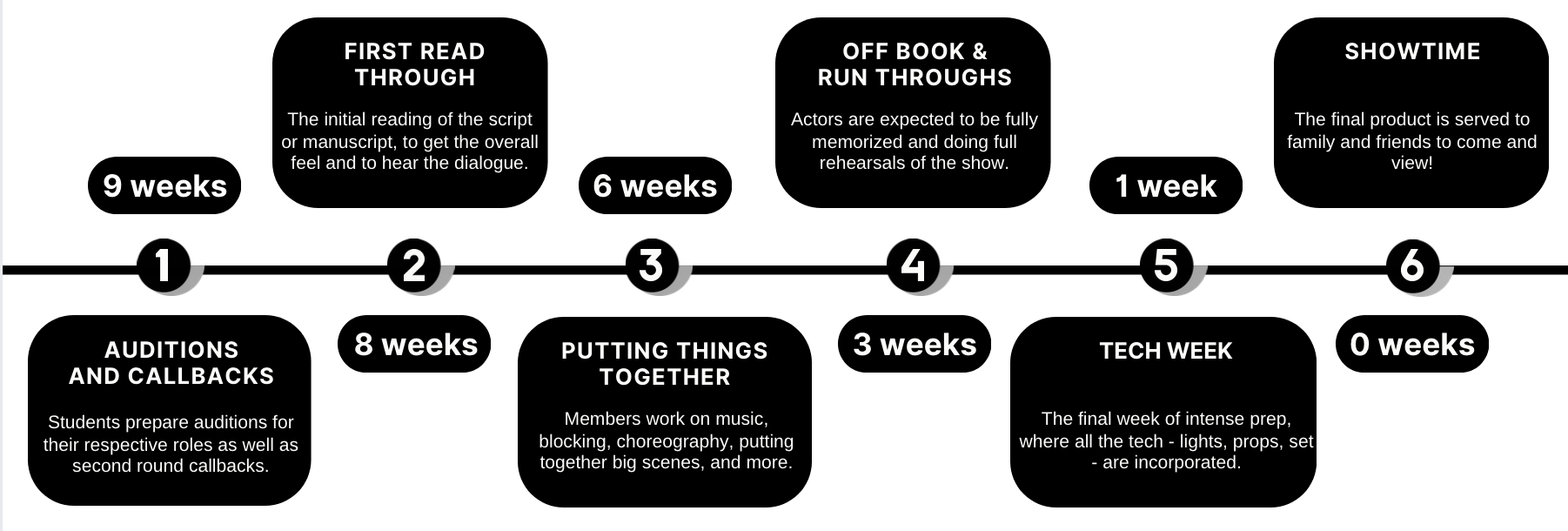
“The first two weeks, we’re working on simpler stuff,” Garwood said. “You can actually have a conversation, so you just get to talking with everyone.”
On the other side of the stage, Schroeder played the role of Squidward. He believes that having fun with other actors relieves the stress and anxiety that can build during a show. He has also found that having good relationships with other cast members can improve onstage performance and interactions.
“I feel like theater is built on trust,” Schroeder said. “People say that their favorite part about doing theater is the people that you meet. I think those connections can only be made through being able to put your trust in other people to create something so artistic.”
But Schroeder doesn’t just find himself putting faith in his costars; the directing team is one he learned to trust quickly, allowing him to make more elaborate and personal choices for his characters.
“I really trust [the director] with acting because she has been very clear about how knowledgeable and passionate she is about it,” Schroeder said. “I trust that if I’m making a choice that she doesn’t think looks good, then she will let me know.”
On the other hand, trusting the directing team can be a difficult component of the creative process for Garwood. She finds that adjusting large pieces of the set can be a challenge to execute effectively and efficiently.
“Sometimes the directors, the day before our show, are like, ‘No, actually we want that switched up,’” Garwood said. “So we really do just have to have faith in them and that they know what they’re doing will look good.”
Aside from the creative directors, the tech teams usually work with a tech director. At PTG, Misti Plummer is the adult monitoring this process and ensuring everything runs smoothly.
“Occasionally, I have one idea of input, but she always says yes,” Garwood said. “She’s been planning everything out since probably August, so if she’s had that vision in her head, I’m gonna trust that she knows what she’s doing. There’s kind of a collaborative sense of trust between the crewheads and Misti.”
Having faith in the wonderful art we call theater is vital to the success of any production. Theater is like building blocks; everyone brings a piece, and collectively, we attempt to build a tower. Somehow, we must learn to trust others to add their bricks safely and not knock over the ones already placed.