For eight years, from kindergarten to seventh grade, my Saturday mornings consisted of two and a half grueling hours of hoping I wouldn’t get called on by my teacher in a language I only partly knew. In 5th grade, I began helping out with kindergarten students and stumbled over my words as I tried to work with them on their assignments.
Before beginning elementary school, I was nearly fluent in Spanish, having attended Manzanitas, a Spanish-immersion preschool in Ann Arbor. At Manzanitas, we read Spanish translations of the “Rainbow Magic” fairy books, put on plays and played make-believe games, all in Spanish. At home, I sang “Let It Go” from “Frozen” in Spanish and gathered up my stuffed animals for a language lesson.
After I graduated from preschool, my parents didn’t want me to lose all the Spanish I’d learned. So, I began spending Saturday mornings at En Nuestra Lengua.
En Nuestra Lengua (which translates to “In Our Language”) is a free program run by University of Michigan faculty. It takes place at Bach Elementary School in Ann Arbor for 4–13-year-olds with a Spanish language background. Everyone else spoke Spanish at a higher level than I did. Unlike me, the other students at En Nuestra Lengua had been speaking Spanish their entire lives, spoke the language at home and came from Latino families.
As a generally high-achieving, well-performing student, I felt, every Saturday, lost and lonely in our classroom. Whenever I was called upon to speak, my heart pounded, my cheeks turned red and my voice quivered.
While the other kids in my class would laugh over their many inside jokes, I would stand to the side, putting on my best fake smile as I tried to make sense of their conversations.
Yet gradually, as the years passed, what I often dreaded began to turn into something meaningful. Our small group would make ice cream together, perform blind obstacle races and eat pan dulce on Dia de Los Muertos.
I still have many of my Friday-night essays, which my little fingers would scramble to finish in time. I would scheme over ways to make my essays reach the 500 required words (all in Spanish), adding three muy’s in a row and three definitivamente’s.
I remember singing “22” by Taylor Swift in my head, reciting the lyrics “We’re happy, free, confused, and lonely at the same time / It’s miserable and magical / Oh, yeah,” and feeling like it encapsulated my experience at En Nuestra Lengua.
I can vividly picture myself, at 12 years old, looking at the snowy world outside and then looking around at these people, this building and this program I’d grown to feel a part of.
The summer before eighth grade, after tutoring sessions with my former En Nuestra Lengua teacher, I took an exam to test out of high school Spanish. My dad woke me up the morning the results came in. “¿Hablas Espanol?” he asked. “Si?” I said, confused. “Si!” he said, showing me the successful results of my test.
After putting in so much effort to keep up my Spanish, I worry about losing this skill that I’ve dedicated so much time to over the years. These days, I make my way over to the University of Michigan to meet with my new tutor. We discuss “The Summer I Turned Pretty” and “Dance Moms,” and while our conversations are sometimes awkward and stumbling, I feel a sense of nostalgia and pride when I speak in Spanish.
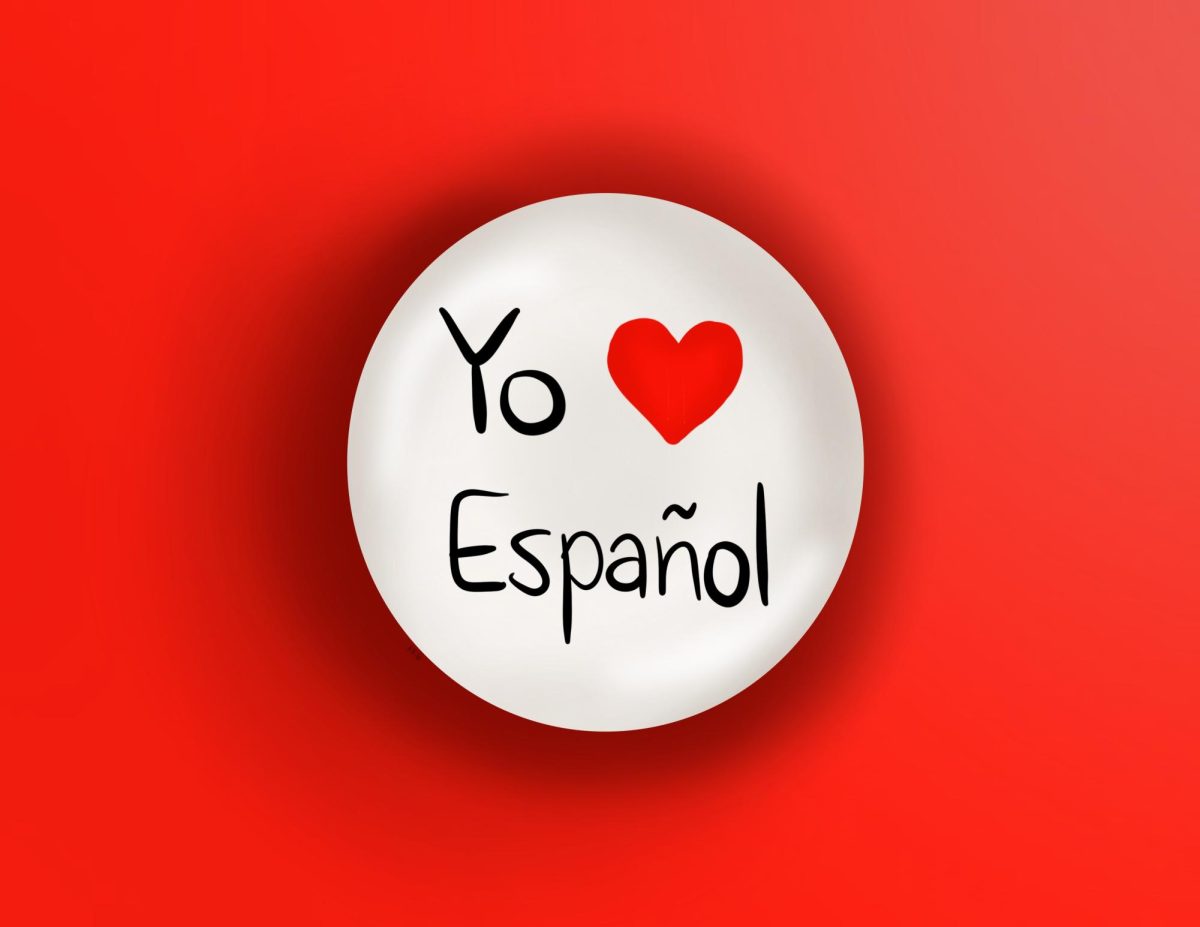
Today, an “I Love Spanish” pin, which I received from En Nuestra Lengua many years ago, still rests on my bedroom desk. Spanish is a part of me, or, to say it better, El Español es una parte de mí.