“I don’t want to get married” are the words that immediately popped out of my five-year-old self’s mouth after my parents explained how marriage worked. I had asked them what a wedding was, since I’d never been to one. I always thought that they were just parties to celebrate two people living together as friends or family; I hadn’t realized that they were specifically made to celebrate the coming together of two (or more) people who are in a romantic relationship. This was the first of many confusions and misunderstandings I experienced regarding romance as a child.
My parents never questioned or opposed the fact that I was sincerely uninterested in romance. After all, I was just a toddler; I had other things on my mind. I was still socializing with the others at my preschool, learning songs, games and craft projects, and slowly but surely, differentiating the two languages I was learning so that I could keep my Spanish separate from my English. There was no space in my head to think about relationships.
As I got older, I learned harder skills such as basic math and reading and was fully immersed in my two languages. I started to have opinions on matters, and since I’ve always been a talkative and extroverted person, I had no problem sharing those opinions with my parents and friends. I remember that a lot of these thoughts were about the media I consumed, which mostly consisted of cartoons and animated movies. The Disney movies I watched often had a princess or headstrong female fall in love rapidly with a prince or a mischievous man; the two would be on some sort of adventure, which required fighting a malicious, yet iconic, villain so that they could achieve their happy ending. Don’t get me wrong, I love these movies. They are so much fun with their humorous characters, gorgeous animation and guaranteed happy endings. However, I still remember the first time I watched “Brave” and was ecstatic about the fact that Merida had no love interest and was completely against marriage. “Merida is like me because I don’t want to get married!” is what I would tell my parents after watching “Brave,” and it was part of my argument for why “Brave” is a good movie.
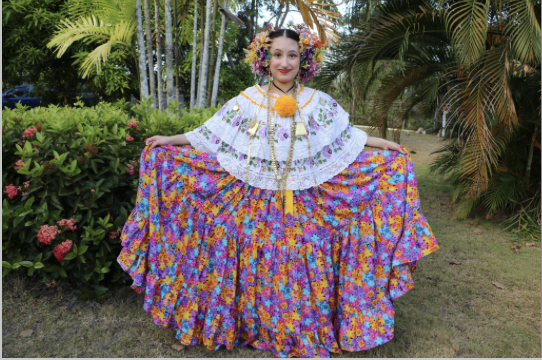
More time passed, and sooner than I expected, I was in fourth grade, living in Panamá for six months. I had made some friends in my 4th/5th-grade class at the Panamanian school I was attending. We would often walk to a park near the school for recess, and while we were there, we would chat while we were on the play structures. We talked about a variety of things, but I had one friend who would sometimes talk about the boys she had crushes on. One time, she asked me if I had any crushes, and I said no. “Someday you’ll like boys,” she told me, which I knew was not going to happen. Not long after that, a rumor started among my peers that I had a crush on this boy who was in the same grade as me. Now I was insulted! I didn’t interact with him very much, and he seemed to believe that the rumor was true even though I had made it very clear that I wasn’t interested in romance. Luckily, it only lasted for about an hour since fourth graders have short attention spans, but I was still mad that they seemed to find it more unlikely that I was uninterested in romance than the fact that I could have a crush on someone whom I barely knew.
Fast forward to middle school, which was when more of my peers started getting crushes and when I started developing a wider vocabulary relating to romance. It was in eighth grade when I found out that “asexual” and “aromantic” were the terms used to describe people like me. It wasn’t a surprise to me that other people were equally uninterested in romance, but what was surprising was that there were enough of us to have a word dedicated to us.
Once I had this realization, I was able to find more media featuring asexual/aromantic characters. I started paying more attention to the characters in TV shows and books who had no love story as part of their character development. Although it was nice to find more representation of aromantic spectrum (arospec) characters, my favorite genre, fantasy, still primarily consisted of characters in romantic relationships whose love lives were an important part of the plot. Something that I find important to keep in mind when looking for representation of any group of people is that everyone tells stories differently.
Sometimes the way you want to be represented doesn’t always match the way that the authors, writers and directors want to tell that story. I’ve always loved writing, ever since we started writing short picture books in kindergarten. It was in sixth grade when I realized that instead of keeping my fantasy stories to myself, I’d rather share them with the people around me. Now, I realize that my ability to write and create stories with a variety of characters is the solution to the need to feel represented. If I want to read about arospec characters in fantasy stories, I can always write about them myself. Fantasy has changed and evolved, and currently, they don’t just have to be stories of male heroes rescuing maidens from dragons, curses and witches. The heroes in these stories don’t always need a romantic partner to inspire courage in them; they should have the choice to be able to find the courage within themselves. It’s my hope that one fantasy story at a time, I’ll be able to make more and more asexual/aromantic people feel seen and heard.