Sleepless nights and heavy eyes are not something to applaud.
In this modern day, it seems that everyone is chasing success, but nobody seems any happier. Identity is commonly tied to achievement, as the world we live in rewards constant hustle and competition.
There is a common misconception that if you are a student, especially one on the brink of college, you must relentlessly be busy. We begin to feel pressured to fill our transcripts or to try and get ahead of peers academically, socially or intellectually. But it is unhealthy to lack the skills of taking your time, paying attention to details and learning from small mistakes, because they can make all the difference.
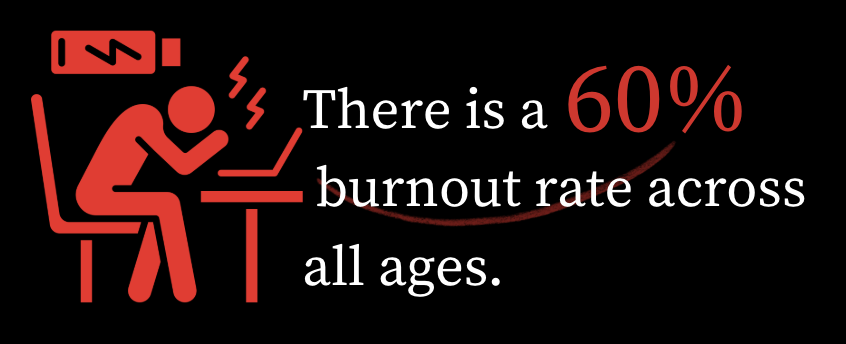
When students pile on AP classes, sports and jobs, it induces a feeling of guilt for relaxing or taking a break. An overflowing schedule does not equate to success or well-being. Recent studies reveal an approximately 60% burnout rate across all ages, according to Forbes magazine.
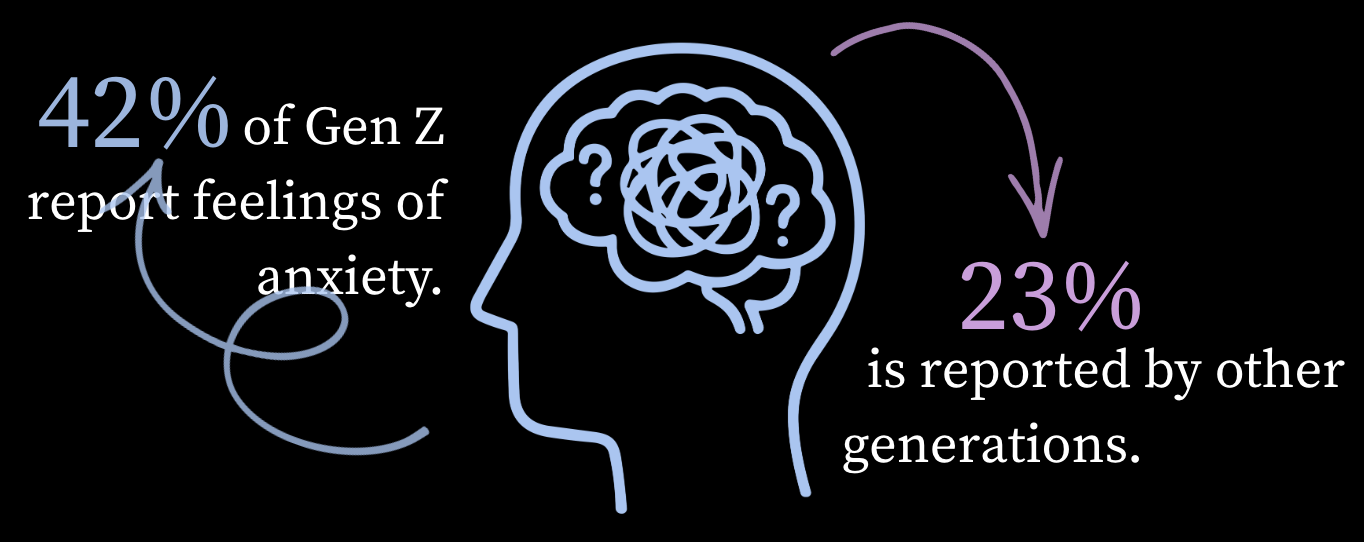
According to “A Gen Z Report” by the Oliver Wyman forum, 42% of Gen Z report feelings of anxiety, and 23% is reported by other generations. Regardless of whether this anxiety has an official diagnosis, the feelings are all the same. Teens and young adults contain the highest levels of anxiety out of any other age group; much of this is attributed to the immense weight we force on ourselves through academics, friendships or extracurriculars. Everyone has the desire to be great, but does that really mean we must stuff our lives so full that we barely have time to get a healthy amount of sleep?
Adolescent years are the most crucial for developing the social and emotional behaviors needed to become your best self, according to the World Health Organization (WHO). “These include adopting healthy sleep patterns; exercising regularly; developing coping, problem-solving and interpersonal skills and learning to manage emotions,” said the WHO.
The already heavy pressure we place on ourselves is amplified by comparison to peers, influencers or a more idealized version of ourselves we create in our heads.
“Challenge” is defined by Merriam-Webster as “a difficult task or problem.” Of course, this is commonly applicable, but that’s the literal definition. I think a more accurate definition should relate to the process of overcoming and becoming, growing confidence and outrooting fear of the unknown.
As written in “The Tortoise and the Hare” by Aesop, “Do you ever get anywhere?” he [The Hare] asked with a mocking laugh.
“Yes,” replied the Tortoise, “and I get there sooner than you think.”