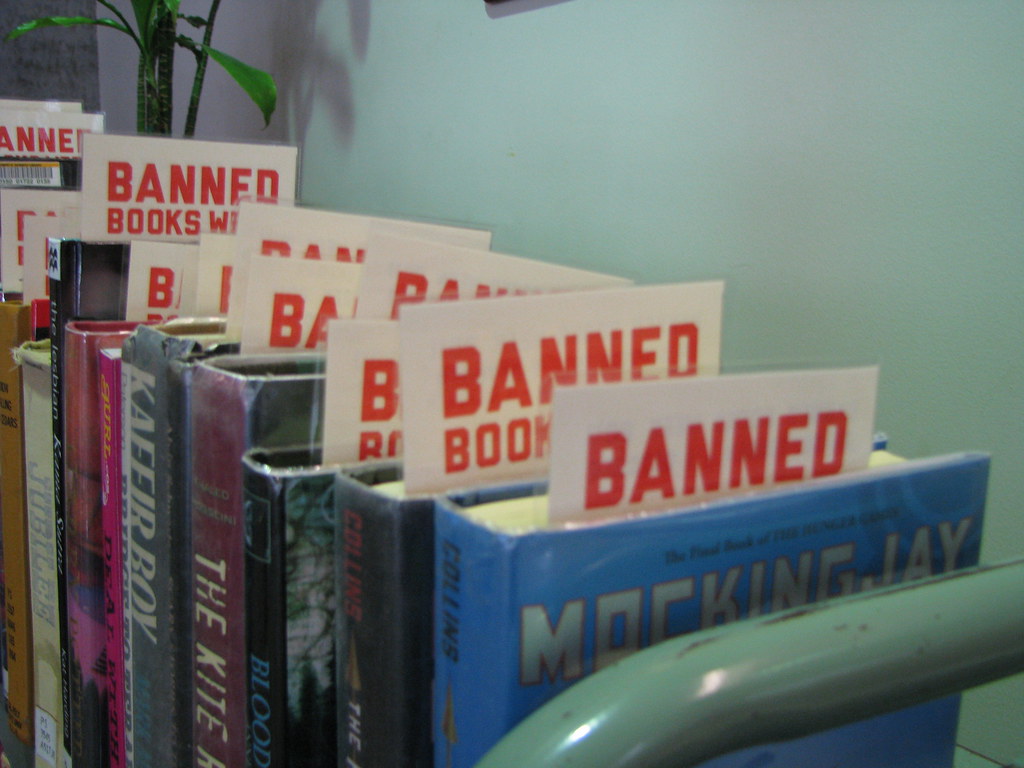
Imagine walking into your school library and finding empty shelves where books used to be. Titles removed, not because they were inaccurate, but because someone decided certain ideas were too inappropriate for students to read. This is the reality of many schools today, where book bans are reshaping what students are allowed to read.
Since 2021, PEN America — a nonprofit organization with a mission to protect free expression —has documented over 23,000 instances of book bans in public schools in the U.S. The organization has also stated that due to quiet, undocumented removal of literature in schools, there are likely thousands more that have gone unrecorded. If each book were stacked on top of the others, it would make a tower taller than the World Trade Center, and over three times as tall as the Washington Monument.
The surge of book bans across the country isn’t stopping anytime soon, at least not if education continues to be a battleground between political and cultural views. Decisions that affect students’ education and the resources available to them are fueled by personal beliefs, not the best interests of the students.
“The United States’ history, since its inception, is full of uses of curriculum to shape politics, the economy and the culture,” says Ansley Erickson, the Associate Professor of History and Educational Policy at Columbia University’s Teachers College. “This is a really dramatic moment, but the curriculum has always been political, and people in power have always been using it to further emphasize their power.
One of the fundamental ideas of democracy is the free exchange of ideas. All people within the United States have a First Amendment right to read and learn about the viewpoints of all different beliefs and communities. So when content is censored within public schools, it is not only restricting the rights of students, but it’s compromising their education.
How can a democracy be healthy if its principles are violated? The answer is that it can’t be.
A healthy democracy requires freedom of speech, even if it is controversial or unpopular. “Without Freedom of Thought, there can be no such thing as Wisdom; and no such thing as public Liberty, without Freedom of Speech.” —Benjamin Franklin
If these principles are violated, then they are substituting free exchange of ideas with standardised, forced narratives. Protecting free speech is essential for maintaining a representative and free society.
To understand why book bans are so concerning, it is important to understand the role that public schools play in society. Schools are meant to equip students with the skills and education they need to be productive citizens and to be able to take care of themselves in society. But how can schools prepare students if they are prevented from reading about the very ideas and perspectives that shape the world they live in?
Many of the books being challenged within school libraries deal with topics such as race, identity, history and the experiences of marginalized communities. These subjects can be uncomfortable, but they are also an extremely important part of understanding the world that students live in. Removing students’ ability to be exposed to these issues does not make these issues disappear; it just prevents students from learning about them earlier on.
A democracy depends on citizens who can think critically, evaluate different perspectives and form their own opinions. Schools should encourage that process, not limit it. If education is meant to prepare students for a democratic society, then banning books that challenge ideas and perspectives has no place in it.