Whether it be televised commercial breaks or monetized content on your social media feed, modern technology has fostered a virtually inescapable swarm of advertisements. Viewers are constantly being convinced to purchase just one more thing. But, in this crowded digital marketplace, what separates the ads that work from the ones you simply scroll past?
Rajeev Batra, a marketing professor at the University of Michigan’s Ross School of Business, defines a good advertisement as one that meets the advertiser’s goals. A specific brand might want to attract new buyers, strengthen customer loyalty, or just create noise online.
“You can’t judge an ad as being successful or unsuccessful without knowing what it was trying to achieve,” Batra said. “Advertisers have lots of different possible goals for any ad that they have.”
In recent years, several major ads have been launched, most of which gained traction on social media. From iconic throwbacks to viral TikTok choreography, we’ve seen both the return of classic campaigns and new releases.
Gap:
Over a short one-year stretch, GAP premiered two of its most renowned ads. A masterful combination of choreography and catchy music helped them gain widespread attention almost overnight. Their first ad debuted in August of 2024. It featured singer-songwriter Troye Sivan and a host of models dancing to the tune of “Funny Thing” by Thundercat, a campaign titled “Get loose. Now live.” The brand quickly became a hot topic among young audiences as they watched the Australian pop star promote denim in an eye-catching visual display.
In August of the following year, the brand built on its momentum. GAP’s 2025 “Better in Denim” campaign spotlighted KATSEYE as they danced to “Milkshake” by Kelis. The recently popularized girl group drew in similar demographics as Sivan: teens eager to repost and discuss the promotional video.
The overwhelming public response to GAP’s two advertisements demonstrated the leverage that celebrity endorsements can have. Batra discussed this powerful marketing tactic, underscoring both its benefits and possible shortcomings.
“It’ll make people pay attention, and it gains awareness,” Batra said. “But it can actually lead to people remembering only that joke or that celebrity and not remembering the other stuff in the ad about why the brand is good. So you have to craft the ad very, very carefully. You have to make sure that no goal or factor is overpowering the other.”
Batra’s insight is telling of why this denim campaign was so successful and why the celebrity cameos became just as iconic as the branding itself. As both advertisements had their individual moments of fame on social media, it was hard to bypass them. Coming from the perspective of a dancer, I found that seeing such renowned choreographers like Robbie Blue and Sergio Reis create such successful advertisements was captivating. Watching people be so drawn into the world of dance through these advertisements and being able to appreciate the visual art is what defines this as a successful advertisement to me.
American Eagle:
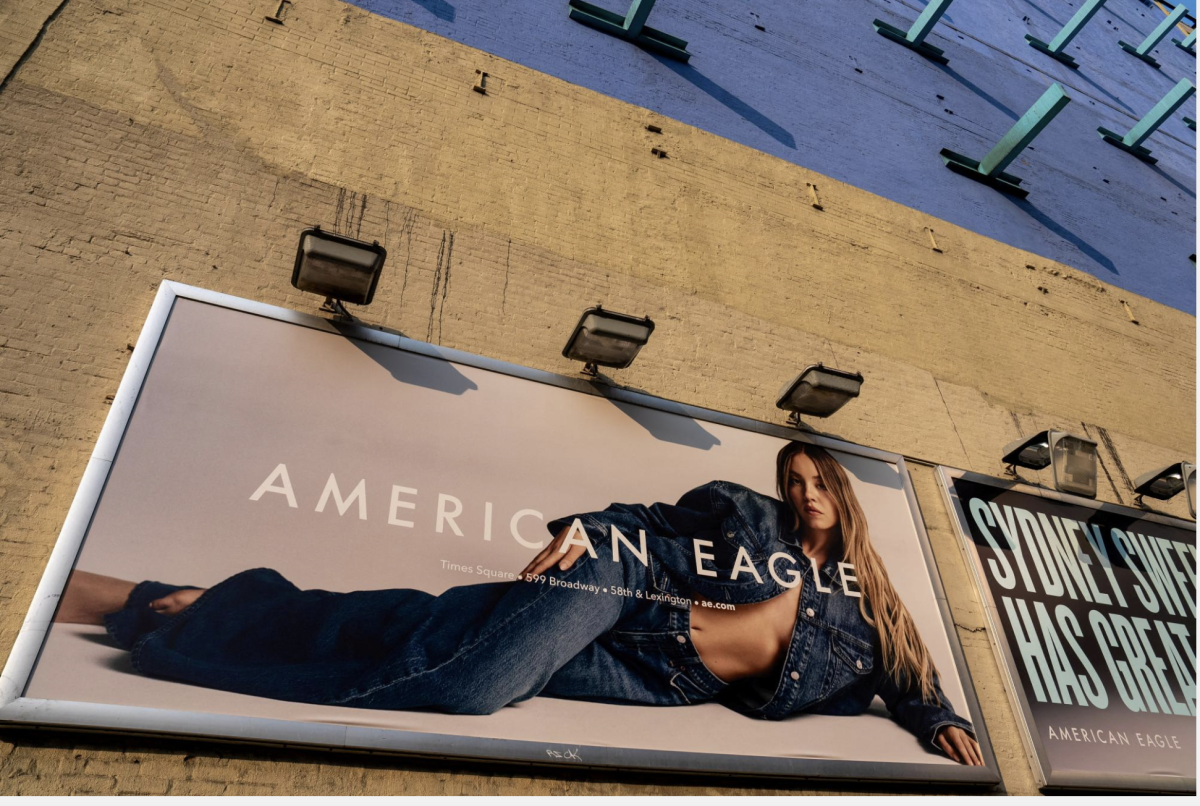
Just a few months before the release of the KATSEYE campaign, actress Sydney Sweeney appeared as the face of the American Eagle fall denim collection. This ad mirrored Calvin Klein’s infamous advertisement with Brooke Shields, tapping into similar controversial marketing tactics and messages. A stark contrast to Gap’s charismatic celebrity features, this promotion provoked a whirlwind of internet backlash. It was received as hypersexualized, encouraging narrow, exclusionary beauty standards. Many challenged the campaign tagline, “Sydney Sweeney has great genes,” asserting that it echoes core principles of eugenics. While intended as a pun linking biological genes to Sweeney’s American Eagle jeans, critics argued it also implied the superiority of thin women with blue eyes, blond hair and pale skin.
While the ad might seem like a major misstep, Batra points out that negative buzz isn’t always fatal to a brand’s image and numbers. In fact, media attention can have overwhelmingly positive outcomes, regardless of its initial form.
“These things tend to have a short shelf life,” Batra said. “You know, a week, a month later, people may forget what they were concerned about, but they may still remember the brand name. I just read an interview with [American Eagle’s] CEO. He says, ‘I don’t know what the heck people are so upset about because actually, our jean sales are going through the roof.’”
Though the campaign has since stepped out of the media’s white-hot spotlight, its impact is not so short-lived. I personally found both the campaign’s central message and Sweeney’s dull, dismissive response to public backlash very disappointing. The way the conversation was directed towards her appearance is troubling, especially since the advertisement was intended to raise awareness for domestic violence and mental health. Not only has the campaign pushed unrealistic ideas about physical desirability, but it has also undermined the seriousness of the issues it claimed to support.
Got Milk?
During its run time from 1993 to 2014, the “Got Milk” campaign was one of the most successful ads, with a rather unique goal: an overall increase in national milk consumption. For over two decades, milk-centric ads took over people’s TVs. Put out by the congress-authorized nonprofit MilkPEP (Milk Processor Education Program), the advertisements ranged from funny skits emphasizing the necessity of milk to the iconic “Milk Mustache” campaign.
1995 marked the launch of the “Milk Mustache” project, which featured celebrities sporting milk mustaches in a stylish manner. The advertisements were a perfect combination of witty, weird and attention-grabbing, which helped them go down as one of the most successful advertisement campaigns ever. As an attempt to make milk cool, print advertisements featured short anecdotes from celebrities describing how milk pertains to their specific careers.
“Got Milk” sets itself apart from the other major advertisements of its time by not supporting a single brand and instead encouraging a nationwide increase in milk consumption overall. Due to its previous success, a got milk revival was attempted in 2020 to increase sales during the pandemic, but it never fully took off.
Considering the ambitious goal they were trying to achieve, I consider this advertisement one of the most influential of all time. Between the campaign’s creative ideas and the execution of its celebrity features, “Got Milk” was ahead of its time.
Coca-Cola
For 30 years now, Coca-Cola has been airing its classic Christmas advertisement, which signals the unofficial start of the holiday season for many viewers. Featuring snowy landscapes and traditional Christmas figures, the advertisements focus less on product promotion and more on evoking nostalgia. The ads tap into the familiar warmth of holiday traditions, associating the beverage with comfort and togetherness.
The persistent popularity of Coca-Cola’s campaign demonstrates just how powerful storytelling can be in advertising. Year after year, consumers are satisfied with the campaign’s consistency, which reinforces a classic, recognizable brand identity. These ads exemplify another distinct marketing goal. Coca-Cola does not aim to push a specific product but to uplift its image by embedding itself in the emotional atmosphere of the holidays.
“When people watch an ad and think about it later, the key question is ‘What did they take away from it that lasts?’” Batra said. “It’s not how funny it is or how creative it is; it’s whether there is a big idea about the brand that sticks with them long term.”
This core principle is precisely what makes Coke’s campaign so monumental. Its subtle comfort feels akin to a favorite holiday movie or song. While we know that this advertisement aims to capture our attention as potential customers, it feels more like a comforting tradition than a money grab.
In an era where consumers are met with hundreds of advertisements every day, standing out is no easy task. As campaigns from Gap, American Eagle, MilkPEP and Coca-Cola demonstrate, successful advertising can take many forms. What ultimately determines an ad’s impact is whether it accomplishes the goal behind it, whether that means boosting sales, shaping a brand’s identity, or simply capturing public attention.
While some campaigns spark admiration and others ignite criticism, both reveal the heavy influence advertising still holds in shaping consumer culture. In a crowded digital landscape, the ads that last are not always the loudest or the most polished, but the ones that leave audiences remembering the brand long after the screen goes dark.