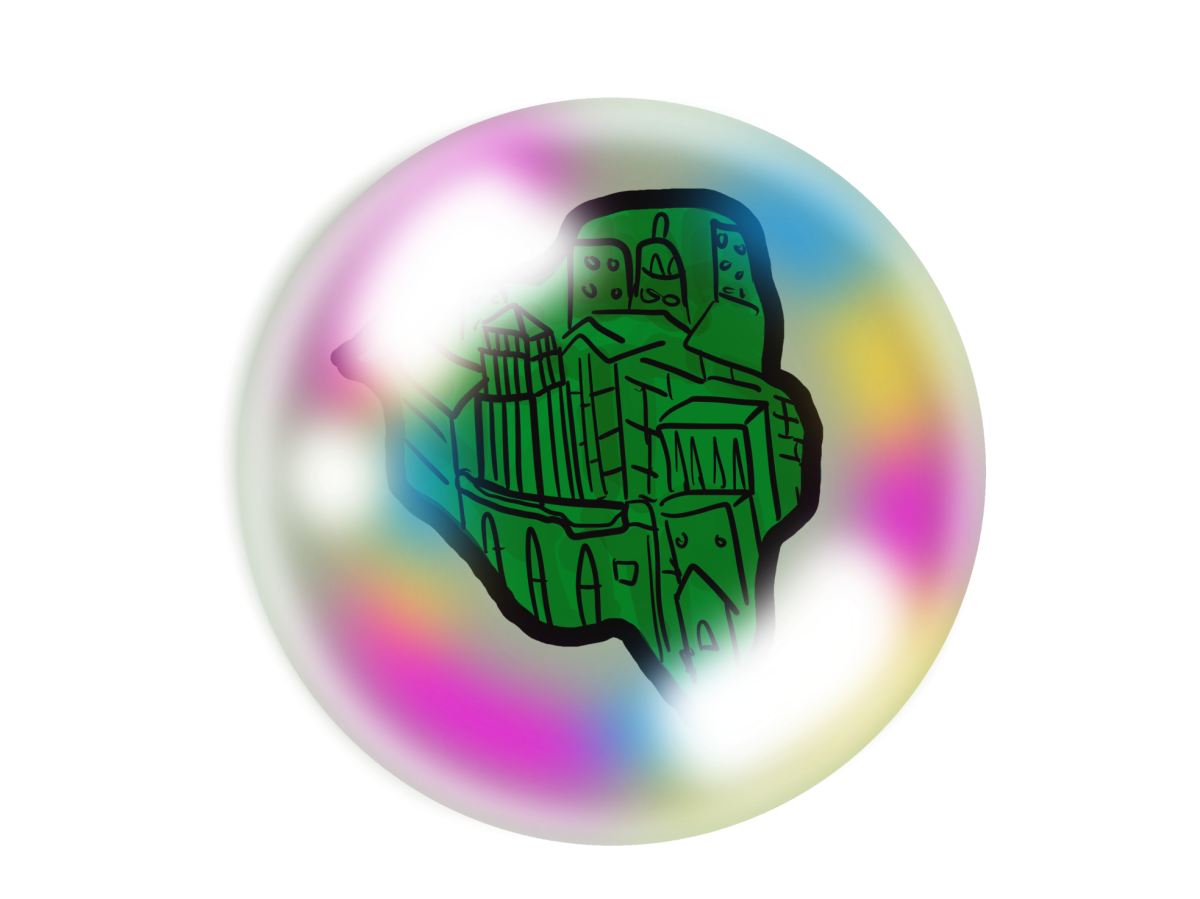
When you first hear of the phrase “the Ann Arbor Bubble,” it sounds simple. By definition, a bubble is simply something sealed off from the rest of its environment. The people inside it are in a sense protected and separated from the outside world, making it feel like the bubble that they live in is their only reality.
But the idea of a bubble is complicated. It can create a community where certain values feel safe and widely accepted, yet, at the same time, it can limit how often those values are challenged or questioned. That’s the tricky part about living in one. When everyone around you mostly thinks the same way, it doesn’t feel like a bubble at all. It just feels like one’s existence.
We are all colloquially familiar with this phrase, and people say it pretty casually: Ann Arbor is a bubble. Sometimes it is meant as a compliment, and sometimes it is criticism. Either way, the meaning is usually the same; Ann Arbor feels different from the rest of Michigan.
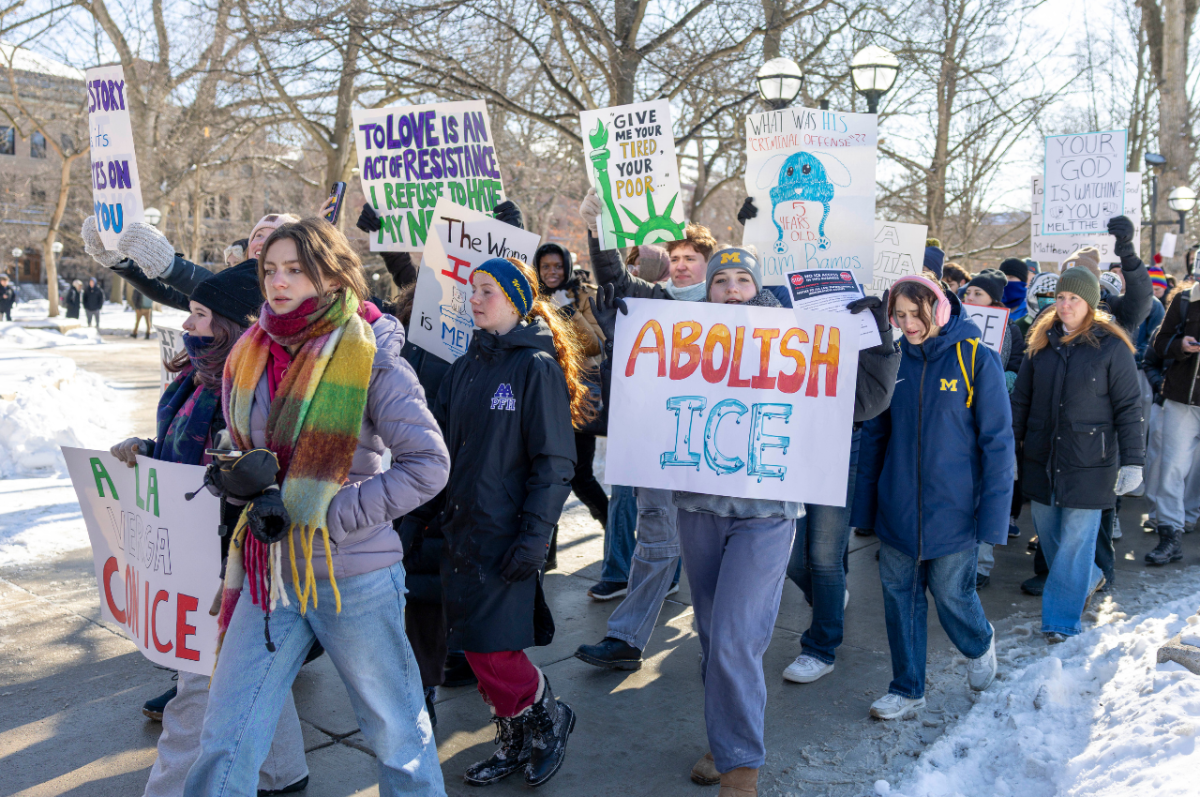
People usually mean this in a political sense. Compared to much of Michigan, which is primarily a politically split state, Ann Arbor is overwhelmingly liberal: yard signs, protests and policy debates are commonplace. However, the truth is that this bubble extends way beyond politics, and it is a racial and economic bubble as well.
10 years ago, when an article was written on our very own Communicator on this exact topic, titled “Ann Anomaly: Dissecting the Ann Arbor Bubble,” it tried to explain this reasoning. It pointed to the relationship with the University of Michigan (U-M) that has defined Ann Arbor for nearly two centuries. After losing out to Lansing for the bid to become the capital of Michigan, Ann Arbor caught the eye of U-M and, with little debate, established itself right at the heart of where we all know it to be today.
Much of this city’s prosperity can be attributed to the university, as for two centuries, it has served as one of the region’s largest employers, bringing jobs, research funding and thousands of students into the city each year. Specifically, events like the 2007 closure of Pfizer’s Ann Arbor research campus, when the university purchased the land and eventually created even more jobs than the company had provided, show how the university can stabilize the local economy.
On the other hand, these deciding factors in Ann Arbor’s development and growth could, in turn, also create problems. The rising housing prices at the time and increasing demand to live in the city, due to a multitude of reasons, were pushing lower-income families outward. Not only did this contribute to the already present economic divide, but it also created racial divides within the community. And while Ann Arbor does pride itself on its progressive values and political activism, the city’s inexplicable growing wealth and real estate market could reinforce this inequality, creating an economic bubble that insulates residents from struggles facing surrounding communities.
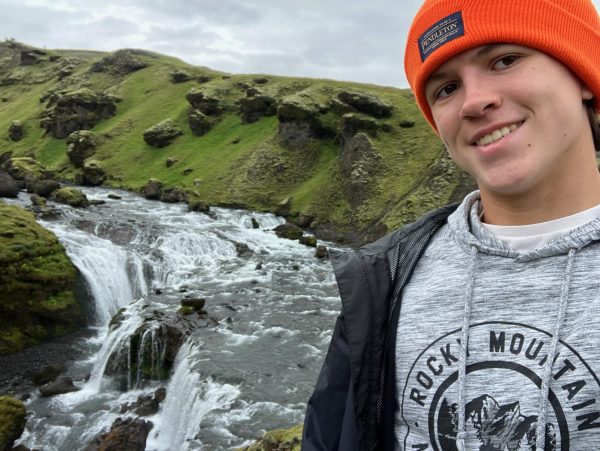
“I think we need to do a better job with connecting, and I think it’s fully a wealth issue with bridging these inequalities,” said CHS sophomore Gabe Foster, who is involved in Michigan Youth in Government. “We might be the most segregated, but we are aware of the other people to a certain extent.”
Ann Arbor’s progressive identity does not necessarily translate into a diverse population. According to census estimates, only about 7.02% of Ann Arbor’s population identifies as Black or African American, while roughly two-thirds of residents white. For us who grew up in Ann Arbor, those demographics shape everyday social environments and can quietly reinforce the same social boundaries that define the “Ann Arbor bubble,” making it so easy to overlook just how limited those perspectives can become.
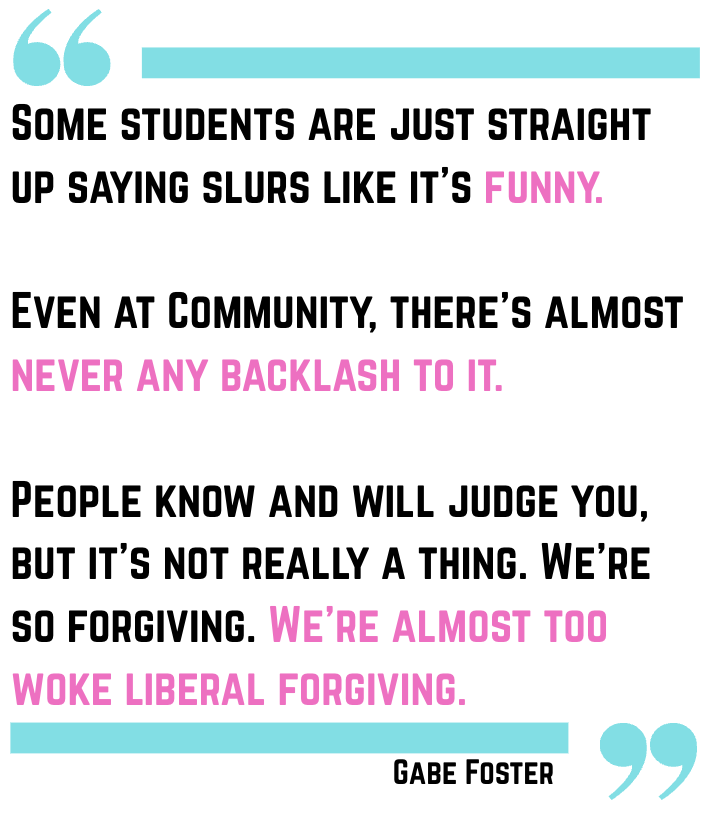
“Some students are just straight up saying slurs like it’s funny,” Foster said. “Even at Community, there’s almost never any backlash to it. People know and will judge you, but it’s not really a thing. We’re so forgiving. We’re almost too woke liberal forgiving.”
Even just a short drive outside Ann Arbor can reveal a very different political landscape. A road lined with campaign signs supporting a candidate you rarely hear praised inside the city can feel jarring, even if the distance is only a few miles. Experiences like that are what make people realize that the perspective they grew up with is not necessarily shared everywhere else.
“When you just go out to even Dexter, it’s like a flood of Trump signs,” Foster said. “It was really staggering.”
This lack of direct interaction can also make disagreement feel more shocking than it really is. When someone grows up surrounded by mostly similar perspectives, it is easy to assume those views are widely shared. The first time they encounter others with completely different opinions than their own, the result can be shocking.
For Foster, that happened when he interacted with people from across the state in Michigan Youth in Government, an organization that brings in students from all over the state to participate in a mock legislature. In environments like these, it can reveal just how differently people think about the same issues, especially when it comes to public policy, which is what Michigan Youth In Government is all about.
“I was like, wait, we all disagree with this, right?” Foster said. “I thought everyone was like, this is silly and dumb. It really broke my shell to outside Michigan.”
Over time, that distance can reinforce the very divisions people claim to want to overcome. Communities become defined not just by geography but by the assumptions they make about one another. Without meaningful interaction across those boundaries, stereotypes and misunderstandings can persist even in places that value openness and progress.
Recognizing that dynamic does not mean rejecting the community you come from. Instead, it is the first step toward seeing its limits. Once we realize that their perspective is shaped by a particular environment, it becomes easier to approach conversations with curiosity rather than certainty — and to look beyond the bubble rather than assuming it represents the whole world.
Venus Stolerow, a Community High School senior who has lived in Ann Arbor her entire life, believes many teenagers are starting to recognize just how insulated the city can be.
“I think we’ve always been a very liberal bubble, but I think people are starting to realize more and more how much we live in a bubble,” Stolerow said.
However, in Ann Arbor, the internet often becomes the first place where those differences appear. Social media platforms expose users to a wide range of political viewpoints, often from outside their immediate surroundings.
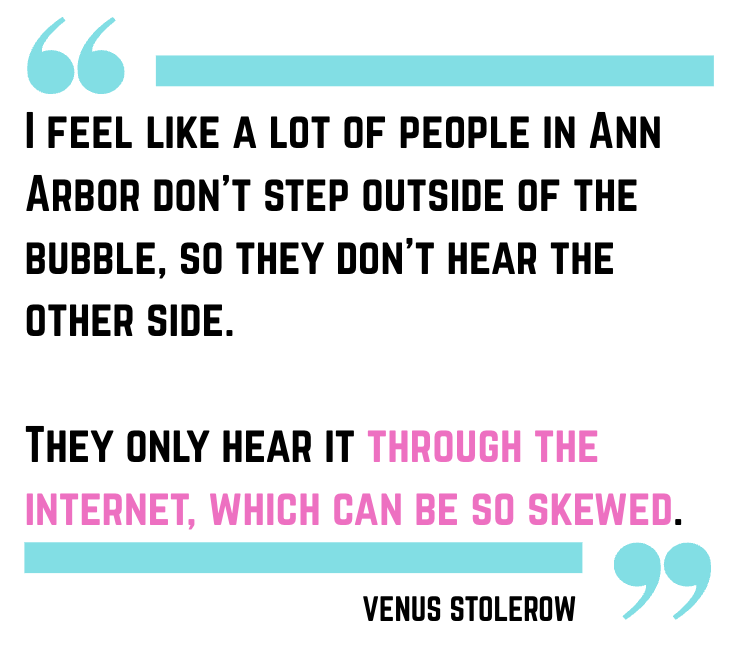
“I feel like a lot of people in Ann Arbor don’t step outside of the bubble, so they don’t hear the other side,” Stolerow said. “They only hear it through the internet, which can be so skewed.”
But the internet usually distorts those perspectives. Algorithms prioritize content designed to capture attention, to maximize it, meaning that the viewpoints people encounter online are typically exaggerated or simply used to cause inflammation. Tyler Simko, a professor of Political Science at the University of Michigan, agrees that social media has greatly impacted politics as we know it and can also be a powerful tool for looking beyond one’s political bubble.
“The biggest potential force in this area over the last 20 years or so is definitely the rise of social media,” Simko said. “In theory, people could use those resources to become very informed and perhaps notice when they’re living in a ‘bubble.’ Yet, social science research has also shown us that people don’t tend to behave that way, and instead can seek ‘echo chambers’ and even recreate their own political bubbles online.”
The concept of a political bubble is not foreign to The New York Times, which published an article authored by Gus Wezerek, Ryan D. Enos and Jacob Brown on this topic on May 3, 2021. Enos is a professor of political science at Harvard University and is a leading expert on the matters of the intersection of political behaviors and geography. This article explores the causes of political bubbles around the country, and what the effects of being in one can be.
“It’s a lot easier to demonize people on the other end of the political spectrum if you don’t personally know many of them,” said Richard D. Kahlenberg, a senior fellow at the Century Foundation, speaking to The New York Times. “That’s not a healthy situation for the country.”
In the article, it cited that people of opposing political parties are the most segregated they’ve ever been, and this contributes to increased partisan polarization.
“People aren’t choosing to live near neighbors who share their party affiliation,” said Alan Abramowitz, a professor of political science at Emory University, speaking to the New York Times. “They’re segregating based on lifestyle choices.”
The result of this is that in Ann Arbor, students won’t normally come across many opposing viewpoints. However, when they happen to leave the city or go online, they are barraged by perspectives and experiences totally alien to them. When Ann Arborites encounter these opposing viewpoints online, they could assume that the outside is drastically different, possibly more than it actually is. Viral posts and campaign signs simply aren’t enough to fully understand what people outside Ann Arbor might think, and jumping to conclusions will only increase the political gap between Ann Arbor and the rest of Michigan, because speculation will decrease understanding between everyone.
Over time, economic and demographic forces created a city where many residents share similar backgrounds and beliefs. But the danger of this bubble is not that it exists. The danger is when people inside it forget that it’s there, and by extension, begin to speculate about people outside it, instead of working to better understand others. For students growing up in Ann Arbor today, recognizing that political border may be the first step toward looking beyond it.