Thwump —Thwump — Thwump
Our tennis ball bounced against the decades-old backboard again and again. The board was tucked away in a corner of my backyard, framed by trees and foliage, and always felt welcoming and abundant to me. It seemed to lean back after years of being used solely by me, my best friend Calvin, and Mother Nature. As we made our contributions to the wall’s continued erosion, Calvin and I would bounce ideas off of each other, imitating the motion of the ball against the board. In a spark of imagination one day, there was a particularly sticky idea that didn’t bounce back: Pokémon Robots. We began thinking of engineering robots that would look and act identically to Pokémon so we could catch and fight legendary creatures just like we saw Ash Ketchum do routinely on Calvin’s family room TV.
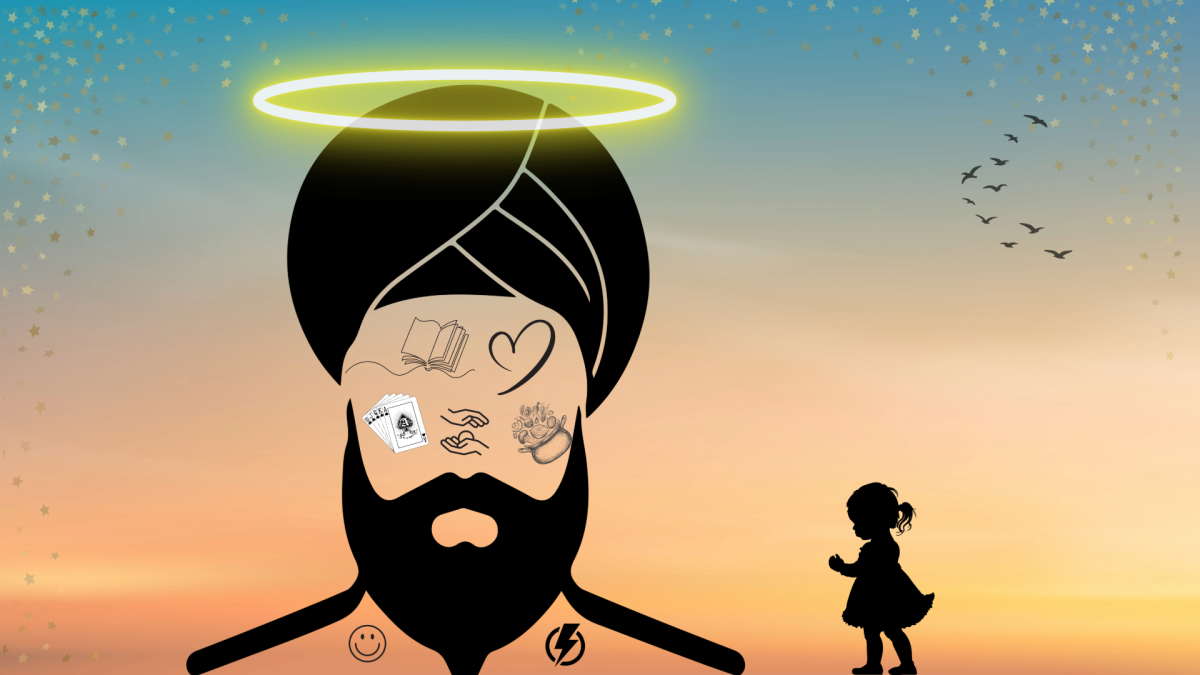
In the span of that week, my eight-year-old mind grew heavy with thoughts of how I would be able to carry out this project we had just envisioned. In the environmental unit of my elementary science class, a sweet man with a big, long beard taught us that we are losing many natural resources to unnatural systems. Just then, it seemed unreasonable to try my luck at making our world an amazingly mystical place if there were some very smart people implying that our planet would no longer be habitable within the next few decades.
The magnitude of this issue, though, was irrelevant to me — there was no barrier my imaginary robots couldn’t break. Consequently, I was comforted by the notion that nothing stood in the way of my dream. At eight years old, it had never occurred to me that dreams could clash with reality, because to me, the two were never meant to be separate.
As I grew, I learned about more sophisticated solutions, and over time, I established promises similar to my Pokémon robots. Though they embodied varying developments in maturity, these promises all followed the same path toward a commitment to bringing the same overarching issue down: pollution in the environment. But the maturity I’ve gained in the decade since my first environmental science lesson comes at a cost; my thoughts are never free of the weight of reality. Wherever my mind may wander nowadays, it is always trailed by a rain cloud that dampens my creativity.
Behind my house lived a forest that once served as a barrier between our neighborhood and a highway that reached into the outside world. This year, leaves and trees transformed into concrete and steel as the forest was replaced by an apartment building, and with that, the outside world has acoustically found its way into our lives. I organized and planted white pine trees in the liminal space, hoping that, in time, they would reclaim a fraction of the microcosm that we were part of, although I know those results won’t come immediately. The importance of this project lies in its simplicity, relying on nature to do its part. I will grow away from here, but the trees will not. Long after I am gone, the trees will stand where their predecessors once stood and continue the battle I started.
Science can become intricate, but its beginnings are often simple. The best science, I’ve come to learn, does not always begin with complexity: It begins with curiosity; it begins with wonder. No matter how complicated the challenge, the best ideas come from people who care enough to imagine a solution — people who bounce their first tennis ball and take their first step.