Large explosions were reported in the capital city of Cacarcas, Venezuela, in the early morning of Jan. 3, 2026. Hours after, President Donald Trump alerted the nation that the Venezuelan president, Nicolás Maduro and his wife, Cilia Flores, were arrested under U.S. law enforcement and are expected to go to trial on Monday, Jan. 5.
This was the goal of Operation Absolute Resolve, which was launched without congressional approval and led with bombing attacks in Venezuelan states, including La Guaira, Miranda & Aragua. The U.S. specifically targeted air bases, military facilities and the capital city of Caracas. The operation had been carefully sculpted, studied and perfected in the recent few months.
Leading up to the large-scale strikes, the U.S. had struck at least 35 Venezuelan boats accused of carrying drugs out of the country. The first of these happened in early September of last year. In late December, a drone strike by the CIA occurred at a docking port inside Venezuelan borders. For some, this was seen as an attack not only on drug trafficking, but on President Maduro himself.
According to The New York Times, the United States had built a full-scale replica in Kentucky of Maduro’s compound. There, Elite Army Delta Force commandos practiced and perfected the strike, blowing through steel doors and other obstacles. In the days leading up to the operation, U.S. intelligence agents constantly tracked Maduro’s habits and location in preparation, and when the weather was finally clear this past Friday night, Trump gave the order to go ahead and begin Operation Absolute Resolve.
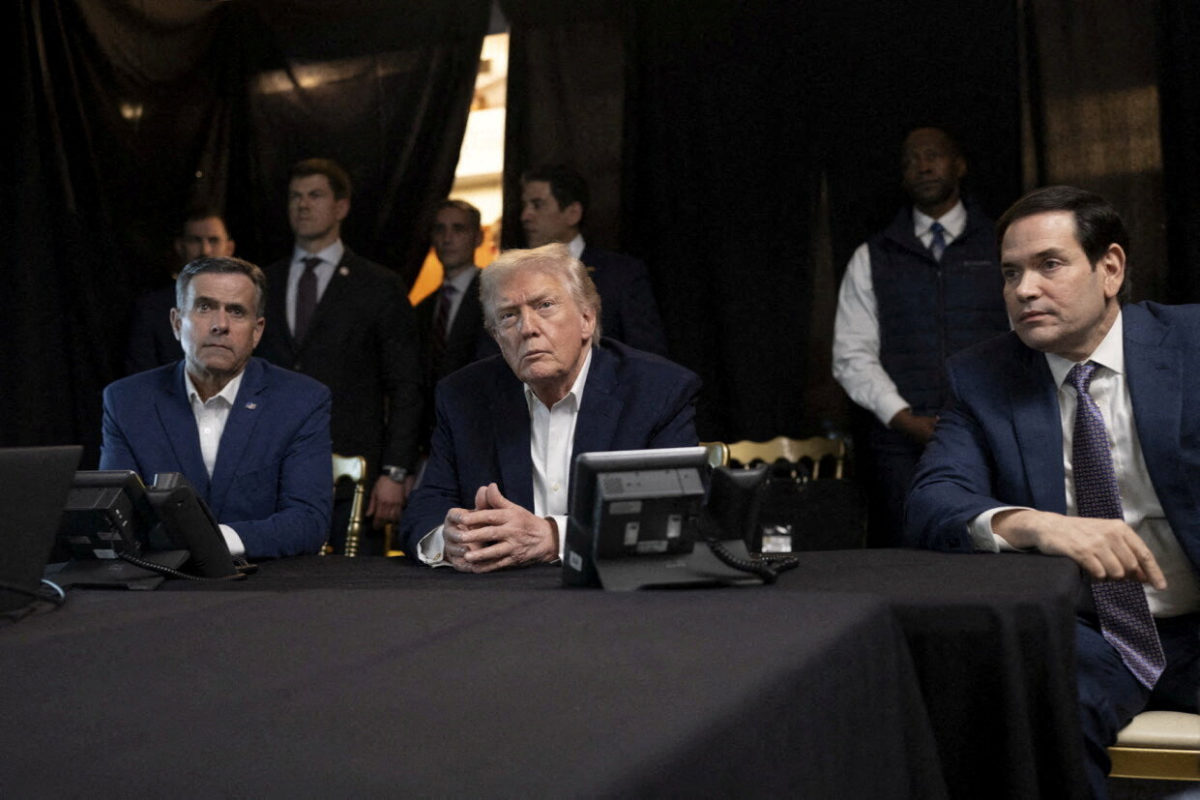
The morning of the operation, at 11:00 a.m. in Mar-a-Lago, Florida, Trump held a press conference at his estate where he talked about the successes of the operation and President Maduro’s arrest. He was charged by the United States government for narco-terrorism and the smuggling of cocaine during his past 13 years in office.
The U.S. will be temporarily controlling Venezuela as a result of their president’s arrest, at least until “a safe, proper and judicious transition” (Press Conference, Donald Trump) is accomplished.
When U.S. Secretary of State Marco Rubio was asked about whether or not the United States would work with Venezuela’s vice president, Delcy Rodríguez, on CBS News Face the Nation, he replied: “”We’re going to make an assessment on the basis of what they do, not what they say publicly in the interim.” To this, he added, “if they don’t make the right decisions, the United States will retain multiple levers of leverage to ensure that our interests are protected.” However, Rodríguez has stated that she will not let Venezuela become “a colony of an empire.”
The president has been quick to let the nation know the potential benefits of temporarily controlling a country such as Venezuela. These include the economic benefits of controlling parts of the oil industry. During his interview at his Mar-a-Lago estate press conference, Trump said, “We’re going to have our very large U.S. oil companies, the biggest anywhere in the world, go in, spend billions of dollars, fix the badly broken infrastructure, the oil infrastructure and start making money for the country.”
There have been mixed reactions about the operation; many Florida Venezuelan communities have been celebrating the downfall of the Venezuelan president.
“We’re scared but hopeful,” said Venezuelan-American Marisela Lara, who lives in Miami. “Last night may have been the beginning of the end of a 30-year nightmare.” (CNN)
However, in Venezuela, over 80 people lay dead and several buildings were destroyed from the bombings.
“Even up until a little while ago, I was still crying … I was crying because I was so scared … I had to leave my house with my daughter, with my family, and go to another house, a neighbour’s house,” a public worker in Venezuela told the AFP news agency. “It was really traumatic. I wouldn’t wish it on anyone, really.”(Aljazeera)
While a shocking move to many, the US government has made their decision clear, and we can only wait for what will happen next.