The University of Michigan Natural History Museum collection of over 200,000 birds offers a unique learning opportunity for CHS seniors in Ecology. CHS and Communicator alum Matt Hack led the field trip and offered this year’s Ecology Class a unique, hands-on experience. Hack recalls taking Courtney Kiley’s Ecology when he was a senior in 2016. This was one of the factors that inspired his pursuit of an ecology major during his undergraduate studies. He is now in his fifth year of his PhD and is focused on studying bird migration.
Hack explains that learning about these birds is important not only for his own interests and passions, but also because of the struggles birds are facing in today’s day in age.
“Birds in general are declining in population rapidly. Since 1970, we’ve lost 25% of the bird population in this part of the world.” Hack said. “Migrant birds, in particular, are facing issues with climate change, habitat loss and a lot of human pressures.”
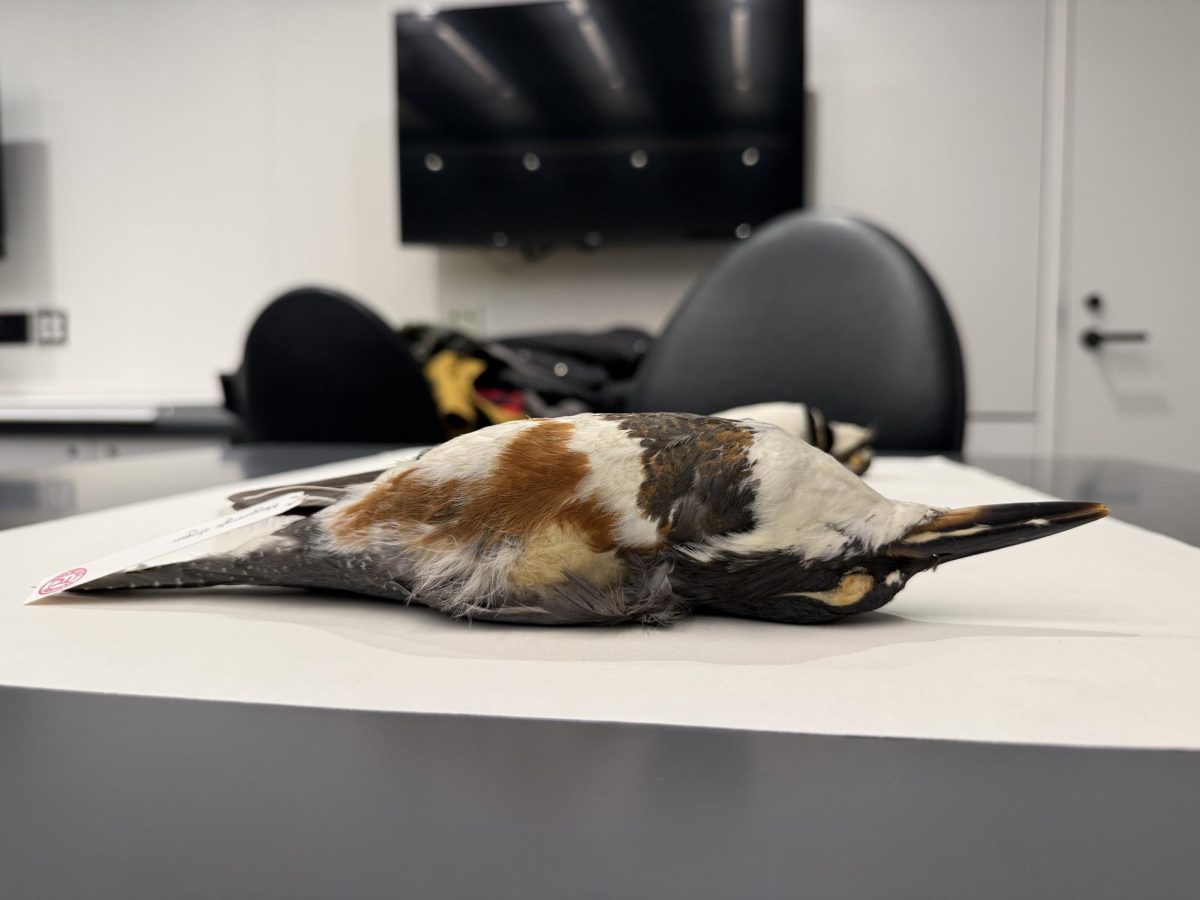
On Dec. 18, 2025, the ecology class left CHS to embark on a walk to the natural history museum to observe dead bird specimens of the species that are being studied in class. This trip provided behind-the-scenes insight into the process of preserving dead birds, along with an opportunity to get up close and study the birds that they had just begun to learn about.
Malcolm London, a senior at CHS, found that going on this trip allowed him to compare the sizes of the birds in a way that he would’ve never been able to do through images from the internet.
“It was cool seeing how big the birds are. I was looking at those pictures, and I was like, those birds are normal size. Then I got here, and the common loon is gigantic!” London said. “I’ve seen loons before in the water, and they look duck-sized, and I never thought that they would be that big.”
Hack taught London that the reason he didn’t recognize the loon as that large is was because a lot of their mass sits under the water. After all, their bones aren’t fully hollow, so they’re a little bit heavier, and they look smaller on the water.
Another ecology student, CHS senior Dexter Idzikowski, recognizes that without the unique experiences being a student at Community provides, he wouldn’t have these special field trips and opportunities to utilize the resources offered in Ann Arbor.
“If I was going to be at Skyline, I wouldn’t have been able to take a school trip like this one. Idzikowski said. “Skyline’s in the middle of nowhere, you can’t walk places, and that kind of sucks, because the University of Michigan is a pretty great resource for a bunch of valuable information, and if I couldn’t have access to that, I would learn a lot less.”
As bird populations continue to decline, the importance of education and awareness becomes increasingly clear. By studying preserved specimens and learning from an active researcher, CHS seniors gained a deeper understanding of the realities facing bird species today. The trip reinforced the idea that understanding ecology is a crucial step toward addressing environmental challenges and protecting wildlife for the future. It also showcased the unique advantages of being a student at CHS and the world-class resources available at our doorsteps.