When Courtney Kiley returned to CHS after summer break, she instantly noticed that things had changed.
“There were lockers in my classroom, and it looked like a bomb went off in the building,” Kiley said.
Just months earlier, she stood in the dewy June mornings of an ending school year, removing everything from her walls as she had been instructed. In the stripped classrooms, new paint would be applied to the walls. The classroom would be under construction over the summer until Kiley, along with her pictures, posters and students, could refill the space.
While many classrooms were repainted over the summer, Kiley’s room was used as a storage space for lockers while construction continued in the hallway. While this made floor renovations easier, it also means that Kiley will have to strip and refill her walls a second time when CHS students and staff have vacated the building for winter break.
And the floors aren’t quite done yet either. Students may have noticed the cardboard taped to the third-story floors — a temporary measure to cover up some of the in-progress renovations. CHS Assistant Dean Reccecca Westrate and administrators decided to put the cardboard in before Capsule Night at Community to make the school more presentable. The cardboard also helps keep any dirt from spreading and signals that the floor is a work in progress.
“It’s kind of like putting up a fence when you’re doing construction,” said Moe Nagpal, District Manager of Capital Programs and Construction. A fence does a couple of things: it makes it safer, and it is also a visual clue that, hey, this is a work in progress. Same thing with cardboard on the floor,” Nagpal said.
Nagpal oversees all the district construction projects and has been spending a lot of his time at CHS working on the renovations. He has an extensive knowledge of the logistics of the renovations and the main focuses: flooring, painting, wood restoration and roofing.
On the first and third floors, the current flooring is being replaced with terrazzo, a durable, low-maintenance and eco-friendly material. This choice is not only practical but also historically consistent with the building.
“The goal with the flooring on the first and the third floor was to kind of honor some of the things about the history of the school,” Nagpal said. “We wanted to echo what we know is original on the second floor.”
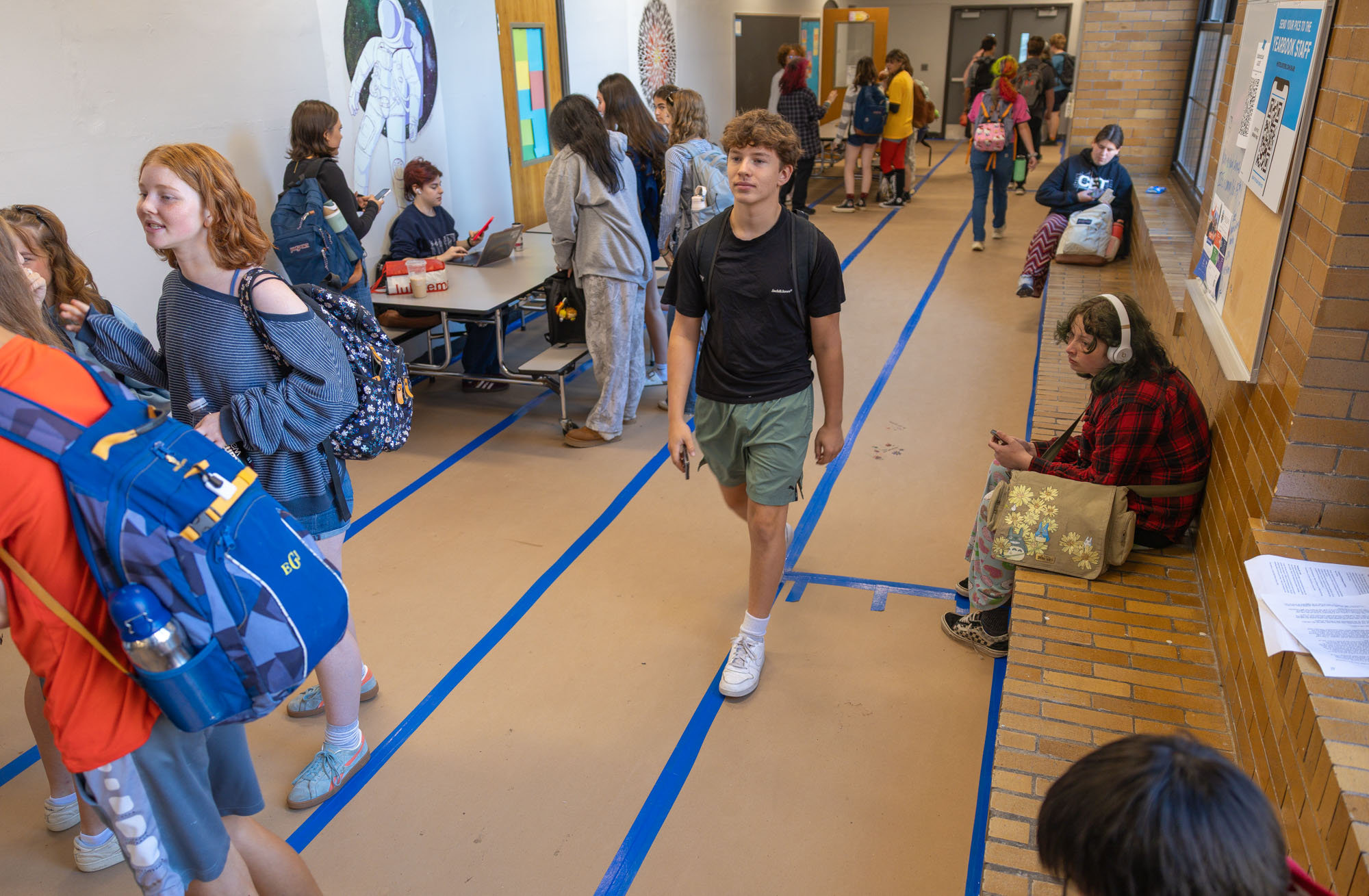
In addition to the flooring, the walls and corridors have also changed. Walls have been painted, and any wood is being restored to the original finish when possible. In some cases, the wood is replaced, with the intention of preserving the historical architecture. Outside the building, the roof of the school received some general repairs, though not any intense technical changes.
Due to the different aspects of the construction, the renovation is a lengthy process. One major hindrance to the timeliness of the construction is the logistics of the school and programs that take place in the building, limiting their work.
“The hope was that it would be all done in the summer, and they got a lot done, but not all of it.” Westrate said, Assistant Dean at CHS. “Right now, the construction team is working on second shift, so they’re coming in at 4:30 in the afternoon and working until two or three in the morning. They’re coming in every day doing that.”
Junior Jules Gates felt surprised by the work-in-progress state of the renovations upon their return to school.
“The floors aren’t polished, so everything looks covered in dust,” Gates said. “It’s kind of annoying. I wish the school looked nicer.”
Gates feels that some changes, like stair updates, may look good eventually, but overall sees it as an unnecessary disruption.
Even if they may be slightly disruptive to the overall look of the school for the time being, the school board has determined that the renovations are necessary in order to maintain the quality of facilities so they don’t become a bigger issue in the future. In fact, according to Nagpal, the beginning of the renovation journey started several years ago when CHS underwent a “facilities condition assessment”— a thorough examination of the building that gives insight into potential renovations to come.
Once the school board knew what needed to be done, a bidding process began to find contractors to enact the renovations. Contractors can bid on the requirements put together by Nagpal and his team and are then selected based on qualifications.
There is a lot of other logistical work between and after these, much of which falls on Nagpal, but eventually a time is picked to begin construction and the work can begin. For CHS, this was in June of 2025, after the school year had ended.
“What you see happening in the construction is kind of like the tip of the iceberg,” Nagpal said. “There’s a lot underneath it that you know isn’t visible, but it’s still much needed to get done before we get to the site.”
The construction is predicted to be completed late next summer. In the meantime, CHS will slowly be shaped into a changed building — a new look into the future while continuing to honor the history it holds.