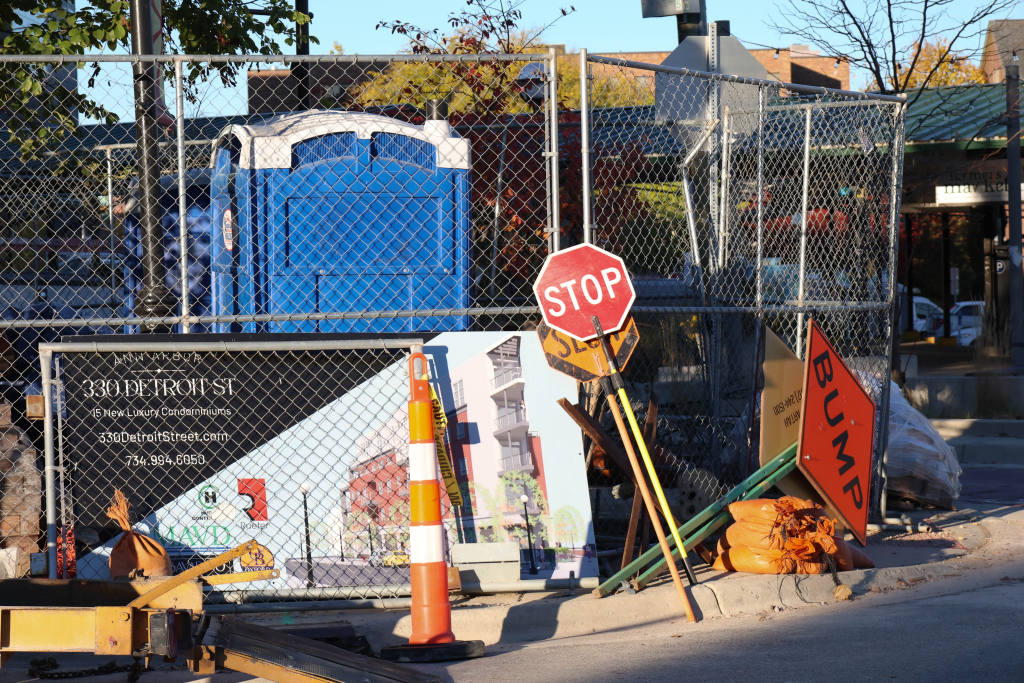
Downtown Ann Arbor is undergoing a major wave of construction projects, from resurfacing and utility upgrades to new university buildings and private developments. City officials say the work is aimed at replacing aging infrastructure and improving mobility, while residents and students are adjusting to detours, closures and longer commutes.
One of the largest city efforts this year is the 2025 Miscellaneous Utilities Project, which includes work along Fifth Avenue. According to the city’s website, the existing 6-inch water main is being replaced with a new 12-inch main, and several stormwater structures are being repaired or replaced. The city cites aging and undersized pipes as the main reason for the upgrades.
Once utility work is completed, the street will be resurfaced as part of a separate road program.
Funding for the Fifth Avenue project comes from multiple city sources, including the Water Supply System Fund, the Stormwater Fund and the Road, Bridge, and Sidewalk Millage Fund. During construction, residential access is being maintained, though the city notes that residents should expect occasional delays during working hours.
CHS freshman Roshan Malani, who gets dropped off near the area, believes the closures have slightly changed his routine.
“At the start of the year, for the first couple of weeks, I was getting dropped off in the parking lot,” Malani said. “But because of the construction around it, I now get dropped off in front of the school and walk the rest of the way.”
For Malani, the adjustment was a little frustrating at first, but he understands the need for roadwork.
“If the road needs to be fixed, then it needs to be fixed,” Malani said. “It is better to go to another entrance for a month than deal with a bad road long-term.”
Several other infrastructure projects, apart from the 2025 Miscellaneous Utilities Project, are also underway or planned across Ann Arbor. The Pauline Boulevard Watermain and Road Resurfacing Project replaced an old 6-inch cast-iron water main with a 12-inch ductile-iron pipe between South Seventh Street and Main Street.
Work at the Pauline and Seventh intersection was completed in July 2025, and new parking restrictions along Pauline were added in September. The city is funding this project through its Street, Bridge, and Sidewalk Millage, combined with Michigan Act 51 gas and weight tax revenues.
The Seventh Street Resurfacing Project, estimated to cost about $1.15 million, is another large part of the city’s maintenance plan. The project involves replacing sections of asphalt, reaping storm drain inlets and upgrading curb ramps to meet accessibility standards. Detours have been set up during the full closure of North Seventh Street between West Huron and Miller Avenue.
For drivers who use Seventh Street daily, the closure has created noticeable effects. For Zoe Shuchman, a junior at CHS who drives to school, the closure has added extra time to her morning commute.
“Usually I take Seventh to get to school, but because it’s closed, I have to go around,” Shuchman said. “It causes a lot of traffic in places that usually don’t have much. It takes longer and gets congested.”
Her five-minute drive now takes up to 15 minutes, and she has to leave earlier to make it to school on time.
“I used to leave around 7:45, but now I leave at 7:30 because everything takes longer,” Shuchman said.
Shuchman has also noticed the large-scale construction downtown and near the University of Michigan’s new athletic building on Washtenaw Ave.
“They always have trucks coming in and out, so there’s a lot of stopping and starting,” Schuchman said. “People get mad and start driving recklessly, which gets very annoying.”
Beyond roadwork, U-M’s contusion sites list shows multiple new or ongoing projects, such as the College of Pharmacy building, the Ross School of Business Executive Cormitory renovations and the D. Dan and Betty Kahn Health Care Pavilion, also known as the Clinical Inpatient Tower.
The city’s State Street Watermain and Resurfacing Project is another major initiative, combining infrastructure work with mobility improvements. The project includes a protected bike lane, raised crosswalks and enhanced bus stops as part of the city’s “Moving Together Towards Vision Zero” safety plan. Construction crews are also installing an infiltration trench to improve stormwater quality by filtering runoff before it reaches the Huron River. In addition, the project plans to remove on-street parking to make room for transit and bike lane improvements.
Although these projects aim to modernize safety and efficiency, residents have mixed feelings about the impact on Ann Arbor’s atmosphere.
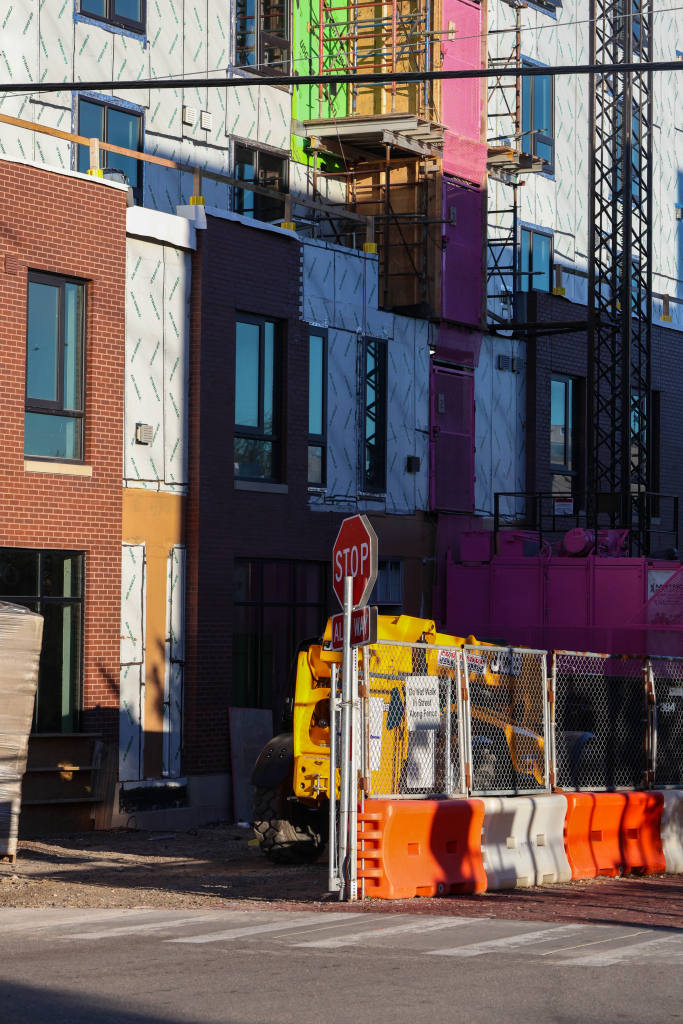
“Downtown Ann Arbor is beautiful, especially in winter with the twinkling lights,” Shuchman said. “But all of the construction equipment and cones mess up the atmosphere.”
She believes that new apartment buildings are replacing many of the older brick buildings that gave downtown its historic look.
“It used to feel uniform — the old brick buildings,” Schuchman said. “Now it feels different. It’s more like a big city instead of a town.”
Despite the temporary unconvinced, Malani believes the improvements are necessary.
“It’s not as nice that there’s construction everywhere, but it gets better once it’s done,” Malani said. “It fixed issues.”
While the orange cones and detours may slow traffic now, city officials expect the work to strengthen Ann Arbor’s water, road and storm systems and prepare downtown for continued growth in the years ahead.