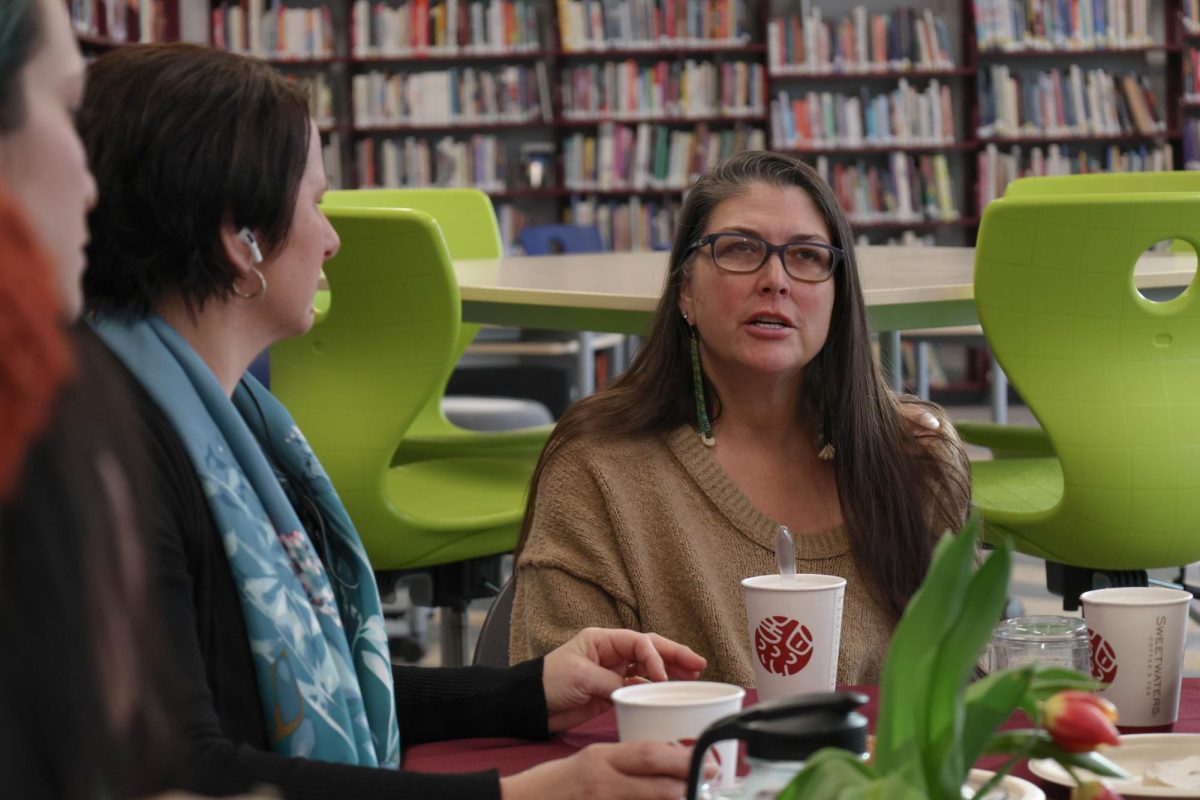
Red tablecloths decorated the Community High library. It was Feb. 9, 2026, and a spread had been laid out on the back table with coffee and pastries for the NAAPID attendees.
NAAPID stands for National African American Parent Involvement Day. A day to promote parent engagement in schools, it is held on the second Monday each February, in conjunction with Black History Month. NAAPID was founded in 1995 by Joe Dulin, who was inspired by the Million Man March on October 16, 1995. The march was organized by Black leaders across the country, with the central goal of promoting unity and support in the Black community and putting Black issues at the forefront of American politics.
Dulin’s aim was to help African American parents feel more welcome in schools. Historically, African American parents have been less welcome in school environments than their white counterparts due to systemic racism going all the way back to before slavery was abolished.
“During slavery, they didn’t want Black folks to learn how to read or have access to anything like that,” said history teacher Joslyn Hunscher-Young. “It was very intentional.”
According to Hunscher-Young, reconstruction also created problems of its own in terms of integrated schooling, because the Black students were now in white spaces. With discrimination continuing and Black educators being laid off en masse, the parents felt less welcome advocating for their kids’ needs because they were misunderstood and unrepresented.
Hunscher-Young has noticed that a story that rarely gets told is that of the negative impact that integrating schools had on Black communities, particularly on Black educators. As schools were consolidated, many chose to keep on only the white teachers, resulting in a lot of Black teachers losing their jobs. On top of that, Black families often got the short end of the stick when it came to school location.
“They broke up communities, often bussing Black kids to integrated schools, which then means you’re not even close to the school that your child is going to,” Hunscher-Young said. “It’s not your community anymore.”
The lack of representation in parent-teacher organizations and associations contributed to the discomfort of Black parents in advocating for their children’s needs to the school and in getting involved in the integrated public school environment as a whole. Discrimination that has continued since the Civil Rights movement has also added to the exclusion of Black parents from PTOs, which is why having a day prioritizing their involvement is so crucial.
CHS’ NAAPID 2026 was a quiet but impactful event. Dean Marci Tuzinsky and Assistant Dean Rebecca Westrate were in the CHS library for the occasion, with social studies teacher Joslyn Hunscher-Young also attending. Parent attendees included Adelaide Lancaster, Christine Kaschube, and Adriya Pressley.
Pressley identifies as African American, and has been attending NAAPID events for as long as her children have been in school. However, she felt that the event has lost its meaning over the years.
“I think the true meaning of NAAPID has gone,” Pressley said. “Now it’s just the name. It was supposed to be National African American Parent Involvement Day. Now it’s just national parent involvement day.”
Both Pressley and Tuzinsky believed that they needed to put the “African American” back in National African American Parent Involvement Day. It was decided that they would reach out for more input from African American parents and students for future years.
“This is the biggest issue. I’m a white woman trying to plan NAAPID,” Tuzinsky said. “I need to reach out to our parents and find out what our parents want.”
Those at the meeting discussed ideas for more parent involvement, like having a coffee hour on the first day of school, or having some parents come in as guest speakers depending on their area of expertise or profession (like an author coming in for an English class). Many parents agreed that they wanted to be more involved, but weren’t sure how to help and be present.
A lot of parents are used to the PTO style of involvement, where if you come up with an idea, you’re often responsible for organizing the whole thing. As a parent, that was Pressley’s biggest fear, and she emphasized the necessity of choice: having the opportunity to give feedback or advice, but not getting saddled with doing the whole production.
“You’re like, ‘Okay, I can commit to this, but I can’t do everything,’” Pressley said. “I think that’s where it’s less intimidating.”
Tuzinsky made plans to reach out to parents and find out what works for them, whether stopping to get coffee and chat after dropping off their kids or having an open lunch hour where people can come if they’re available. She mentioned the possibility of bringing back or borrowing from events from previous years, but is waiting until she can talk with other staff members to finalize.