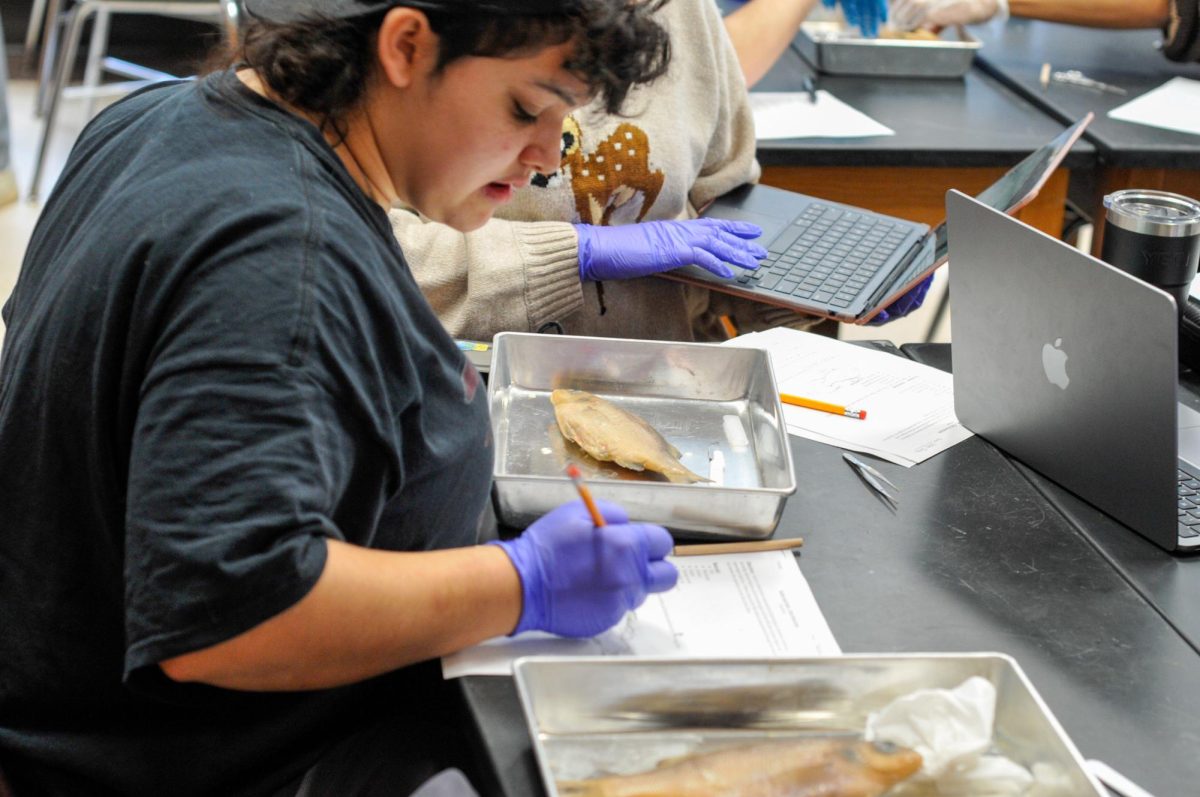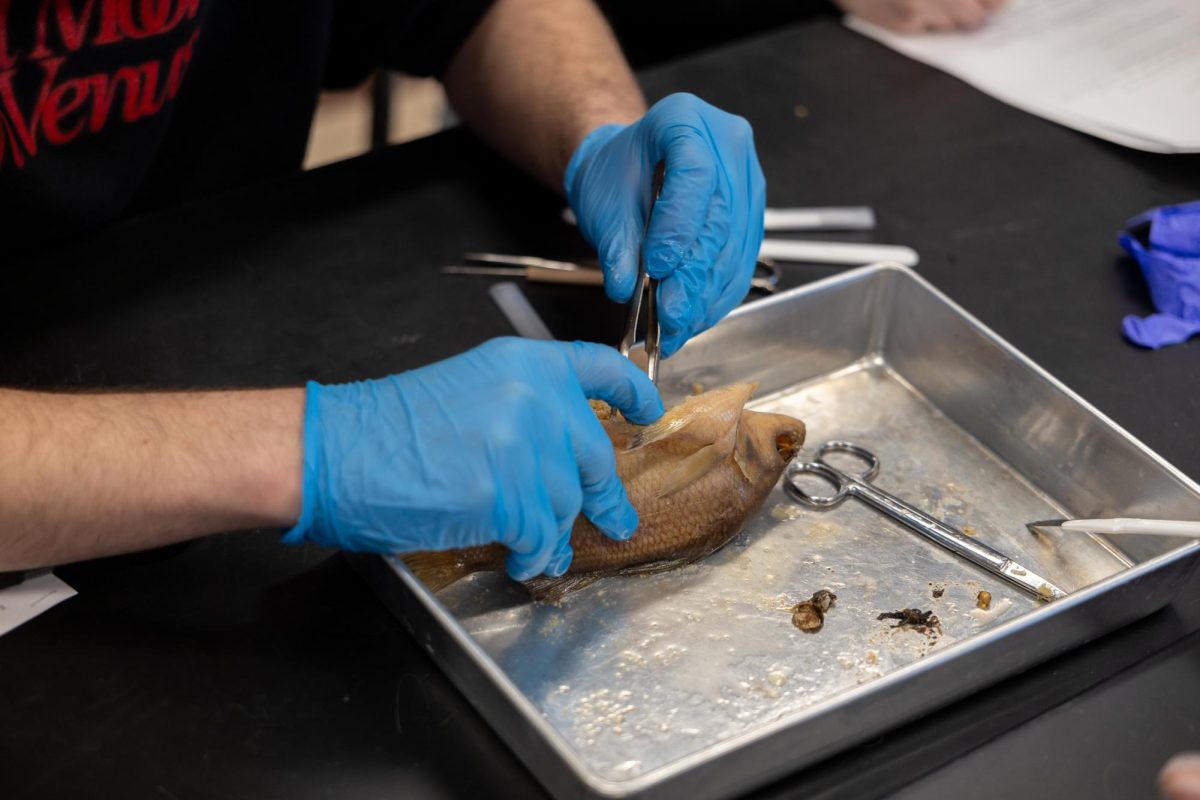
The smell of preserved fish lingered in the air of Room 214 as seniors in Courtney Kiley’s ecology class leaned over metal trays, scalpels in hand, carefully dissecting yellowperch fish. What was just another high school lab turned into a hands-on dive into anatomy, ecology and for some students, a test of their comfort zones. The CHS ecology class began studying their fish unit a couple of weeks ago and finally completed their fish dissections on Feb. 20th.
Courtney Kiley, who has been teaching ecology for 11 years now, said the class represents everything she loves about science. Though she began her career teaching FOS courses and physics, ecology was always the goal.
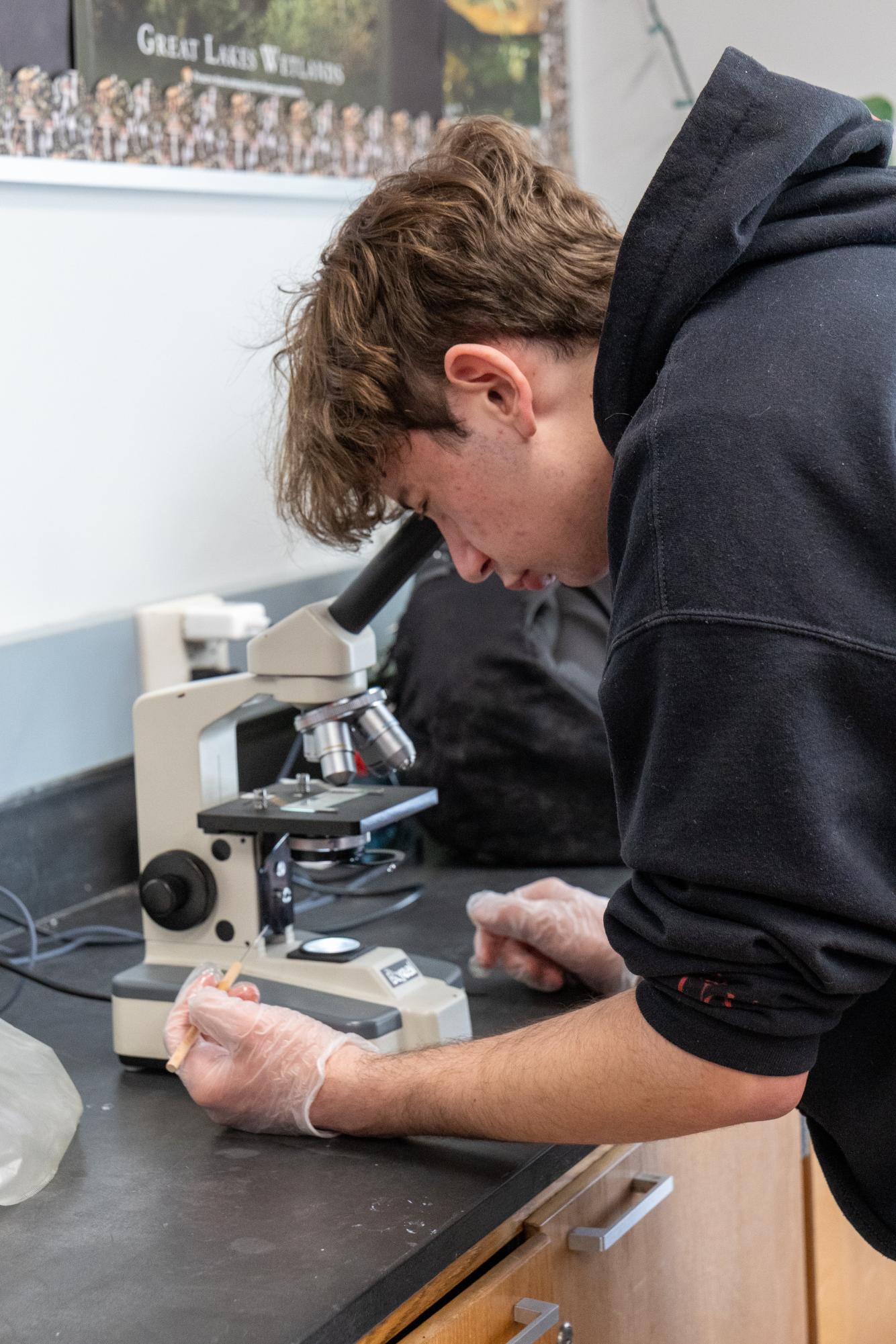
“I knew I wanted to teach ecology,” Kylie said. “I love biological sciences and ecology. Ecology is all of my favorite types of science exposed in one.”
Kiley’s passion for ecology, and fish in particular, was on full display during the class’s recent fish dissection lab. As students examined ear bones, hearts and ovaries, Kiley moved between tables, guiding their cuts and hyping up their discoveries. For Kiley, fish are often overlooked.
“They’re one of the most underappreciated organisms,” Kiley said. “We don’t see them on a daily basis, but they have this whole world down there that we don’t know a lot about.”
For senior Caleb Mothersell, the experience was memorable, though not exactly enjoyable or comfortable. While the smell didn’t bother him so much, the texture was a definite issue. Mothersell was one of the only students assigned a female fish, which meant dissecting the ovaries and eggs was uncharted territory.
“The eggs kept splashing on all of us,” Mothersell said. “Every time I would try to cut into the fish, it would grind up on the bone.”
Despite his mixed feelings about the process, Mothersell highly praised Kiley’s teaching style.
“She knows [about fish] in a way that isn’t overbearing,” Mothersell said. “It almost feels like second nature to her. She’s really good at making it accommodating and hyping everybody up whenever they do something good.”
For another senior in the class, Bug Denomme, the lab was an immediate dive into curiosity. Denomm said the earlier fish-coloring project the class did, where students mapped anatomical structures and labeled them by color, helped them understand where bone ended and flesh began.
“It helped me understand where I was cutting bones and just flesh, and how the skeletal structure and the actual fish structure worked together,” Denomm said. “It was a lot of fun to see all the different parts of fish.”
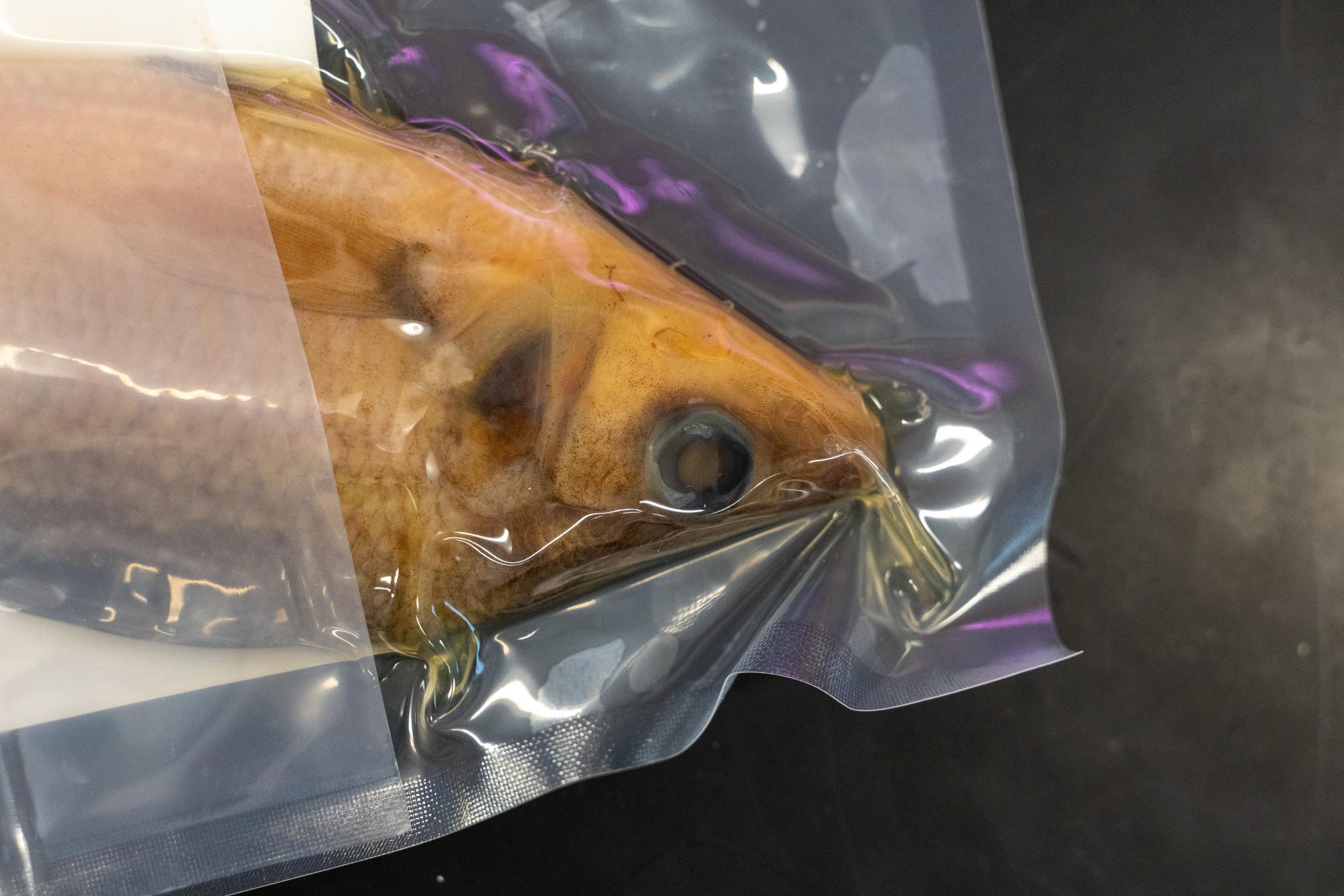
Marcel Swinko, a fellow senior in ecology, thought that seeing the organs in real life was far more impactful than studying diagrams. Swinkon admitted after the lab that he initially held back, letting his lab partner, Alex Smith, do most of the work.
“I thought it was going to be super gross,” Swinko said. “And it kind of was, but it was also cooler than I thought it would be, and it was cool to see so many different components all in one tiny fish.”
While some students were put off by the lab, many found it to be a fun experience that furthered their understanding of fish. This hands-on dissection brought anatomy out of the textbook and allowed students the freedom to explore in any way they wanted. Some students cut up the entire fish to find the ear bones and eyes, while others drew images and studied while their partner dissected. No matter what role they played in the lab, each student took away a new experience and new knowledge that they will carry through the rest of the semester.