Among the many teams across the state of Michigan, in March of 2026, Community High School Mock Trial (CHSMT) “A” Team reigned as the champions over the mock trial state competition. This win allowed them to head to Nationals in early May. This is the fifth time Community has been to Nationals under the guidance of their current coach, social studies teacher Chloe Root. It is also the 10th time the team has been overall, a considerable achievement in itself.
However, Root faced a dilemma about accepting the invitation to nationals: how would she be able to coordinate the trip while working inside her contract hours as a teacher? Root initially drafted and sent a letter to Ann Arbor Public Schools’ central administration asking if another adult involved in CHSMT could attend in her place. CHS Deans Marci and Rebecca stepped in to help Root find a solution.
“It was a very big group effort to make it so that the team could still go,” Root said.
Parents and the volunteer coaches for the team took on Root’s coordination role, which she estimated would have taken 80 hours of work on her own. Root has been happy to dedicate her time to coordinate this event in the past, but this time was different because of her restriction to only work within contracted hours.
Of the 16 students who attended the competition, 9 were competing members of the team. The rest consisted of team managers and members of CHSMT’s B team and alternates who wished to attend. Root and three other coaches—Bob West, Dale Hallie and Billie Ochberg—from CHSMT, who focus on the legal and acting components, were also present. In addition to the students and coaches, several unofficial parent chaperones provided transportation throughout the competition, as the current struggles with teachers’ contracts made transport planning difficult.
Before the real competition, CHSMT had the chance to scrimmage against two mock trial teams, one from Hawaii and another from Oregon. These scrimmages gave the competing members a rough idea of where they were as a team and allowed them to patch any holes before competition.
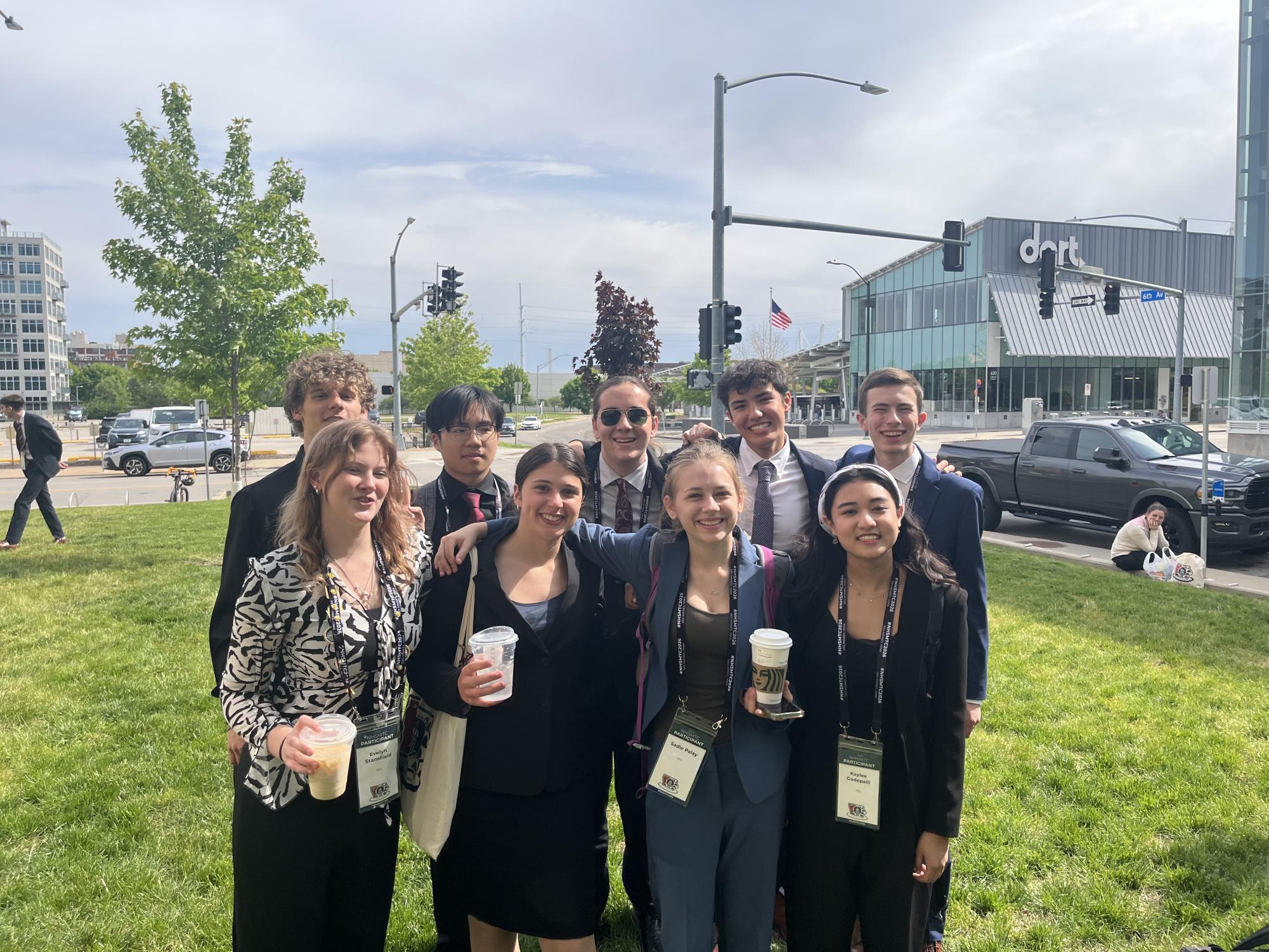
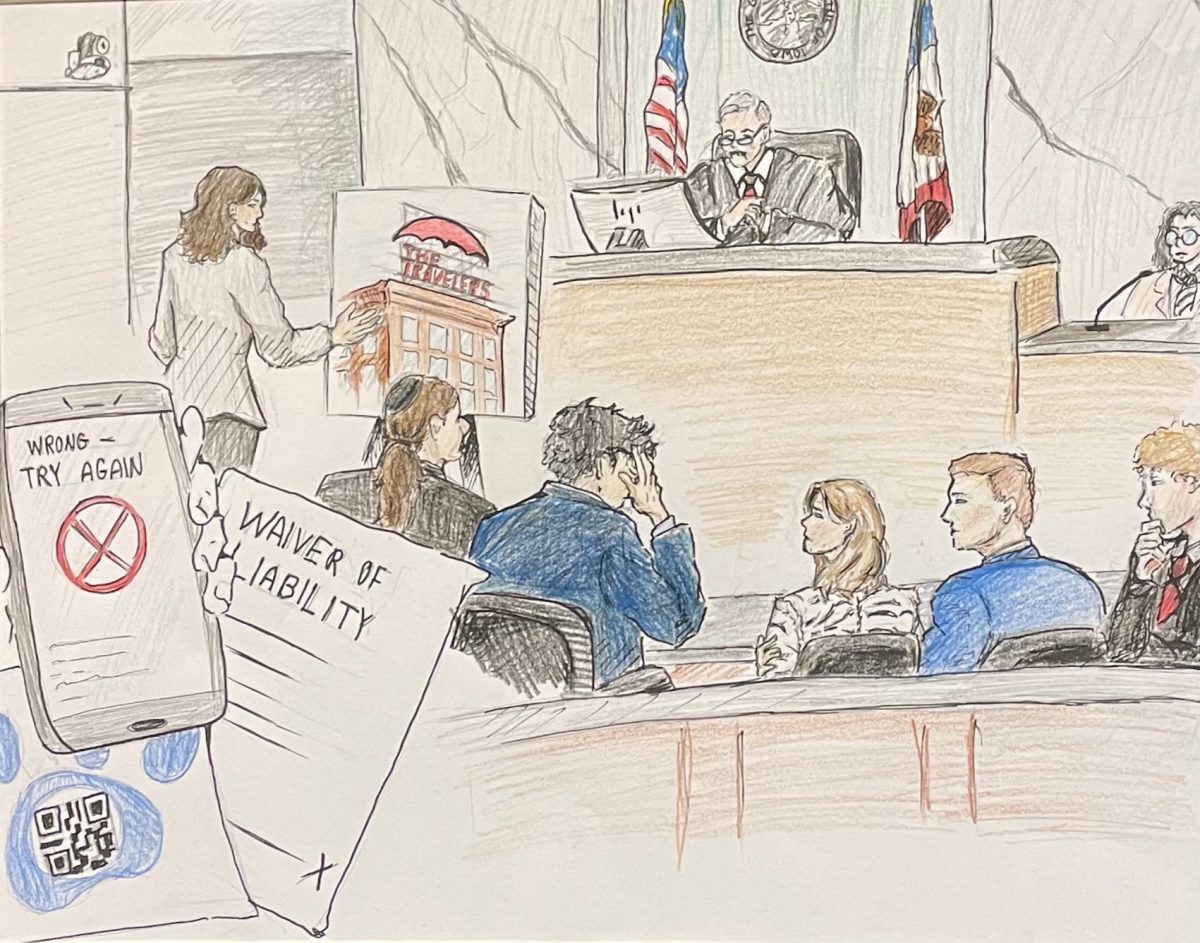
On May 7, 2026, the fun officially began. CHSMT first competed against Alabama at 8:00 AM and New Hampshire at 1:45 PM, then took on New Jersey and Pennsylvania the next day on the same schedule. In between trials on both days, the teams broke for lunch from about twelve to one. For both morning trials, CHSMT played the prosecution (the team trying to prove guilt of the offending party), and played the team of the defense (the team defending the person or company being sued) in the afternoon. Lawsuits in mock trial competitions are sometimes based on real-life events, but the scenarios that teams prepare are fully fictional.
Each trial lasted about 2 and a half hours, and consisted of three major events from both teams: opening statements, examination and cross-examination of witnesses (people with personal knowledge of the case), and closing statements. Opening statements serve as each side’s roadmap to the case, where they outline facts and evidence they wish to bring forth. Teams then examine their witnesses and cross-examine the opposing team’s witnesses in an attempt to sway the jury in their favor.
“At the end of the trial, there are closing statements where [we] have to sum up everything that the jury heard and make a recommendation to the jury on how they should rule based on the evidence that [they] heard,” said junior Noah Lauring, one of CHSMT’s team captains.
According to Root, the level of competition was intense for her team, with no clear victories except for their first round. To win a round in mock trial, a team has to secure points from 3 scoring judges who each score every competitor out of ten. The judges’ score is counted up on a ballot, and the team with the most points wins the ballot.
“In the first round, we won all three ballots, and we kind of knew that because of the way the trial went,” Root said. “After that, we had no idea whether we won or lost the next three trials because they were so, so close.”
To make Nationals even more exciting, all of the judges who presided over trials are actual judges. This isn’t usually the case because judges are busy, and volunteers to play judges usually consist of attorneys. Since Iowa has a good base of support for mock trial programs, the competition was able to pull real judges, which made the experience all the more authentic for competitors.
In CHS’s third trial, senior Kaylee Gadepalli portrayed a witness and gave herself a very convincing French character to play. Gadepalli even came up with the acronym ‘MERCI’ to describe her role’s expert recommendations to the defendant. Root felt proud to be associated with CHSMT at that moment because her team members can have fun while still competing at a very high level.
Team Michigan, the name for CHSMT at Nationals, ranked twentieth in the final results. However, Root feels that the final standings do not accurately express what happened during the actual trials.
“And even then, mock trial is so subjective,” Root said. “It’s not technical in the ways that people tend to think it is.”
Root explains that while one judge might give 10 points for a performance, a different judge might give the same performance a much lower rating. The rankings also don’t reflect that CHSMT faced two teams that ended up in the top ten, and won at least one ballot in every round.
“I’m super proud of the team,” Root said. “I hope that they understand that they could have just as easily been in the top ten.”
Lauring also found their performance at Nationals very impressive and is a sign of better things to come for CHSMT. Because the team that went to Nationals was mostly non-seniors who will return to mock trial in the fall, Community’s mock trial program will be even stronger with A Team’s experience in Iowa under their belt.
“We’re gonna have an A Team that’s full of people who have been to Nationals,” Lauring said. “I think that we’re gonna have a really strong season next year.”